
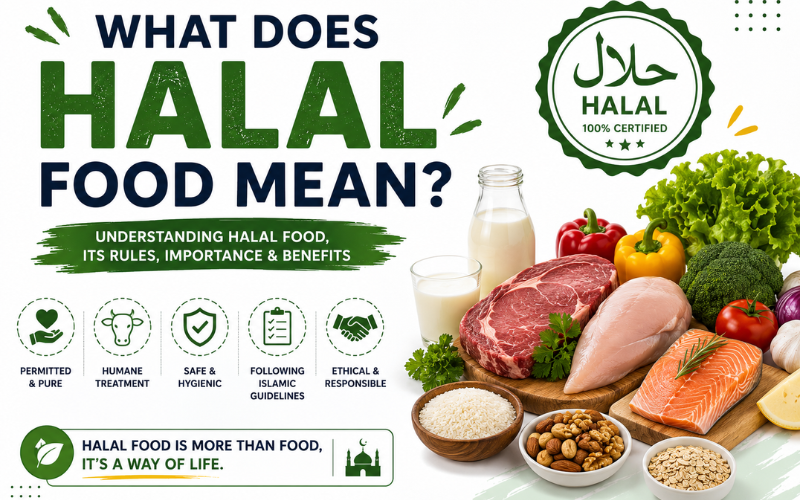
Halal food means food that Muslims are allowed to eat according to Islamic teachings. The word halal means “permissible” or “allowed.” It covers more than just avoiding pork or alcohol. Islam gives Muslims clear rules about what they can eat, how animals should be treated and slaughtered, and which ingredients should be avoided.
For example, meat from animals that are normally allowed, such as chicken, beef, lamb, and goat, can be halal when the Islamic rules for slaughter are followed. Pork, blood, and animals that die on their own are not halal. Alcohol and other intoxicating substances are also not allowed.
Halal food is meant to help Muslims choose food with care and follow their faith in everyday life. When buying packaged food, Muslims may check the ingredients and look for a trusted halal certification. Understanding these basic rules makes it easier to know what Islam allows and what should be avoided.
What Does Halal Mean?
The Arabic word halal (حلال) means “permissible,” “lawful,” or “allowed.”
In Islam, halal applies to many areas of life, including:
- Food and beverages
- Business transactions
- Clothing
- Personal conduct
- Financial activities
When discussing food, halal refers to anything that Muslims are permitted to eat or drink according to Islamic teachings.
The opposite of halal is haram, which means forbidden or unlawful.
The Religious Foundation of Halal Food
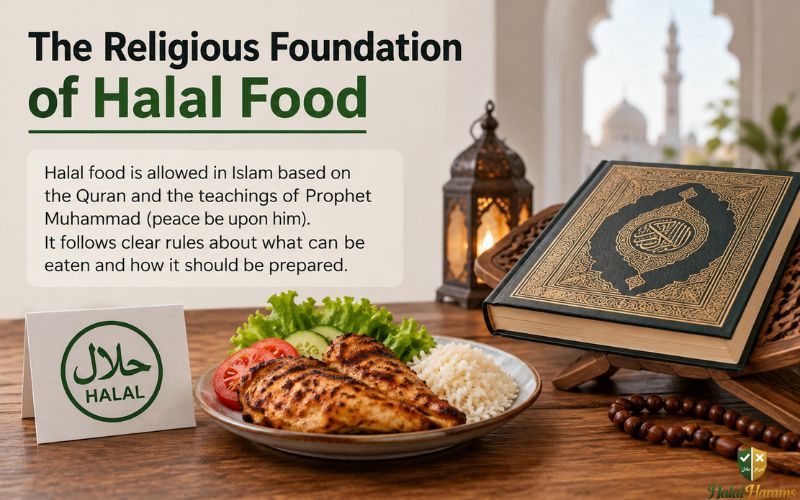
The concept of halal food originates from the Quran and the Sunnah (traditions of Prophet Muhammad).
Islam encourages believers to consume foods that are both lawful and wholesome. Muslims are instructed not only to avoid prohibited foods but also to seek food that is pure, clean, and ethically obtained.
The Quran repeatedly emphasizes eating what is lawful and good, making halal consumption an important aspect of faith and obedience.
For Muslims, choosing halal food is not simply a dietary preference but a religious obligation.
Why Halal Food Is Important in Islam
Halal food is important because it reflects obedience to Allah’s commands and promotes ethical eating practices.
Muslims view halal consumption as:
- An act of worship
- A sign of faithfulness
- A way to maintain spiritual purity
- A method of following Islamic teachings
- A means of ensuring ethical treatment of animals
The importance of halal extends beyond nutrition and becomes part of a Muslim’s overall lifestyle.
Basic Principles of Halal Food
Several principles determine whether food is halal.
The Food Must Be Permissible
The food itself must come from a source that Islam allows Muslims to consume.
The Ingredients Must Be Halal
Every ingredient used in the product must be permissible.
The Processing Must Be Halal
The manufacturing and preparation process must not involve prohibited substances.
The Food Must Be Free from Contamination
Halal food should not come into contact with haram ingredients during production, storage, or serving.
The Animal Must Be Slaughtered Properly
For certain land animals, Islamic slaughter requirements must be followed.
These principles form the foundation of halal dietary laws.
Related Post:What Is Halal Food? Complete Guide For Muslims(2026)
Foods That Are Generally Halal
Many foods are naturally halal and can be consumed without concern.
Examples include:
- Fruits
- Vegetables
- Grains
- Rice
- Beans
- Nuts
- Seeds
- Milk
- Honey
- Fish
- Eggs
These foods are generally permissible unless they become contaminated with prohibited ingredients.
Common Halal Foods
| Food Category | Examples |
|---|---|
| Fruits | Apples, bananas, oranges |
| Vegetables | Carrots, spinach, broccoli |
| Grains | Wheat, rice, oats |
| Seafood | Tuna, salmon, cod |
| Dairy | Milk, yogurt, butter |
| Legumes | Lentils, chickpeas, beans |
These foods are widely consumed by Muslims around the world.
Foods That Are Haram
Islam specifically prohibits certain foods and beverages.
Pork and Pork Products
Pork is one of the most clearly prohibited foods in Islam.
This includes:
- Pork meat
- Bacon
- Ham
- Lard
- Pork gelatin
Alcohol and Intoxicants
Alcohol and intoxicating substances are forbidden.
Examples include:
- Beer
- Wine
- Liquor
- Spirits
- Alcohol-based beverages
Improperly Slaughtered Animals
Animals that are lawful in themselves become impermissible if they are not slaughtered according to Islamic requirements.
Carrion
Animals that die naturally without proper slaughter are generally prohibited.
Blood
The consumption of flowing blood is forbidden in Islam.
Common Haram Foods
| Food Type | Reason |
|---|---|
| Pork | Explicitly prohibited |
| Alcohol | Intoxicating substance |
| Blood | Forbidden in Islamic law |
| Carrion | Improper death |
| Non-Halal Meat | Improper slaughter |
Muslims avoid these foods as part of their religious obligations.
What Makes Meat Halal?
One of the most discussed aspects of halal food is halal meat.
For meat to be halal, several requirements must be met.
The Animal Must Be Permissible
Animals such as cows, sheep, goats, chickens, and camels are generally halal.
The Animal Must Be Healthy
The animal should be alive and healthy at the time of slaughter.
Proper Islamic Slaughter
A trained individual performs the slaughter while invoking the name of Allah.
Blood Must Be Drained
The slaughter process allows blood to drain from the animal.
These requirements help ensure that meat complies with Islamic dietary laws.
Halal Slaughter Explained
Islamic slaughter is often referred to as Dhabihah.
The process generally involves:
- Using a sharp instrument.
- Mentioning the name of Allah.
- Cutting the throat swiftly.
- Severing major blood vessels.
- Allowing blood to drain.
The goal is to minimize suffering while fulfilling religious requirements.
Many Muslims view halal slaughter as both a spiritual and ethical practice.
Is Seafood Halal?
Seafood is generally considered halal by the majority of Islamic scholars.
Common halal seafood includes:
- Tuna
- Salmon
- Cod
- Sardines
- Mackerel
Some differences of opinion exist regarding certain marine animals, but fish are widely accepted as halal across major Islamic schools of thought.
Because of this, seafood often presents fewer halal concerns than meat products.
Halal Food and Processed Products
Modern food production often involves complex ingredients and manufacturing processes.
A processed food may appear halal but contain ingredients derived from prohibited sources.
Examples include:
- Gelatin
- Emulsifiers
- Flavorings
- Enzymes
- Food colorings
This is why many Muslims carefully review ingredient labels before purchasing packaged foods.
Related Post: Is Five Guys Halal? A Simple Guide for Muslims(2026)
What Is Halal Certification?
Halal certification is a process through which an organization verifies that a product complies with Islamic dietary requirements.
Certification bodies inspect:
- Ingredients
- Manufacturing facilities
- Processing methods
- Storage procedures
- Packaging systems
Products that meet halal standards may display a halal certification logo.
Benefits of Halal Certification
| Benefit | Explanation |
|---|---|
| Consumer Confidence | Easier identification of halal products |
| Ingredient Verification | Confirms ingredient compliance |
| Production Oversight | Reviews manufacturing processes |
| Reduced Uncertainty | Helps consumers make informed choices |
| Global Recognition | Facilitates international trade |
Certification provides additional assurance for Muslim consumers.
Halal Food Is More Than Ingredients
Many people assume halal simply means avoiding pork and alcohol.
In reality, halal also considers:
- Food sourcing
- Ethical treatment of animals
- Cleanliness
- Preparation methods
- Cross-contamination prevention
This broader approach reflects Islam’s emphasis on purity and responsibility.
Halal and Cleanliness
Cleanliness is an important part of halal food preparation.
Food preparation areas should be:
- Clean
- Hygienic
- Free from contamination
- Properly maintained
Islam places great importance on cleanliness in both religious and daily life.
This principle extends directly to food production and preparation.
Cross-Contamination and Halal Food
Cross-contamination occurs when halal food comes into contact with haram substances.
Examples include:
- Shared cooking equipment
- Shared frying oil
- Shared cutting boards
- Shared storage containers
Preventing cross-contamination is an important part of maintaining halal integrity.
Many halal-certified facilities implement strict procedures to avoid such issues.
Related Post: What Is Halal Chicken? Complete Guide for Muslims(2026)
Halal Food Around the World
Halal food is consumed by millions of Muslims across every continent.
Today, halal products are available in:
- Supermarkets
- Restaurants
- Hotels
- Airlines
- Food delivery services
The global halal food industry has grown significantly, serving both Muslim and non-Muslim consumers.
Many people choose halal products because they value the quality standards and transparency associated with halal certification.
Common Misconceptions About Halal Food
Halal Means Only No Pork
While pork is prohibited, halal involves many other dietary requirements as well.
Halal Food Is Only for Muslims
Anyone can consume halal food regardless of religion.
Halal Food Tastes Different
Halal certification affects how food is sourced and prepared, not its basic taste.
All Vegetarian Food Is Automatically Halal
Vegetarian products may still contain alcohol, non-halal additives, or cross-contamination issues.
Halal and Kosher Are Identical
While there are similarities, halal and kosher dietary laws are not exactly the same.
Health and Ethical Aspects of Halal Food
Many consumers appreciate halal food because it often emphasizes:
- Clean ingredients
- Food safety
- Ethical sourcing
- Animal welfare
- Quality control
While halal is primarily a religious concept, these principles can also contribute to consumer confidence.
It is important to remember that halal certification focuses on religious compliance rather than guaranteeing nutritional superiority.
How to Identify Halal Food
Consumers can use several methods to identify halal products.
Look for Halal Certification
A recognized halal logo is often the easiest indicator.
Read Ingredient Labels
Check for prohibited ingredients such as:
- Pork derivatives
- Alcohol
- Non-halal gelatin
Ask Questions
When dining out, ask restaurant staff about ingredients and preparation methods.
Research Brands
Many manufacturers provide halal information on their websites or product packaging.
Being informed helps consumers make confident choices.
If you find this helpful and want more Halal and Harams guide then here’s more for your knowledge:
- Is Butter Halal? Complete Guide For Muslims(2026)
- Is Mirin Halal? Complete Guide for Muslim(2026)
- Is Tuna Halal? Complete Guide For Muslims(2026)
- Is Calamari Halal? Complete Guide for Muslims(2026)
- Is Bonchon Halal? Complete Guide for Muslims(2026)
Frequently Asked Questions
What does halal food mean
Halal food refers to food and beverages that are permissible according to Islamic law and dietary guidelines.
What is the opposite of halal
The opposite of halal is haram, which means forbidden or unlawful.
Is all seafood halal
Most fish and seafood are considered halal by the majority of Islamic scholars.
Why can’t Muslims eat pork
Pork is explicitly prohibited in the Quran and is therefore considered haram.
Is alcohol halal
No. Alcohol and intoxicating substances are generally forbidden in Islam.
What makes meat halal
The animal must be permissible, healthy, and slaughtered according to Islamic requirements.
What is halal certification
Halal certification verifies that a product meets Islamic dietary standards regarding ingredients and production methods.
Can non-Muslims eat halal food
Yes. Halal food can be consumed by anyone regardless of religious beliefs.
Is vegetarian food always halal
Not necessarily. Some vegetarian products may contain alcohol-derived ingredients or other non-halal substances.
Why do Muslims follow halal dietary rules
Muslims follow halal guidelines as an act of obedience to Allah and to comply with Islamic teachings.
Final Remarks
Halal food is not simply about checking whether a food contains pork or alcohol. It is a way for Muslims to make food choices that follow the teachings of Islam. Foods such as fruits, vegetables, grains, and many types of seafood are generally halal. Meat from permitted animals must also meet Islamic requirements, including the proper method of slaughter. Muslims should also be careful with ingredients such as gelatin, animal fats, and flavorings because their source can affect whether a product is halal.
When a food is unclear, checking the ingredients or asking about its source can help. Trusted halal certification can also make packaged foods easier to identify. The main idea is simple: Muslims can enjoy good, wholesome food while staying within the limits set by Allah. Understanding these rules helps make everyday food choices with greater confidence.
