
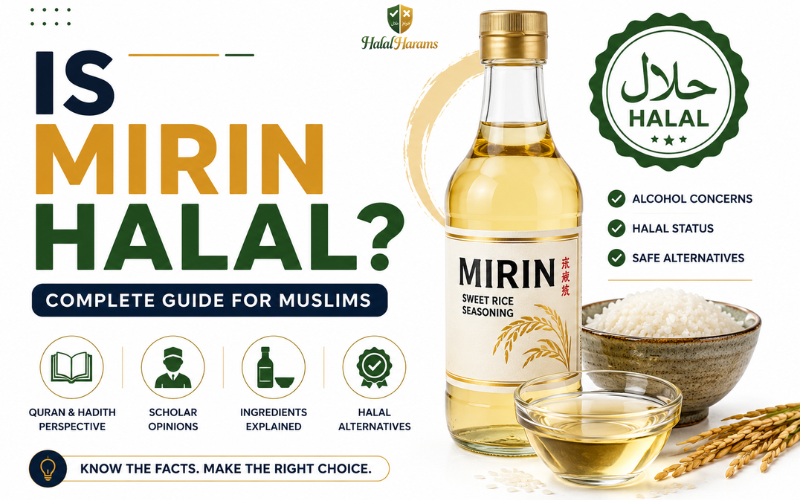
If you are Muslim and enjoy Japanese food, you may have seen mirin listed in sauces, marinades, sushi, and teriyaki recipes and wondered, “Is mirin halal?” This is an important question because mirin is not always made the same way.
Traditional hon-mirin is a Japanese sweet rice wine that contains alcohol, which makes it a concern for Muslims who follow halal dietary rules. However, some products sold as mirin-style seasoning may be alcohol-free or made with different ingredients.
For Muslims, the key point is to look beyond the name on the bottle. Check the ingredient label and find out whether the product contains alcohol or actual rice wine. Islamic dietary rules generally prohibit intoxicating alcoholic drinks, and many scholars advise Muslims to avoid cooking ingredients that contain wine or other alcoholic beverages.
There are also halal-certified and alcohol-free mirin alternatives available. Understanding the difference between traditional mirin, mirin-style seasoning, and alcohol-free substitutes can help Muslims make a more informed food choice without unnecessary confusion.
Short Answer:
No, traditional mirin is not halal because it contains alcohol. However, some halal-certified or alcohol-free mirin alternatives are permissible, so always check the ingredient list and halal certification before using them.
What Is Mirin?
Mirin is a sweet Japanese rice seasoning traditionally made through a fermentation process involving rice, rice koji, and alcohol. It is valued for its ability to add sweetness, depth, and a glossy finish to various dishes.
Mirin is commonly used in:
- Teriyaki sauce
- Sukiyaki
- Ramen broths
- Udon dishes
- Sushi preparations
- Glazed seafood and meat dishes
- Japanese dipping sauces
Unlike ordinary sugar, mirin provides both sweetness and complex flavor, making it a staple ingredient in Japanese cooking.
How Is Mirin Made?
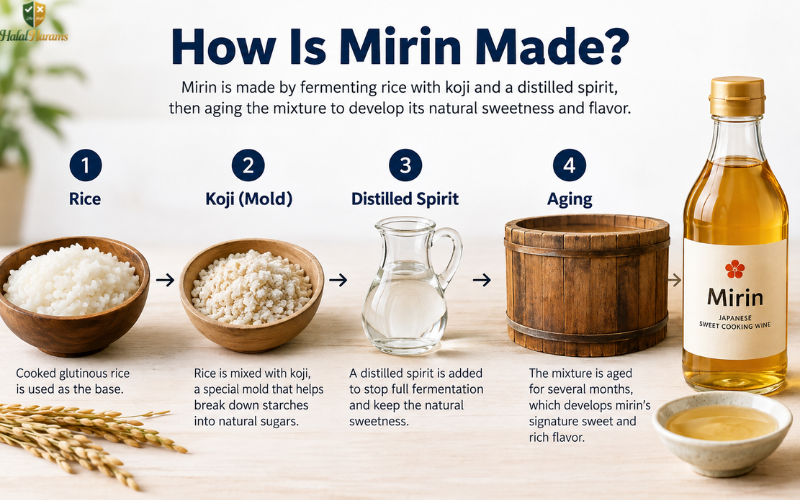
Traditional mirin is produced by combining glutinous rice, rice koji, and distilled alcohol. The mixture undergoes fermentation and aging, creating a sweet liquid with a distinctive flavor profile.
The production process generally includes:
| Step | Description |
|---|---|
| Rice Preparation | Glutinous rice is steamed |
| Koji Addition | Rice koji is mixed with rice |
| Alcohol Addition | Distilled alcohol is added |
| Fermentation | Ingredients mature over time |
| Aging | Flavor develops and sweetens |
| Filtration | Liquid is separated and bottled |
The key concern for Muslims is the alcohol used during production and the alcohol content that remains in the final product.
Does Mirin Contain Alcohol?
Yes, traditional mirin contains alcohol.
The alcohol content typically ranges between 10% and 14%, although percentages may vary depending on the manufacturer and type of mirin.
Because alcohol remains present in traditional mirin, many Islamic scholars consider it problematic from a halal perspective.
This alcohol content is significantly higher than what is found in many naturally fermented foods and beverages.
Types of Mirin
Not all mirin products are identical. Understanding the different varieties is essential when determining halal status.
| Type | Alcohol Content | Halal Status |
|---|---|---|
| Hon Mirin (True Mirin) | Approximately 10–14% | Generally not halal |
| Mirin-Fu Chomiryo | Very low or no alcohol | May be halal depending on ingredients |
| Alcohol-Free Mirin | None | Usually halal if ingredients are permissible |
| Cooking Mirin | Varies by brand | Requires ingredient verification |
Carefully reading product labels is important because names and formulations differ between manufacturers.
Is Traditional Mirin Halal?
The majority of Islamic scholars consider traditional mirin to be non-halal because it contains a substantial amount of alcohol.
Islam prohibits intoxicating drinks and substances intended for intoxication. Since traditional mirin is produced using alcohol and retains measurable alcohol content, many scholars classify it as impermissible.
Traditional mirin is therefore generally avoided by Muslims who follow halal dietary guidelines.
Related Post:Is Vanilla Extract Halal? A Complete Guide for Muslims
Why Alcohol Matters in Islamic Dietary Law
Alcohol occupies a special position in Islamic jurisprudence because intoxicants are explicitly prohibited.
The Quran warns believers against intoxicating substances, and numerous authentic Hadith reinforce this prohibition.
Islamic scholars often refer to the principle:
Whatever intoxicates in large amounts is prohibited even in small amounts.
Because traditional mirin contains a significant amount of alcohol, many scholars apply this principle when evaluating its halal status.
Scholarly Opinions on Mirin
Islamic scholars have discussed foods and ingredients containing alcohol in detail.
Most scholars categorize traditional mirin as non-halal because:
- Alcohol is intentionally added during production.
- Alcohol remains in the finished product.
- The alcohol content is relatively high.
- It is traditionally classified as an alcoholic seasoning.
However, opinions may vary regarding foods cooked with mirin, depending on whether alcohol completely evaporates and the amount used.
Despite these discussions, many halal certification organizations advise avoiding traditional mirin altogether.
Is Mirin Haram?
Traditional mirin is generally regarded as haram by the majority of scholars because of its alcohol content.
However, this ruling applies specifically to authentic mirin that contains alcohol.
Products marketed as mirin substitutes or alcohol-free mirin may be permissible if they do not contain prohibited ingredients.
Therefore, the ruling depends on the specific product rather than the name alone.
Is Cooking With Mirin Halal?
This question often arises because mirin is commonly used in cooked dishes.
Some people believe all alcohol disappears during cooking. In reality, scientific studies have shown that alcohol does not always evaporate completely.
The halal ruling depends on several factors:
- The amount of mirin used
- The cooking duration
- Whether alcohol remains in the final dish
- The scholar or certification body’s interpretation
Because of these uncertainties, many Muslims prefer dishes prepared without traditional mirin.
Is Teriyaki Sauce Halal If It Contains Mirin?
Teriyaki sauce frequently contains mirin.
A standard teriyaki sauce may include:
- Soy sauce
- Mirin
- Sugar
- Ginger
- Garlic
If traditional mirin is included, the halal status becomes questionable or impermissible according to many scholars.
Muslims should carefully review ingredient labels or seek halal-certified alternatives.
Many halal brands now produce teriyaki sauces without alcohol-containing ingredients.
See Also:Is Root Beer Halal? Complete Guide for Muslims(2026)
Is Sushi With Mirin Halal?
Mirin is often used in sushi rice seasoning.
Traditional sushi rice seasoning may contain:
- Rice vinegar
- Sugar
- Salt
- Mirin
Whether the sushi is halal depends on the ingredients used during preparation.
Many restaurants now offer halal-friendly sushi made without mirin or with alcohol-free substitutes.
When dining out, asking about ingredients can help avoid uncertainty.
Halal Alternatives to Mirin
Fortunately, several halal alternatives can provide sweetness and flavor without using alcohol.
| Alternative | Common Use |
|---|---|
| Alcohol-Free Mirin | Direct replacement |
| Rice Vinegar and Sugar | Homemade substitute |
| Apple Juice Concentrate | Sweet sauces and glazes |
| White Grape Juice | Marinades and sauces |
| Halal Cooking Seasonings | Japanese-style recipes |
These alternatives can often replicate mirin’s flavor while maintaining halal compliance.
What Is Alcohol-Free Mirin?
Alcohol-free mirin is specifically formulated to mimic traditional mirin without containing alcohol.
These products are increasingly available in:
- Asian grocery stores
- Halal supermarkets
- Online retailers
- Specialty food shops
Although generally permissible, Muslims should still verify all ingredients and look for halal certification whenever possible.
How to Identify Halal Mirin Products
Consumers should carefully examine packaging before purchasing.
Key steps include:
- Read the ingredient list.
- Check the alcohol percentage.
- Look for halal certification.
- Research unfamiliar additives.
- Contact the manufacturer if needed.
- Verify certification through trusted halal authorities.
These precautions help ensure that the product aligns with Islamic dietary requirements.
Common Ingredients Found in Mirin Products
Understanding ingredient labels can make shopping easier.
| Ingredient | Halal Concern |
|---|---|
| Ethyl Alcohol | Significant concern |
| Fermented Rice | Usually permissible |
| Sugar | Generally halal |
| Rice Koji | Usually halal |
| Flavor Enhancers | Verify source |
| Preservatives | Check origin if unclear |
A careful review of ingredients can help identify potentially problematic products.
Can Muslims Eat Food That Contains Small Amounts of Mirin?
This issue is debated among scholars.
Some scholars focus on whether the final product contains intoxicating levels of alcohol.
Others focus on the intentional inclusion of an alcoholic ingredient regardless of quantity.
Because opinions vary, many Muslims choose the cautious approach and avoid foods containing traditional mirin altogether.
This approach eliminates uncertainty and aligns with the practices of many halal certification organizations.
See Also: Is Balsamic Vinegar Halal? Shocking Guide for Muslims(2026)
Mirin vs Rice Vinegar
Many people confuse mirin with rice vinegar, but they are different products.
| Feature | Mirin | Rice Vinegar |
|---|---|---|
| Main Purpose | Sweet seasoning | Sour seasoning |
| Alcohol Content | Often present | Usually absent after production |
| Flavor | Sweet | Tangy |
| Halal Concerns | Significant | Generally fewer concerns |
| Common Uses | Glazes and sauces | Dressings and sushi rice |
Rice vinegar is often easier to incorporate into halal cooking than traditional mirin.
Why Many Halal Certifications Reject Traditional Mirin
Halal certification bodies typically evaluate ingredients according to Islamic dietary standards.
Traditional mirin often fails certification because:
- It contains alcohol.
- Alcohol is intentionally added.
- Alcohol remains measurable in the finished product.
- Alternative halal ingredients are readily available.
For these reasons, many halal-certified food manufacturers avoid traditional mirin altogether.
Practical Tips for Muslims
When purchasing Japanese foods or ingredients, consider the following guidelines:
- Check ingredient labels carefully.
- Look for halal certification logos.
- Ask restaurants about mirin usage.
- Choose alcohol-free alternatives.
- Verify sauces used in sushi and teriyaki dishes.
- Purchase products from trusted halal brands.
These steps can help ensure confidence when enjoying Japanese cuisine.
Health and Culinary Benefits of Mirin
Although halal concerns are important, mirin is valued in cooking because it:
- Enhances flavor
- Adds sweetness
- Reduces strong odors in seafood
- Creates glossy finishes on foods
- Balances salty ingredients
Fortunately, many halal alternatives can achieve similar culinary results without alcohol.
See Also: Is Dr Pepper Halal? A Complete Guide for Muslim(2026)
Frequently Asked Questions
Is mirin halal
Traditional mirin is generally not considered halal because it contains alcohol. Alcohol-free alternatives may be halal depending on their ingredients.
Does mirin contain alcohol
Yes. Authentic mirin usually contains approximately 10% to 14% alcohol.
Is cooking mirin halal
It depends on the product. Some cooking mirin products contain alcohol, while others are alcohol-free. Ingredient verification is necessary.
Can Muslims eat teriyaki sauce containing mirin
Many scholars advise avoiding teriyaki sauce made with traditional mirin because of its alcohol content.
Is alcohol-free mirin halal
In most cases, yes. However, ingredients should still be reviewed and halal certification is recommended.
Is sushi halal if mirin is used
The halal status depends on the ingredients used. Sushi containing traditional mirin may not be considered halal by many scholars.
What can replace mirin in halal cooking
Rice vinegar combined with sugar, alcohol-free mirin, apple juice concentrate, and white grape juice are common alternatives.
Does all Japanese food contain mirin
No. Many Japanese dishes do not contain mirin, and halal-friendly versions are increasingly available.
Final Remarks
When it comes to mirin and halal food, the main thing to remember is that not all mirin products are made in the same way. Traditional hon-mirin is a type of Japanese cooking wine and contains alcohol, so Muslims who avoid alcohol should not treat it like an ordinary halal seasoning.
If you are unsure about a particular bottle, check the ingredient list carefully. Look for terms such as rice wine, alcohol, or sake. You can also choose a product that is clearly labeled alcohol-free or halal-certified. This is often the easiest way to avoid doubt.
Islam encourages Muslims to be careful about what they eat and to stay away from things that are clearly prohibited. At the same time, questions about small amounts of alcohol in cooked foods can have different scholarly opinions. For a personal religious ruling, it is best to follow a trusted Islamic scholar or halal authority that you normally rely on.
