
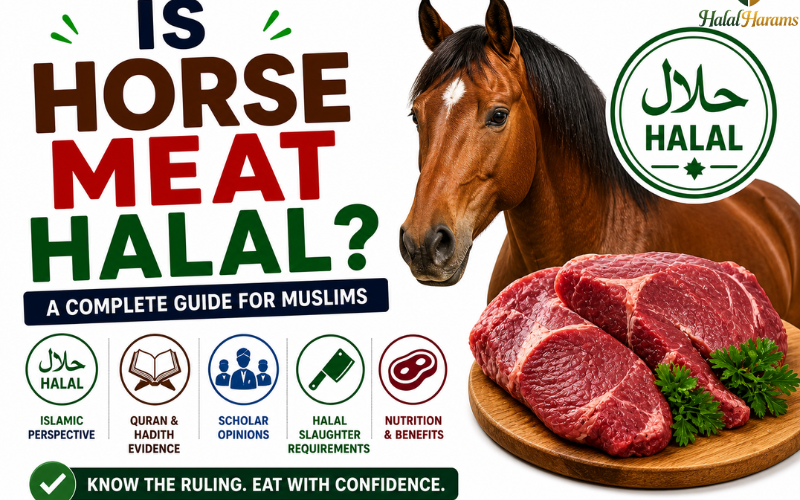
Horse meat is eaten in some parts of the world, although it is not a common meat in many Muslim communities. This raises an important question for Muslims: Is horse meat halal in Islam?
The general answer is yes, horse meat is considered halal by many Islamic scholars. There are authentic Islamic teachings that mention horses and show that eating horse meat is permissible. However, there is some difference of opinion among scholars, especially in the Hanafi school. Some Hanafi scholars consider horse meat makruh (disliked) rather than clearly haram, while other scholars allow it.
The way the horse is slaughtered also matters. Like other land animals, a horse intended for halal consumption should be slaughtered according to Islamic requirements. If it is killed or prepared in a way that does not meet those requirements, the meat may not be halal.
Another point is the source of the meat. If you are buying horse meat, it is important to know where it came from and how it was slaughtered. Halal certification can make this easier to confirm.
In this guide, you will learn what Islamic scholars say about horse meat, why opinions differ, and what Muslims should check before eating it.
Is Horse Meat Halal or Haram?
Short Answer
Horse meat is considered halal by the majority of Islamic scholars, but some scholars—especially within the Hanafi school—consider it disliked (makruh), though not strictly haram.
Understanding Halal Meat in Islam
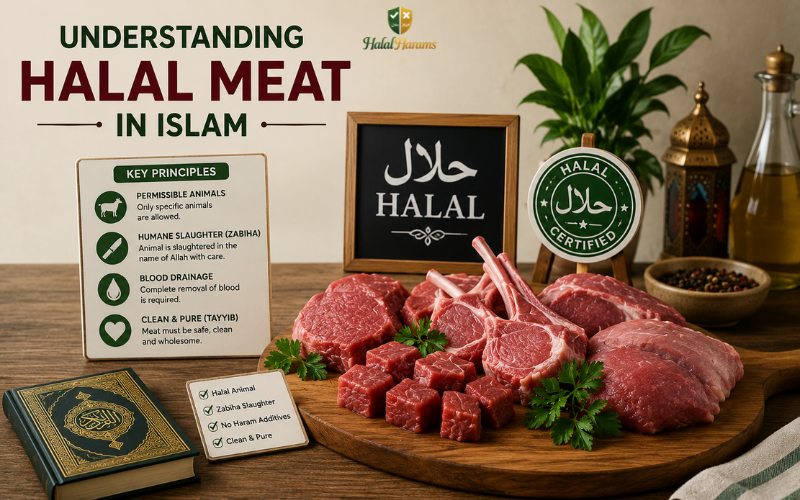
Before discussing horse meat specifically, it is important to understand the general rules of halal meat.
For meat to be halal:
- The animal must be permissible
- It must be slaughtered according to Islamic law (Zabiha)
- The name of Allah must be recited
- Blood must be fully drained
- The animal must be healthy at the time of slaughter
👉 These conditions apply to most land animals.
Is Horse Meat Mentioned in Islam?
Yes, horses are mentioned in Islamic texts, but primarily for riding and transportation rather than consumption.
The Quran states:
“And (He created) horses, mules, and donkeys for you to ride and as adornment…” (Quran 16:8)
This verse highlights their use but does not explicitly forbid eating them.
Hadith Evidence About Horse Meat
There are authentic narrations (Hadith) regarding the consumption of horse meat.
One well-known narration states:
- The Prophet Muhammad (peace be upon him) permitted the eating of horse meat
Another narration mentions:
- Horse meat was consumed during the time of the Prophet
👉 These hadiths are key evidence for permissibility.
Related Post: Is Octopus Halal
Scholarly Opinions on Horse Meat
Islamic scholars have different views on horse meat.
Scholarly Views
| School of Thought | Opinion on Horse Meat |
|---|---|
| Hanafi | ⚠️ Makruh (disliked but allowed) |
| Shafi‘i | ✅ Halal |
| Hanbali | ✅ Halal |
| Maliki | ✅ Halal |
👉 The majority consider it halal.
Why Some Scholars Consider It Makruh
The Hanafi school considers horse meat makruh (disliked) rather than haram.
Reasons include:
- Horses are valued for riding and work
- Cultural and historical considerations
- Preference to preserve horses
👉 Important: Makruh does NOT mean haram—it means better to avoid but still permissible.
Why Majority Scholars Consider It Halal
Most scholars consider horse meat halal based on:
- Authentic hadith permitting its consumption
- No explicit prohibition in the Quran
- General permissibility of lawful animals
👉 This makes it permissible in most interpretations.
Conditions for Horse Meat to Be Halal
Even if horse meat is considered halal, it must meet standard halal conditions.
Halal Conditions
| Requirement | Explanation |
|---|---|
| Permissible animal | Horse is allowed |
| Zabiha slaughter | Required |
| Allah’s name recited | Mandatory |
| Blood drained | Required |
| Clean processing | No contamination |
👉 Without these, it becomes non-halal.
Comparison: Horse Meat vs Common Meats
Meat Comparison
| Meat Type | Halal Status |
|---|---|
| Chicken | ✅ Halal |
| Beef | ✅ Halal |
| Lamb | ✅ Halal |
| Horse | ✅ Halal (with differences) |
| Pork | ❌ Haram |
👉 Horse meat is generally permissible unlike pork.
Related Post: Is Beef Halal? A Complete Guide for Muslims
Cultural and Regional Practices
Horse meat is consumed in various regions:
- Central Asia
- Mongolia
- Parts of Europe
In many Muslim countries, however, it is less common due to cultural preferences.
👉 Cultural norms can influence acceptance.
Preparation and Cooking Considerations
Even halal meat can become non-halal if improperly handled.
Cooking Factors
| Factor | Requirement |
|---|---|
| Ingredients | Must be halal |
| Cooking utensils | Clean |
| Cross-contamination | Avoid |
| Storage | Separate from non-halal |
👉 Preparation matters as much as sourcing.
Cross-Contamination Risks
Cross-Contamination Overview
| Area | Risk |
|---|---|
| Shared grills | Medium |
| Utensils | Medium |
| Processing plants | High |
👉 Always verify preparation conditions.
Nutritional Benefits of Horse Meat
Horse meat is known for its nutritional value.
Nutritional Overview
| Nutrient | Benefit |
|---|---|
| Protein | High |
| Iron | High |
| Fat | Low |
| Vitamins | B12 |
👉 It is often leaner than beef.
When Horse Meat Is Clearly Halal
It is halal when:
- Slaughtered according to Islamic law
- No contamination occurs
- Following majority scholarly opinion
When It May Be Avoided
It may be avoided when:
- Following Hanafi preference
- Cultural discomfort exists
- Doubt about slaughter or sourcing
👉 Personal choice plays a role.
Common Misconceptions
“Horse meat is haram”
Not true—majority consider it halal.
“All scholars agree”
There is some difference of opinion.
“Makruh means forbidden”
Makruh means disliked, not haram.
Why This Topic Matters
Understanding whether horse meat is halal is important because:
- It is consumed globally
- There are differing scholarly opinions
- It helps Muslims make informed decisions
Related Post: Is Wingstop Halal? Complete Guide for Muslims(2026)
FAQs
Is horse meat halal in Islam?
Yes, it is halal according to the majority of scholars.
Is horse meat haram?
No, it is not haram, but some consider it disliked.
Can Muslims eat horse meat?
Yes, if it is slaughtered according to Islamic law.
Why do some scholars dislike it?
Because horses are traditionally used for riding and work.
Is horse meat halal in the Hanafi school?
It is considered makruh (disliked) but not forbidden.
What is the safest option?
Follow your school of thought and ensure proper halal sourcing.
Final Remarks
Horse meat is a permissible food in Islam according to the majority of scholars, supported by authentic hadith and the absence of any clear prohibition. While the Hanafi school considers it makruh, this classification does not make it haram but simply indicates that avoiding it may be preferable. Ultimately, the decision depends on your personal adherence to a particular school of thought and your level of comfort. As with all halal foods, proper slaughter, clean handling, and avoiding contamination are essential. By staying informed and mindful, Muslims can confidently make dietary choices that align with their faith.
