
Kombucha is a fermented tea that has become popular among Muslims looking for a refreshing alternative to ordinary soft drinks. But because kombucha is made through fermentation, many people naturally ask, “Is kombucha halal, or does the fermentation make it haram?”
The answer depends mainly on the ingredients, how the kombucha is produced, and the amount of alcohol that may naturally develop during fermentation. In general, plain kombucha can be halal when it is made from halal ingredients and the fermentation does not result in an intoxicating alcoholic beverage.
However, not every bottle should automatically be treated as halal. Some commercial products may contain additional ingredients or have higher alcohol levels, so checking the label and product information is a sensible step for Muslims.
Is Kombucha Halal or Haram?
Yes, kombucha is generally halal when it is made from permissible ingredients and does not contain an intoxicating amount of alcohol. Kombucha is produced by fermenting sweetened tea with a culture of yeast and beneficial bacteria. During fermentation, a small amount of alcohol can naturally develop, but this does not automatically make the drink haram.
The main issue is the final product, not simply the fact that fermentation takes place. Islamic rulings concerning intoxicants focus on whether a drink causes intoxication and whether it is being produced or consumed as an alcoholic beverage.
Commercial kombucha can vary from one brand to another. Some products may contain added flavors, extracts, or other ingredients that require checking. If the label shows a low or trace alcohol level and the drink is non-intoxicating, it is generally permissible. If the product contains an intoxicating level of alcohol, it should be avoided.
What Is Kombucha?
Kombucha is a fermented tea beverage typically made from:
- Tea (usually black or green tea)
- Sugar
- Water
- SCOBY (Symbiotic Culture of Bacteria and Yeast)
The SCOBY initiates fermentation by consuming sugar and producing beneficial compounds, organic acids, carbonation, and trace amounts of alcohol.
The resulting beverage has a slightly sweet, tangy, and fizzy taste that many people enjoy.
Kombucha has been consumed for centuries and is believed to have originated in East Asia before spreading throughout the world.
How Is Kombucha Made?
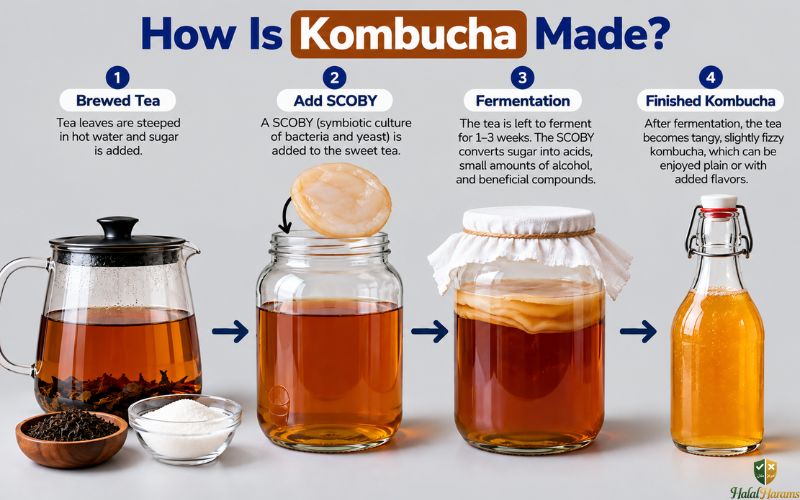
The production process of kombucha involves controlled fermentation.
Basic Kombucha Production Process
| Step | Description |
|---|---|
| Tea Preparation | Tea is brewed and sweetened with sugar |
| Cooling | The tea is cooled to room temperature |
| SCOBY Addition | Culture is added to begin fermentation |
| Fermentation | Yeast and bacteria consume sugar |
| Flavoring | Fruits or herbs may be added |
| Bottling | The beverage is packaged and distributed |
During fermentation, the yeast converts sugar into alcohol, while bacteria convert much of that alcohol into organic acids.
This natural process is the primary reason kombucha’s halal status is debated.
Why Does Kombucha Contain Alcohol?
Alcohol is a natural byproduct of fermentation.
When yeast consumes sugar, it produces:
- Alcohol (ethanol)
- Carbon dioxide
- Various flavor compounds
Even though bacteria subsequently convert much of the alcohol into acids, a small amount often remains in the finished beverage.
The amount of alcohol depends on factors such as:
- Fermentation duration
- Storage conditions
- Sugar levels
- Manufacturing methods
- Product formulation
This alcohol content is the central issue when determining whether kombucha is halal.
Does Kombucha Always Contain Alcohol?
Yes, traditional kombucha typically contains some alcohol because of the fermentation process.
However, the amount can vary significantly.
Typical Alcohol Levels in Kombucha
| Product Type | Approximate Alcohol Content |
|---|---|
| Traditional Kombucha | 0.5% or less |
| Raw Kombucha | May vary |
| Extended Fermentation Kombucha | Sometimes higher |
| Commercial Non-Alcoholic Kombucha | Usually below regulatory limits |
| Hard Kombucha | Often 4% to 8% or higher |
Not all kombucha products contain the same amount of alcohol, making it important to check product labels.
Related Post: What Does Halal Food Mean? Complete Guide(2026)
What Is Hard Kombucha?
Hard kombucha is a special type of kombucha intentionally fermented to increase alcohol content.
Unlike regular kombucha, hard kombucha is produced specifically as an alcoholic beverage.
Its alcohol content often resembles that of beer.
Because it is intentionally produced for alcoholic consumption, hard kombucha is generally considered haram by Islamic scholars.
Muslims should avoid hard kombucha products.
Is Kombucha Halal?
The halal status of kombucha depends largely on its alcohol content and how Islamic scholars interpret fermentation-based beverages.
There are generally two perspectives:
View One: Certain Kombucha Products May Be Halal
Some scholars and halal authorities permit kombucha if:
- The alcohol content remains extremely low.
- Intoxication is not possible through normal consumption.
- The product is not intended as an alcoholic drink.
- The alcohol develops naturally during fermentation.
Under this view, some commercially produced kombucha products may be considered halal.
View Two: Kombucha Should Be Avoided
Other scholars take a stricter approach.
They argue that because alcohol is present in the final beverage, Muslims should avoid kombucha altogether.
These scholars often recommend choosing alternative drinks that do not involve alcohol-producing fermentation.
As a result, Muslims may encounter differing opinions depending on their school of thought and local halal authority.
Islamic Principles Regarding Alcohol
Understanding the Islamic prohibition of alcohol helps explain the discussion surrounding kombucha.
Islam prohibits intoxicants and substances that impair judgment.
Numerous Quranic verses and authentic Hadith emphasize avoiding intoxicating drinks.
A commonly cited principle states:
Whatever intoxicates in large amounts is prohibited even in small amounts.
Scholars differ on how this principle applies to fermented foods and beverages that naturally contain trace amounts of alcohol.
This difference contributes to the ongoing debate regarding kombucha.
Scholarly Opinions on Kombucha
Islamic scholars generally evaluate kombucha by considering:
- Alcohol content
- Source of alcohol
- Production process
- Purpose of the beverage
- Potential for intoxication
Because kombucha is relatively new to many Muslim communities, scholarly opinions continue to evolve as more information becomes available.
Some halal certification bodies permit certain low-alcohol kombucha products, while others remain cautious.
Consumers should follow trusted scholars and certification authorities they consider reliable.
Is Commercial Kombucha Halal?
Many commercial kombucha brands attempt to keep alcohol levels below legal limits for non-alcoholic beverages.
These products often undergo testing to ensure compliance with regulations.
However, halal status cannot be determined solely by legal classification.
Muslims should consider:
- Alcohol percentage
- Certification status
- Manufacturing methods
- Scholarly guidance
Checking for halal certification can provide additional confidence.
Is Homemade Kombucha Halal?
Homemade kombucha presents additional challenges.
Unlike commercial products, homemade fermentation may produce unpredictable alcohol levels.
Factors affecting alcohol production include:
- Fermentation duration
- Temperature
- Sugar concentration
- Storage methods
Because alcohol content can vary significantly, some scholars advise caution regarding homemade kombucha.
Those concerned about halal compliance may prefer commercially tested and certified products.
Related Post: Is HI-CHEW Halal? Complete Guide for Muslims(2026)
Halal Certification and Kombucha
Some kombucha products receive halal certification after evaluation by recognized halal authorities.
Certification organizations typically review:
- Ingredients
- Fermentation methods
- Alcohol levels
- Production facilities
- Quality control measures
Benefits of Halal-Certified Kombucha
| Benefit | Explanation |
|---|---|
| Independent Review | Product has undergone halal assessment |
| Ingredient Verification | Ingredients are evaluated |
| Manufacturing Oversight | Production methods are reviewed |
| Consumer Confidence | Easier purchasing decisions |
| Transparency | Greater clarity regarding compliance |
Halal certification can simplify decision-making for Muslim consumers.
Ingredients Commonly Found in Kombucha
Most kombucha products contain simple ingredients.
Typical Kombucha Ingredients
| Ingredient | Generally Halal |
|---|---|
| Water | Yes |
| Tea | Yes |
| Sugar | Yes |
| SCOBY Culture | Usually yes |
| Fruit Flavorings | Usually yes |
| Herbal Extracts | Usually yes |
The primary concern is not the ingredients themselves but the fermentation process and resulting alcohol content.
Is Raw Kombucha Halal?
Raw kombucha is less processed and may continue fermenting after packaging.
Because fermentation may continue during storage, alcohol levels can sometimes fluctuate.
For this reason, some Muslim consumers prefer pasteurized kombucha products that have undergone greater quality control.
Whether raw kombucha is halal depends on the specific product and the scholarly opinion followed.
Is Pasteurized Kombucha Halal?
Pasteurized kombucha undergoes heat treatment to stop further fermentation.
This process helps stabilize:
- Alcohol levels
- Flavor
- Shelf life
Some consumers prefer pasteurized products because alcohol content is often more consistent and easier to monitor.
However, halal status still depends on the product’s final composition and certification.
Health Benefits Associated With Kombucha
Many people consume kombucha because of its potential health benefits.
Commonly Reported Benefits
| Potential Benefit | Description |
|---|---|
| Probiotics | Supports digestive health |
| Organic Acids | Produced during fermentation |
| Antioxidants | Derived from tea |
| Hydration | Contributes to fluid intake |
| Flavor Alternative | Alternative to sugary soft drinks |
While kombucha may offer benefits, it should not be viewed as a cure or treatment for medical conditions.
Alternatives to Kombucha for Muslims
For Muslims who wish to avoid any uncertainty regarding alcohol, several alternatives are available.
Examples include:
- Herbal tea
- Green tea
- Black tea
- Sparkling water
- Fruit-infused water
- Probiotic yogurt drinks
- Alcohol-free fermented beverages
These options can provide refreshment without raising concerns about fermentation-related alcohol.
Related Post: Is Domino’s Halal? A Clear Guide for Muslims Before Ordering
How to Determine Whether a Kombucha Product Is Halal
Before purchasing kombucha, consider the following steps.
Check the Label
Look for:
- Alcohol percentage
- Product description
- Regulatory classification
Look for Halal Certification
Certification from a reputable authority can provide reassurance.
Research the Brand
Many manufacturers publish detailed information about their fermentation processes.
Consult Trusted Scholars
If uncertain, seek guidance from knowledgeable scholars or local halal organizations.
Common Misconceptions About Kombucha
Kombucha Is Completely Alcohol-Free
Most traditional kombucha contains at least trace amounts of alcohol due to fermentation.
All Kombucha Is Haram
Some scholars permit certain low-alcohol kombucha products under specific conditions.
Hard Kombucha and Regular Kombucha Are the Same
Hard kombucha is intentionally alcoholic and differs significantly from regular kombucha.
Halal Certification Is Unnecessary
Certification can be extremely helpful when evaluating fermented beverages.
If you found this article helpful, check out more Halal and Haram guides below to expand your knowledge:
- Is Dr Pepper Halal? A Complete Guide for Muslim(2026)
- Is Butter Halal? Complete Guide For Muslims(2026)
- Is Mirin Halal? Complete Guide for Muslim(2026)
- Is Tuna Halal? Complete Guide For Muslims(2026)
- Is Calamari Halal? Complete Guide for Muslims(2026)
- Is Bonchon Halal? Complete Guide for Muslims(2026)
Frequently Asked Questions
Is kombucha halal
The answer depends on the alcohol content, production process, certification status, and the scholarly opinion being followed.
Does kombucha contain alcohol
Yes. Traditional kombucha naturally contains small amounts of alcohol produced during fermentation.
Is hard kombucha halal
No. Hard kombucha is intentionally produced as an alcoholic beverage and is generally considered haram.
Can Muslims drink kombucha
Some scholars permit certain low-alcohol kombucha products, while others advise avoiding them. Consumers should follow trusted scholarly guidance.
Is homemade kombucha halal
Homemade kombucha can produce varying alcohol levels, making halal assessment more difficult.
Does halal-certified kombucha exist
Yes. Some manufacturers produce kombucha products that have received halal certification.
Is kombucha considered an alcoholic drink
Regular kombucha is generally marketed as a fermented tea beverage, while hard kombucha is specifically an alcoholic drink.
Should Muslims avoid kombucha completely
Opinions differ among scholars. Muslims should consult trusted authorities and choose products that align with their understanding of halal requirements.
Final Verdict
Kombucha is generally halal when it is made from halal ingredients and contains only a small, non-intoxicating amount of alcohol produced naturally during fermentation. Fermentation alone does not make a drink haram. The main concern is whether the finished drink can cause intoxication or contains any clearly prohibited ingredients.
Muslims should check the product label before drinking kombucha. Look at the ingredients, alcohol information, and how the drink is marketed. If it is a normal non-alcoholic kombucha made with permissible ingredients and does not intoxicate, it can generally be consumed.
If the alcohol level is unclear, unusually high, or the ingredients are questionable, it is better to avoid the product until its status is verified. For a specific brand or unusual homemade preparation, consult a qualified local scholar.
So, is kombucha halal? Ordinary, non-intoxicating kombucha is generally halal, while intoxicating alcoholic kombucha is haram.
