
Halal food is more than just a type of food. It is a way of eating that follows the rules of Islam. The word “halal” means “allowed” or “lawful” in Arabic. Muslims choose halal food because they want to obey Allah and eat in a clean, honest, and responsible way. These rules apply to meat, drinks, ingredients, and even the way food is prepared and served.
Many people think halal only means avoiding pork, but it is much more than that. Halal food should come from lawful sources, be free from harmful or forbidden ingredients, and be handled with care to prevent contamination. Animals used for halal meat must be treated kindly and slaughtered according to Islamic teachings.
Today, halal food is enjoyed in many countries by both Muslims and non-Muslims. Some people choose it because they trust the quality, hygiene, and ethical standards that halal rules promote. As halal products become more common, many people also want to understand what makes food halal and how it is different from other types of food.
In this guide, you will learn what halal food really means, which foods are halal or haram, how halal certification works, and why halal eating is important in Islam. By the end, you will have a clear and simple understanding of halal food and its role in everyday life.
Meaning of Halal Food
The word “halal” is an Arabic term that means “permissible” or “lawful.” In the context of food, it refers to items that are allowed for Muslims to consume.
The opposite of halal is “haram,” which means forbidden. Foods that fall into the haram category are strictly prohibited.
Halal food is not just about ingredients—it also includes:
- How the food is sourced
- How animals are treated
- How the food is processed and prepared
- Cleanliness and hygiene standards
This makes halal a complete lifestyle approach rather than just a diet.
Basic Rules of Halal Food
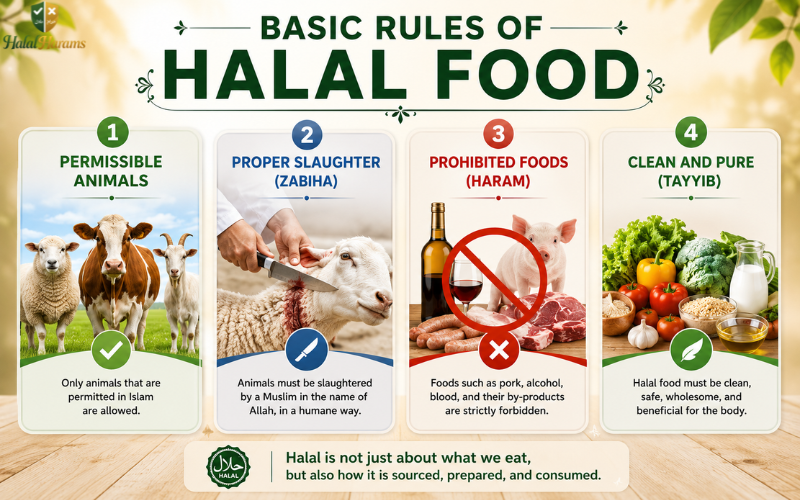
To understand halal food clearly, it’s important to know the main rules that define it.
1. Permissible Animals
Most animals are halal, but they must meet certain conditions. Animals like:
- Cows
- Chickens
- Goats
- Sheep
are generally halal if slaughtered correctly.
2. Proper Slaughter (Zabiha)
For meat to be halal, the animal must be slaughtered according to Islamic guidelines, known as Zabiha. This includes:
- Mentioning the name of Allah before slaughter
- Using a sharp knife for a quick and humane cut
- Ensuring the blood is fully drained from the body
3. Prohibited Foods (Haram)
Certain foods are strictly forbidden, including:
- Pork and all pork products
- Alcohol and intoxicants
- Blood
- Animals that die without proper slaughter
- Carnivorous animals (like lions or eagles)
4. Clean and Pure (Tayyib)
Halal food must also be clean, safe, and pure. This concept is known as “tayyib,” meaning wholesome and good for health.
Related Post: Is Turkey Bacon Halal or Haram? Islamic Guide (2026)
Examples of Halal Food
Halal food includes a wide variety of everyday items, such as:
- Fresh fruits and vegetables
- Grains like rice, wheat, and oats
- Dairy products (if free from haram additives)
- Halal-certified meat and poultry
- Seafood (generally considered halal in most interpretations)
Processed foods can also be halal if they do not contain forbidden ingredients like alcohol-based flavorings or gelatin derived from non-halal sources.
What Makes Food Haram?
Understanding what is not halal is equally important.
Pork
Pork is completely forbidden in Islam, including:
- Bacon
- Ham
- Sausages made from pork
Alcohol
Any food or drink containing alcohol is not halal, even in small amounts.
Improper Slaughter
Even halal animals become haram if they are not slaughtered according to Islamic rules.
Cross-Contamination
Food can become non-halal if it comes into contact with haram substances during preparation or processing.
Halal Certification
In many countries, halal certification helps consumers identify whether a product meets Islamic dietary standards.
Halal-certified products usually have a label from a recognized certification authority. This ensures:
- Ingredients are halal
- Production processes follow Islamic guidelines
- There is no contamination with haram substances
Certification is especially important for packaged and processed foods.
Benefits of Halal Food
Halal food is not only about religious compliance—it also offers several practical benefits.
1. Ethical Treatment of Animals
Islamic guidelines emphasize humane treatment of animals, ensuring minimal suffering.
2. Cleanliness and Hygiene
Halal standards require strict cleanliness, which promotes safer food consumption.
3. Health Considerations
The avoidance of harmful substances like alcohol and improperly processed meat can contribute to better health.
4. Transparency
Halal certification often involves detailed checks, making the food supply more transparent and trustworthy.
Related Post: Are Welch’s Fruit Snacks Halal? Complete(2026)
Common Misconceptions About Halal Food
“Halal food is only for Muslims”
This is not true. Anyone can eat halal food. Many non-Muslims choose it for ethical or health reasons.
“Halal food is limited”
Halal cuisine is incredibly diverse, covering dishes from around the world including Middle Eastern, Asian, African, and Western foods.
“All seafood is haram”
In most Islamic interpretations, seafood is considered halal.
Halal Food in Modern Life
Today, halal food is widely available across the globe. Restaurants, supermarkets, and food brands are increasingly offering halal options.
You can find halal:
- Restaurants and fast food
- Packaged snacks and beverages
- Meat shops and butcheries
- Online food delivery services
This accessibility makes it easier than ever to follow halal dietary guidelines.
How to Identify Halal Food
If you want to ensure your food is halal, here are some simple tips:
- Look for halal certification labels
- Check ingredient lists carefully
- Avoid products with alcohol or unclear additives
- Ask restaurant staff about halal options
- Buy from trusted halal suppliers
If you found this guide helpful, explore these related Halal and Harams articles for more answers to common food and ingredient questions.
- Is Dave’s Hot Chicken Halal
- Is Bovine Gelatin Halal
- Is Boba Halal
- Is Swedish Fish Halal
- Are Marshmallows Halal
FAQs
What is halal food?
Halal food is food that is allowed under Islamic law. It must be free from forbidden ingredients and prepared according to Islamic guidelines.
Why is halal food important in Islam?
Halal food is important because Muslims follow Allah’s commands. Eating halal is considered an act of worship and helps ensure food is lawful and pure.
Is all vegetarian food halal?
Not always. Vegetarian food can still contain alcohol, animal-based additives, or other haram ingredients, so the ingredients should always be checked.
What foods are considered haram?
Foods such as pork, blood, alcohol, meat from animals not slaughtered according to Islamic rules, and harmful substances are considered haram.
What does Tayyib mean in halal food?
Tayyib means clean, pure, safe, and wholesome. In Islam, food should be both halal (lawful) and tayyib (good and healthy).
How can I know if a product is halal?
Check the ingredient list and look for a trusted halal certification logo on the packaging. If you’re unsure, contact the manufacturer.
Can Muslims eat seafood?
Most scholars consider fish and many types of seafood halal, but opinions differ on some sea animals depending on the Islamic school of thought.
Is halal food healthier than regular food?
Halal food is not automatically healthier, but halal standards encourage cleanliness, proper handling, and high-quality ingredients.
Conclusion
Halal food is more than just a dietary choice—it is a complete system that emphasizes permissibility, cleanliness, ethics, and responsibility. It guides Muslims in making food choices that align with their faith while also promoting health and well-being.
By understanding what halal food is, its rules, and its benefits, you can make more informed decisions whether you follow a halal lifestyle or simply want to explore it.
