
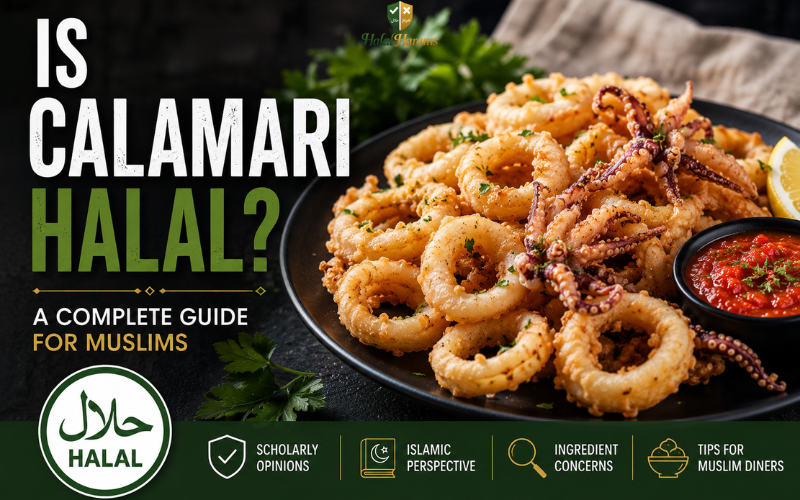
Calamari is the name commonly used for squid prepared as food. Whether it is halal depends on the Islamic school of thought you follow. This matters because Muslim scholars have different views about which sea animals are permissible to eat.
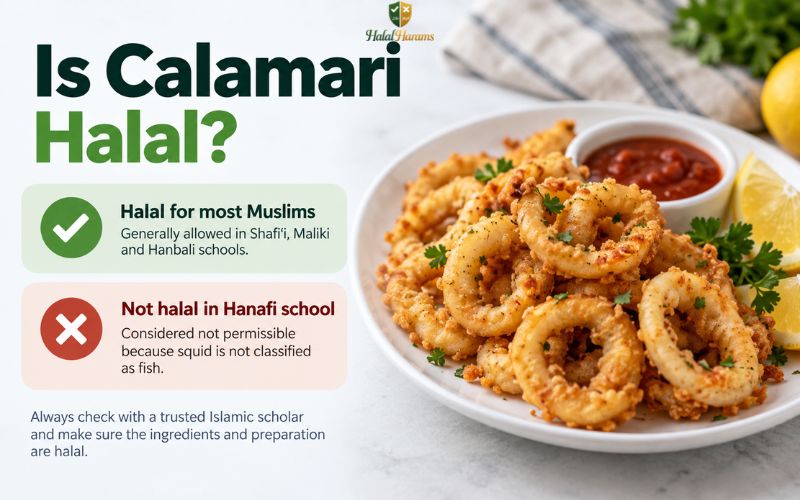
According to the Hanafi school, squid and calamari are generally not considered halal because they are not classified as fish. Muslims who follow Hanafi fiqh are therefore advised to avoid them.
The Shafi‘i, Maliki, and Hanbali schools generally consider squid halal because they allow a wider range of sea animals. So, there is a genuine difference of opinion on this issue.
There is also another point to consider. Even when calamari itself is considered permissible, the way it is prepared matters. Batter, sauces, cooking oil, and other ingredients should not contain haram substances.
For Muslims, the best choice is to follow the ruling of their trusted school of thought or ask a knowledgeable local scholar when unsure.
One line Answer:
Yes, calamari (squid) is generally considered halal by most Islamic scholars, provided it is not cooked with haram ingredients or contaminated during preparation.
What Is Calamari?
Calamari is a culinary term commonly used to describe squid prepared as food.
It is often served in various forms, including:
- Fried calamari rings
- Grilled squid
- Stuffed squid
- Seafood pasta
- Seafood salads
- Asian stir-fried squid dishes
The word “calamari” originates from Italian and refers to squid used in cooking.
Although many people think calamari is a separate seafood species, it is actually squid prepared as a dish.
Is Calamari Halal?
Yes, according to the majority of Islamic scholars, calamari is halal because it is made from squid, which is a sea creature.
Most scholars classify squid as permissible seafood and therefore consider calamari halal as long as it is prepared using halal ingredients.
However, the final ruling may depend on:
- The Islamic school of thought followed
- Additional ingredients used
- Cooking methods
- Cross-contamination risks
Calamari Halal Status Overview
| Item | Halal Status |
|---|---|
| Plain squid | ✅ Halal (majority opinion) |
| Grilled calamari | ✅ Usually halal |
| Fried calamari | ✅ Usually halal |
| Calamari with alcohol-based sauce | ❌ Not halal |
| Calamari cooked with pork products | ❌ Not halal |
The squid itself is generally considered permissible, but preparation methods matter.
Understanding the Islamic View on Seafood
Islamic scholars often discuss seafood separately from land animals.
Unlike cattle, sheep, or poultry, sea creatures generally do not require traditional Islamic slaughter.
Many scholars rely on Quranic teachings that indicate the food of the sea has been made lawful for believers.
Because squid lives entirely in the ocean, it falls under the category of marine life discussed by scholars when determining halal status.
Related Post: Is Bonchon Halal
Why Most Scholars Consider Calamari Halal
The majority opinion is based on the principle that sea creatures are generally permissible.
Scholars supporting this view note that:
- Squid lives in the sea.
- It is not a predatory land animal.
- It is not intoxicating.
- It has been consumed historically in many Muslim societies.
As a result, most contemporary scholars classify calamari as halal.
Scholarly Opinions on Calamari
Islamic schools of jurisprudence have discussed marine animals extensively.
Shafi’i School
The Shafi’i school generally permits all creatures that live in the sea.
According to this view:
- Fish are halal.
- Squid is halal.
- Calamari is halal.
- Octopus is halal.
- Shrimp is halal.
Therefore, calamari is clearly permissible.
Maliki School
The Maliki school also permits most forms of seafood.
Calamari is generally regarded as halal by Maliki scholars.
Hanbali School
Hanbali scholars likewise permit sea creatures unless there is evidence prohibiting them.
Calamari is therefore considered halal.
Hanafi School
The Hanafi school traditionally focuses more heavily on fish when discussing seafood.
Some classical Hanafi scholars differed regarding certain marine animals.
However, many contemporary Hanafi scholars permit squid and calamari due to their classification as seafood and widespread acceptance among scholars.
Islamic Schools and Calamari
| School | Opinion |
|---|---|
| Shafi’i | Halal |
| Maliki | Halal |
| Hanbali | Halal |
| Hanafi | Differences exist, many modern scholars allow it |
The majority view supports the permissibility of calamari.
Does Calamari Require Islamic Slaughter?
No.
One reason seafood is often easier for Muslims to consume is that most scholars do not require traditional Islamic slaughter for marine animals.
This means:
- Squid does not require dhabihah.
- Calamari does not require Islamic slaughter.
- Seafood generally follows different rules than land animals.
As a result, the focus shifts to ingredients and preparation methods rather than slaughter requirements.
Can Calamari Become Haram?
Yes.
Even though squid itself is generally halal, the final dish can become haram if prohibited ingredients are added.
Examples include:
- Alcohol-based sauces
- Pork products
- Non-halal flavorings
- Haram additives
Muslims should evaluate the complete recipe rather than focusing only on the squid itself.
Fried Calamari and Halal Concerns
Fried calamari is among the most popular calamari dishes worldwide.
Typical ingredients include:
- Squid rings
- Flour or batter
- Seasonings
- Cooking oil
Most fried calamari is halal if the ingredients are permissible.
However, Muslims should consider:
- Shared fryers
- Alcohol-containing marinades
- Non-halal flavorings
These factors can affect the halal status.
Is Restaurant Calamari Halal?
Restaurant calamari requires additional scrutiny.
Potential concerns include:
- Shared cooking equipment
- Shared frying oil
- Alcohol-based sauces
- Ingredient transparency
Many restaurants prepare multiple foods in the same kitchen, which may increase the possibility of cross-contamination.
When in doubt, asking restaurant staff is recommended.
Restaurant Calamari Checklist
| Question | Importance |
|---|---|
| Is squid the primary ingredient | High |
| Any alcohol in sauces | High |
| Shared fryer used | Medium |
| Pork ingredients present | High |
| Ingredient list available | Helpful |
This checklist can help Muslims make informed decisions.
See Also: Is Squid Halal
Is Frozen Calamari Halal?
Frozen calamari sold in supermarkets is usually halal if:
- It contains squid.
- No haram additives are included.
- Flavorings are permissible.
Consumers should carefully review:
- Ingredient labels
- Seasoning blends
- Marinades
- Coating ingredients
Halal certification can provide additional reassurance.
Calamari and Cross-Contamination
Cross-contamination occurs when halal food comes into contact with non-halal substances.
Examples include:
- Frying calamari in oil used for pork products
- Using shared utensils
- Shared preparation surfaces
- Storage near non-halal ingredients
Some Muslims consider cross-contamination a significant concern and prefer establishments that maintain separate preparation procedures.
Nutritional Benefits of Calamari
Calamari offers several nutritional advantages.
It contains:
- High-quality protein
- Vitamin B12
- Selenium
- Copper
- Zinc
- Omega-3 fatty acids
Nutritional Benefits of Calamari
| Nutrient | Benefit |
|---|---|
| Protein | Supports muscle health |
| Vitamin B12 | Helps nervous system function |
| Selenium | Supports immune health |
| Copper | Assists energy production |
| Omega-3 Fatty Acids | Supports heart health |
When consumed in moderation, calamari can be part of a balanced diet.
Calamari in Muslim Countries
Calamari is widely consumed in many Muslim-majority countries.
Examples include:
- Indonesia
- Malaysia
- Turkey
- Egypt
- Saudi Arabia
- United Arab Emirates
Its widespread acceptance across the Muslim world reflects the majority scholarly opinion that squid is halal.
See Also: Is Olive Garden Halal
Common Calamari Dishes and Their Halal Status
Different preparations may affect permissibility.
Examples include:
- Fried calamari
- Grilled calamari
- Stuffed squid
- Seafood pasta
- Calamari salad
Common Calamari Preparations
| Dish | Halal Status |
|---|---|
| Plain fried calamari | Usually halal |
| Grilled calamari | Usually halal |
| Calamari salad | Usually halal |
| Calamari with wine sauce | Not halal |
| Calamari with pork ingredients | Not halal |
The ingredients used alongside squid determine the final ruling.
Common Misconceptions About Calamari
Calamari Is Not Halal Because It Is Not a Fish
Many scholars permit marine creatures beyond traditional fish.
Calamari Is Different From Squid
Calamari is simply a culinary term for squid prepared as food.
All Seafood Is Automatically Halal
Preparation methods and ingredients still matter.
Fried Calamari Is Always Halal
Cooking oils, batter ingredients, and cross-contamination must also be considered.
How Muslims Can Ensure Calamari Is Halal
To minimize doubt, Muslims can:
- Buy from reputable suppliers
- Read ingredient labels carefully
- Avoid alcohol-based sauces
- Ask restaurants about preparation methods
- Look for halal-certified seafood products
These steps help ensure the meal complies with Islamic dietary guidelines.
Why Understanding Calamari’s Halal Status Matters
Seafood rulings are often discussed differently among Islamic schools of thought. Understanding the scholarly perspectives allows Muslims to make informed dietary choices based on knowledge rather than assumptions.
Because calamari is widely consumed around the world, knowing its halal status helps Muslims dine confidently while remaining consistent with Islamic dietary principles.
See Also: Is Balsamic Vinegar Halal
FAQs
Is calamari halal in Islam
Yes. The majority of Islamic scholars consider calamari halal because it is made from squid, a permissible sea creature.
Is squid halal
Yes. Most scholars regard squid as halal seafood.
Does calamari require Islamic slaughter
No. Seafood generally does not require traditional Islamic slaughter according to the majority opinion.
Is fried calamari halal
Usually yes, provided the ingredients, batter, and cooking oil are halal.
Can calamari become haram
Yes. It may become haram if prepared with alcohol, pork products, or other prohibited ingredients.
Is frozen calamari halal
Most frozen calamari products are halal if they contain permissible ingredients and no haram additives.
Final Remarks
In short, whether calamari is halal depends on the Islamic school of thought you follow. Hanafi scholars generally consider squid and calamari impermissible because they are not fish, while the Shafi‘i, Maliki, and Hanbali schools generally permit them as seafood.
If you follow the Hanafi school, avoiding calamari is the safest choice. If you follow another school that permits squid, you can eat it as long as the ingredients and cooking method are also halal. When there is uncertainty, checking with a trusted Islamic scholar can help you make a choice that follows your beliefs with confidence.
