
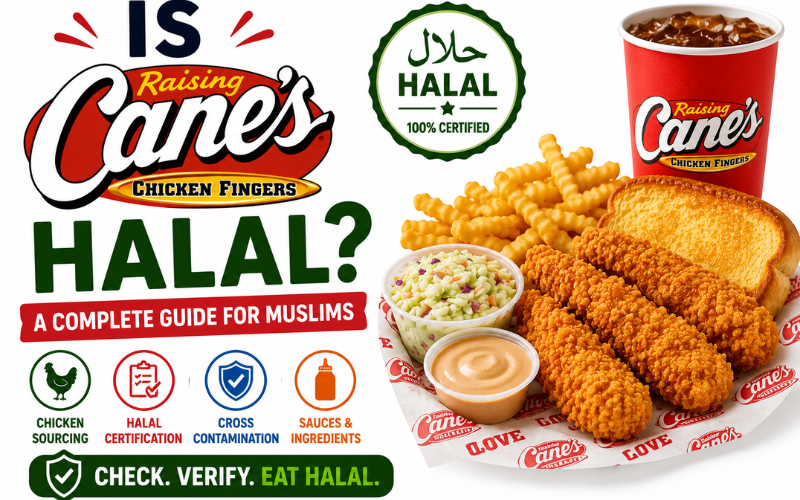
Raising Cane’s is a popular fast-food restaurant known for its chicken fingers, crinkle-cut fries, Texas toast, coleslaw, and Cane’s Sauce. The restaurant focuses mainly on chicken meals, which makes its halal status an important question for many Muslim customers: Is Raising Cane’s halal?
The answer is not the same at every location. Raising Cane’s does not have one universal halal status for all of its restaurants. In some areas, the chicken may come from halal suppliers, while other locations may use non-halal chicken. This means the answer can depend on the specific restaurant, local supplier, and food preparation process.
It is also important to look beyond the chicken. Sauces, seasonings, bread, and cooking methods may contain ingredients that need to be checked. Shared fryers or cooking equipment can also matter for people who strictly avoid contact with non-halal foods.
If you plan to eat at Raising Cane’s, check the specific location and current halal information before ordering. In this guide, you will learn what to check and how to determine whether your local Raising Cane’s is halal.
Is Raising Cane’s Halal or Haram?
Short Answer:
Raising Cane’s is halal only in certain countries or locations where halal-certified chicken is used. Most Raising Cane’s restaurants in the United States are not halal-certified.
What Is Raising Cane’s?
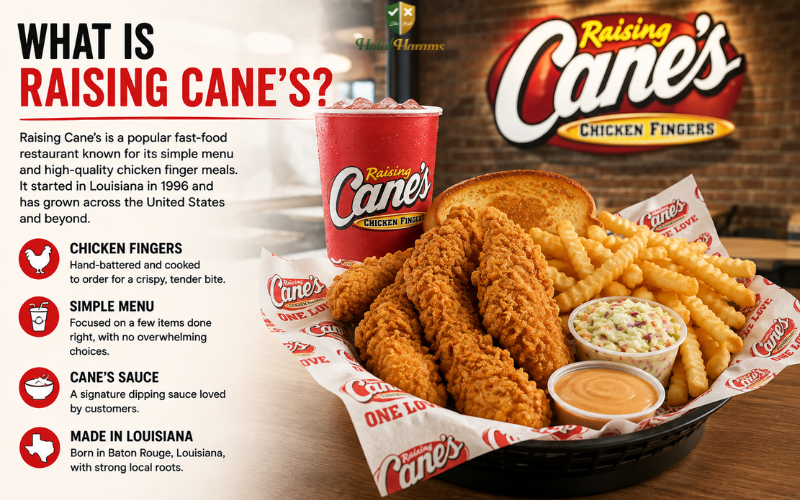
Raising Cane’s is an American fast-food chain specializing mainly in chicken finger meals.
Popular menu items include:
- Chicken fingers
- Fries
- Texas toast
- Coleslaw
- Cane’s Sauce
The restaurant is known for its simple menu and freshly prepared chicken meals.
Why Halal Status Matters
For food to be halal in Islam:
- Animals must be slaughtered according to Islamic law
- Pork and alcohol must be avoided
- Food should not be contaminated with haram ingredients
- Meat must come from halal-certified sources
Chicken itself is halal, but the slaughter method determines permissibility.
Is Raising Cane’s Halal?
The General Answer
Most Raising Cane’s locations in the United States are not halal-certified.
However:
- Some international locations may serve halal chicken
- Halal status varies by country
- Certification differs by region
Muslims should always verify local halal certification.
Raising Cane’s Halal Status by Country
Halal availability changes depending on location.
Country-Based Halal Status
| Country | Halal Status |
|---|---|
| Saudi Arabia | ✅ Halal |
| UAE | ✅ Halal |
| Kuwait | ✅ Halal |
| USA | ❌ Not halal |
| Canada | ❌ Mostly not halal |
| UK | ⚠️ Limited information |
Middle Eastern locations usually follow halal standards.
Why Most US Locations Are Not Halal
Most American branches do not advertise halal certification because:
- Chicken may not be halal-slaughtered
- Suppliers are not halal-certified
- Cross-contamination risks exist
This makes the chicken unsuitable for strict halal consumption.
Chicken Sourcing at Raising Cane’s
The halal status depends mainly on chicken sourcing.
Chicken Source Concerns
| Factor | Concern |
|---|---|
| Slaughter method | Major issue |
| Certification | Often unavailable |
| Supplier transparency | Limited |
Without halal slaughter, meat is generally considered non-halal.
Are the Fries Halal?
Raising Cane’s fries are usually made from potatoes and vegetable oil.
Fries Halal Status
| Item | Halal Status |
|---|---|
| Fries | ✅ Usually halal |
| Frying oil | ⚠️ Check |
| Shared fryers | ⚠️ Possible contamination |
Shared fryers can be a concern for strict halal observers.
See Also: Is Sushi Halal
Is Cane’s Sauce Halal?
Cane’s Sauce is one of the restaurant’s signature items.
Sauce Ingredient Concerns
| Ingredient Type | Concern |
|---|---|
| Flavorings | Usually low risk |
| Emulsifiers | Minor concern |
| Alcohol-based additives | Rare but possible |
Most sauces appear halal-friendly, but official confirmation is limited.
Bread and Texas Toast
Texas toast usually contains:
- Bread
- Butter
- Garlic seasoning
Bread Ingredient Status
| Ingredient | Halal Status |
|---|---|
| Flour | ✅ Halal |
| Butter | ✅ Halal |
| Seasonings | ⚠️ Check additives |
Bread products are generally lower risk than meat items.
Cross-Contamination Risks
Even non-meat items may be affected by shared preparation areas.
Cross-Contamination Areas
| Area | Risk Level |
|---|---|
| Fryers | Medium |
| Cooking surfaces | Medium |
| Utensils | Medium |
| Prep counters | Medium |
Shared kitchen environments matter in halal rulings.
Halal Certification
Halal certification is the clearest way to verify food.
Benefits of Halal Certification
| Benefit | Importance |
|---|---|
| Verified slaughter | High |
| Ingredient approval | High |
| Consumer confidence | High |
Certified restaurants provide more certainty for Muslims.
Why Some International Locations Are Halal
In Muslim-majority countries, Raising Cane’s often:
- Uses halal-certified suppliers
- Follows local halal regulations
- Displays halal certification
This makes those branches more suitable for Muslim consumers.
Related Post: Is Bonchon Halal? Complete Guide for Muslims(2026)
Why Muslims Are Cautious About Raising Cane’s
Many Muslims avoid non-certified fast-food chains because:
- Meat source is unclear
- Cross-contamination is possible
- Staff may not know ingredient details
Avoiding doubtful food is encouraged in Islam.
Scholarly Opinions on Non-Halal Restaurants
Islamic scholars have varying opinions regarding food from non-halal-certified restaurants.
Scholarly Views
| Opinion Type | View |
|---|---|
| Strict | Avoid non-certified restaurants |
| Moderate | Vegetarian items may be acceptable |
| Lenient | Eat if no clear haram evidence exists |
Many scholars recommend caution with meat products.
Can Muslims Eat Vegetarian Items at Raising Cane’s?
Some Muslims choose:
- Fries
- Coleslaw
- Bread
However:
- Shared fryers may still create concerns
- Cross-contact with chicken products is possible
Strict halal followers may still avoid these items.
How to Check If Your Raising Cane’s Is Halal
To verify halal status:
- Ask restaurant management
- Look for halal certificates
- Check official regional websites
- Confirm supplier information
Never assume all branches follow the same standards.
Halal Alternatives to Raising Cane’s
If your local branch is not halal, consider:
- Local halal fried chicken restaurants
- Halal-certified fast-food chains
- Homemade chicken meals
Certified halal options provide greater peace of mind.
Nutritional Considerations
Raising Cane’s food is tasty but high in calories and sodium.
Nutrition Overview
| Nutrient Factor | Level |
|---|---|
| Calories | High |
| Sodium | High |
| Fat | High |
| Protein | Moderate |
Moderation is important for a balanced diet.
Common Misconceptions
“All chicken restaurants are halal”
Not true—slaughter method matters.
“Fries are always safe”
Shared fryers may cause contamination.
“International halal status applies everywhere”
Each country uses different suppliers and certifications.
Why This Topic Matters
Understanding whether Raising Cane’s is halal matters because:
- The chain is globally popular
- Muslims want confidence in their food choices
- Halal dietary laws are an important part of Islamic practice
See Also: Are Pop-Tarts Halal
FAQs
Is Raising Cane’s halal
Raising Cane’s is halal only in certain countries where halal-certified chicken is used.
Is Raising Cane’s halal in the USA
No, most US locations are not halal-certified.
Are Raising Cane’s fries halal
The fries are usually halal, but shared fryers may cause cross-contamination concerns.
Is Cane’s Sauce halal
The sauce appears generally halal-friendly, but official halal certification is limited.
Can Muslims eat at Raising Cane’s
Muslims may eat only at halal-certified locations or choose items they personally consider permissible.
What is the safest option
The safest option is choosing halal-certified restaurants or verified halal meals.
Final Remarks
Raising Cane’s is a well-known fast-food chain loved for its chicken meals and signature flavors, but its halal status depends entirely on location and sourcing practices. While some branches in Muslim-majority countries offer halal-certified chicken, most locations in the United States and other Western countries are not considered halal due to a lack of certification and unclear slaughter methods. Muslims who wish to strictly follow halal dietary guidelines should verify certification carefully before dining. Choosing halal-certified restaurants remains the safest and most reliable approach for maintaining confidence in food choices while staying aligned with Islamic principles.
