
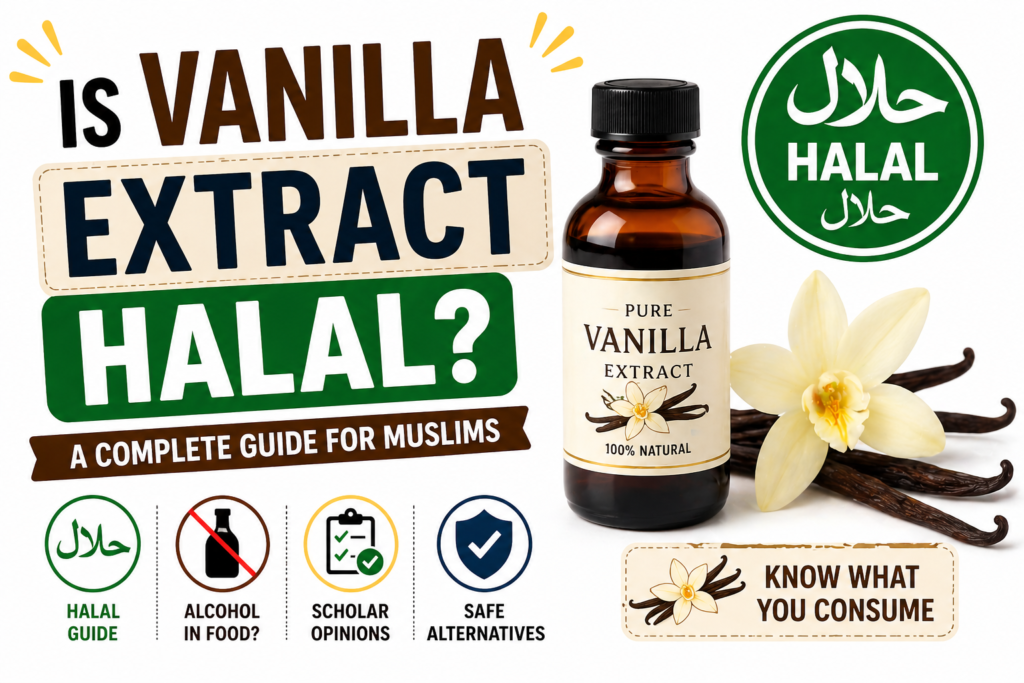
Vanilla extract is a common baking ingredient used to add a rich vanilla flavor to cakes, cookies, ice cream, and many other desserts. It is made by soaking vanilla beans in a liquid, usually a mixture of water and alcohol, which helps draw out the flavor compounds from the beans. This alcohol content is the main reason many Muslims ask, “Is vanilla extract halal?”
The answer can depend on the type of vanilla extract, how it is made, and the Islamic view being followed. Some vanilla extracts contain alcohol as part of the extraction process, while others are made with alcohol-free alternatives. There are also products labeled as halal-certified, which can make the choice easier for Muslim consumers.
It is important to check the product label because ingredients and manufacturing methods can vary between brands. Vanilla flavoring and vanilla extract are not always the same product, so their ingredients may also be different.
In this guide, you will learn how vanilla extract is made, why alcohol is used, whether the alcohol affects its halal status, and what Muslims should check before using it. This information can help you make a more informed choice when buying vanilla extract.
Short Answer
Vanilla extract is a debated ingredient in Islam. It is generally considered permissible by many scholars when the alcohol is used as a solvent and is not intoxicating in the final product, but some scholars consider it doubtful or avoid it altogether.
What Is Vanilla Extract?
Vanilla extract is a liquid flavoring made by soaking vanilla beans in a mixture of alcohol and water. The alcohol helps extract the flavor compounds from the beans, creating a rich and aromatic liquid.
It is commonly used in:
- Baking (cakes, cookies, pastries)
- Ice cream and desserts
- Coffee and beverages
The key issue is the presence of alcohol in the extraction process.
How Is Vanilla Extract Made?
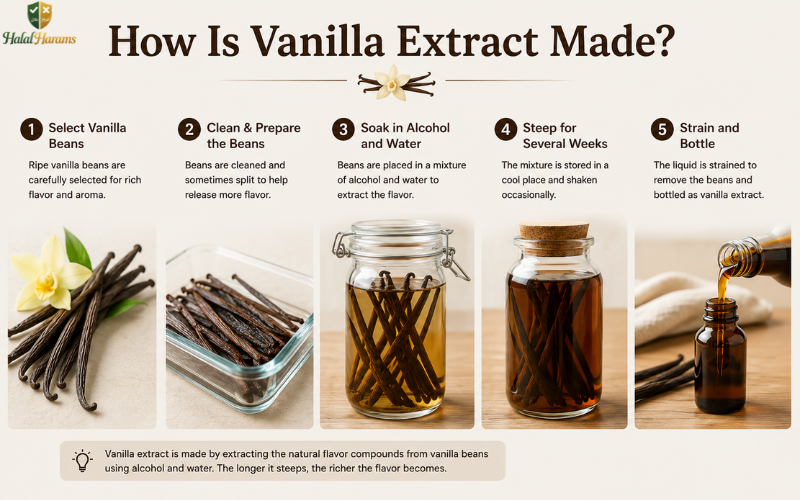
Vanilla extract is produced through a simple but important process.
Vanilla Extract Production
| Step | Description |
|---|---|
| Vanilla beans | Natural source of flavor |
| Alcohol added | Extracts flavor compounds |
| Soaking process | Beans are steeped over time |
| Filtration | Liquid is purified |
| Final product | Flavor-rich extract |
👉 Alcohol is essential in traditional vanilla extract production.
Why Alcohol Is a Concern in Islam
In Islam, intoxicating substances (khamr) are prohibited.
The concern with vanilla extract is:
- It contains alcohol
- Alcohol is used as a solvent
- It may remain in the final product
However, the ruling depends on how the alcohol is used and whether it causes intoxication.
Related Post: Is Starburst Halal
Types of Vanilla Products
Not all vanilla products are the same.
Types of Vanilla and Halal Status
| Type | Description | Halal Status |
|---|---|---|
| Pure Vanilla Extract | Contains alcohol | ⚠️ Debated |
| Imitation Vanilla | Synthetic, may contain alcohol | ⚠️ Check |
| Vanilla Powder | Dried, no alcohol | ✅ Halal |
| Alcohol-Free Vanilla | Glycerin-based | ✅ Halal |
👉 Alcohol-free options are the safest choice.
Does Vanilla Extract Contain Alcohol?
👉 Yes, pure vanilla extract typically contains 35% alcohol or more.
This is required in many countries for labeling as “pure vanilla extract.”
However:
- The amount used in food is very small
- It is diluted during cooking
- It does not intoxicate
Scholarly Opinions on Vanilla Extract
Islamic scholars have different opinions regarding vanilla extract.
Scholarly Views
| Opinion Type | View |
|---|---|
| Permissible | Allowed if alcohol is not intoxicating |
| Cautious | Avoid if unsure |
| Strict | Not halal due to alcohol content |
👉 The difference comes from how alcohol in food is interpreted.
Key Principle: Intoxication vs. Trace Amounts
A widely cited principle in Islamic law is:
- Anything that intoxicates in large amounts is haram
- Small amounts of the same substance are also haram (according to some scholars)
However, others argue:
- If alcohol is transformed or used as a processing agent, it may be permissible
- If it does not intoxicate, it may be allowed
👉 This is why vanilla extract is debated.
Related Post: Is Glycerin Halal? Complete Guide for Muslims (2026)
What Happens to Alcohol During Cooking?
In many recipes:
- Vanilla extract is added in small amounts
- Food is baked or heated
Alcohol in Cooking
| Process | Effect |
|---|---|
| Baking | Reduces alcohol content |
| Boiling | Evaporates alcohol |
| Mixing cold | Alcohol remains |
👉 Some alcohol may remain, but in very small quantities.
When Vanilla Extract Is Considered Halal
It may be considered permissible when:
- Used in very small amounts
- Not consumed directly as an intoxicant
- Mixed into food
- No intoxication occurs
When Vanilla Extract May Not Be Halal
It may be considered doubtful or not halal when:
- Consumed in large amounts
- Alcohol content is significant
- It is used without transformation
- Following stricter interpretations
How to Choose Halal Vanilla Options
To avoid doubt, you can:
- Choose alcohol-free vanilla extract
- Use vanilla powder
- Look for halal certification
- Check ingredient labels carefully
👉 These options provide peace of mind.
Halal Alternatives to Vanilla Extract
There are several safe alternatives available.
Halal Alternatives
| Alternative | Benefit |
|---|---|
| Alcohol-free extract | Same flavor without alcohol |
| Vanilla powder | Completely halal |
| Vanilla paste (halal-certified) | Rich flavor |
| Natural flavoring | Safer option |
Common Misconceptions
“All alcohol is the same”
Not always—context and usage matter in Islamic rulings.
“Vanilla extract is haram everywhere”
Not necessarily—it depends on scholarly interpretation.
“Cooking removes all alcohol”
Not completely, but it reduces it significantly.
Why This Topic Matters
Understanding the halal status of vanilla extract is important because:
- It is widely used in everyday foods
- It involves a common ingredient (alcohol)
- It affects many packaged and homemade foods
See Also: Is Kombucha Halal or Haram?(2026)
FAQs
Is vanilla extract halal?
It is considered halal by many scholars when used in small amounts in food, but some consider it doubtful.
Does vanilla extract contain alcohol?
Yes, pure vanilla extract contains alcohol used for extraction.
Is alcohol in food always haram?
It depends on its use, amount, and whether it causes intoxication.
Can Muslims consume baked goods with vanilla extract?
Many scholars allow it due to the small amount and lack of intoxication.
What is the safest option?
Using alcohol-free vanilla extract is the safest choice.
Is imitation vanilla halal?
It depends on its ingredients and whether alcohol is used.
Final Remarks
Vanilla extract is a widely used ingredient that raises important questions for Muslims due to its alcohol content. While many scholars consider it permissible when used in small amounts and not consumed as an intoxicant, others prefer to avoid it altogether to stay on the safe side. The difference in opinion highlights the importance of personal choice and level of caution in following halal guidelines. For those seeking certainty, alcohol-free alternatives provide a reliable and worry-free option. Ultimately, staying informed, reading labels carefully, and choosing trusted products will help ensure that your food choices align with Islamic principles.
