
Beef is one of the most common meats eaten around the world, but for Muslims, the question is not only “Is beef halal?” The important question is whether the beef was obtained according to Islamic dietary rules.
Beef from cattle is generally halal in Islam. Cows are lawful animals to eat, but the meat must be slaughtered in a proper halal way. The animal should be alive and healthy at the time of slaughter, and the required Islamic method should be followed. Blood should also be properly drained from the animal.
The source of beef matters too. Beef from a halal-certified butcher or supplier is usually easier for Muslims to trust. When buying beef from a restaurant or supermarket, checking the halal label or certification can help avoid doubt.
There is also a difference between plain beef and prepared beef foods. Burgers, sausages, sauces, and frozen meals may contain haram ingredients or additives.
In this article, you will learn when beef is halal, what Islamic rules apply, and what Muslims should check before eating it.
What Is Beef?
Beef refers to meat obtained from cattle, including cows, bulls, and steers. It is one of the most popular sources of protein worldwide and is used in a variety of cuisines.
Common beef products include:
- Ground beef
- Steak
- Roast beef
- Beef burgers
- Beef sausages
- Beef jerky
- Corned beef
Beef is valued for its:
- High protein content
- Rich flavor
- Iron and vitamin content
- Versatility in cooking
Is Beef Halal in Islam?
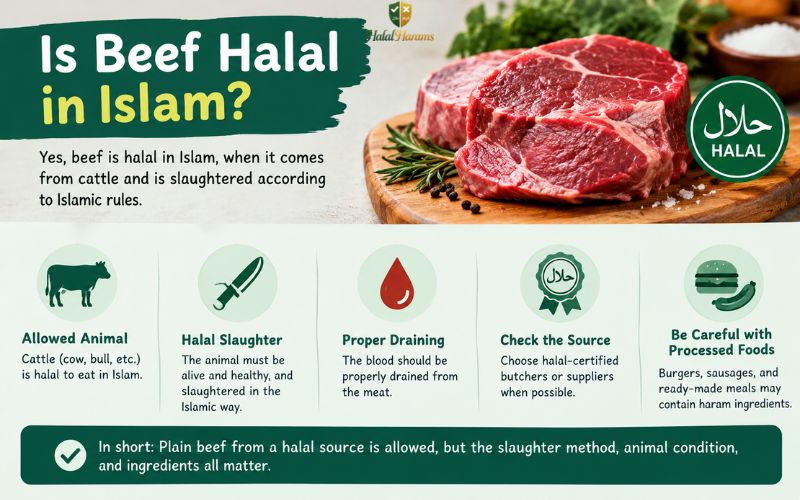
Yes, beef is generally halal in Islam because cattle are considered permissible animals for Muslims to eat.
However, the animal must be:
- Healthy at the time of slaughter
- Slaughtered according to Islamic guidelines
- Free from prohibited ingredients and contamination
If these conditions are not met, the beef may not be considered halal.
Why Beef Is Considered Halal
Islam permits the consumption of certain grazing animals, including cattle. The Quran specifically mentions livestock as permissible for food, provided they are slaughtered properly.
Beef is halal because:
- Cattle are permissible animals
- They are not predators
- They are commonly raised for food
- Islamic law allows their consumption after proper slaughter
Common Meat Sources and Their Halal Status
| Animal | Halal Status |
|---|---|
| Cow (Beef) | ✅ Halal |
| Sheep (Mutton) | ✅ Halal |
| Goat | ✅ Halal |
| Chicken | ✅ Halal |
| Pig | ❌ Haram |
Proper slaughter remains a requirement even for halal animals.
What Makes Beef Halal?
For beef to be halal, Islamic slaughter requirements must be followed.
These include:
- Mentioning the name of Allah during slaughter
- Using a sharp instrument
- Cutting the throat properly
- Allowing blood to drain from the body
- Treating the animal humanely
These practices are intended to ensure respect for the animal and compliance with Islamic teachings.
What Makes Beef Haram?
Beef can become haram if:
- The animal dies before slaughter
- Islamic slaughter is not performed
- Allah’s name is intentionally omitted
- The meat is contaminated with pork
- Haram ingredients are added during processing
Many halal concerns today relate to processing rather than the beef itself.
Related Post: Is Pectin Halal? A Complete Guide for Muslims
Understanding Halal Slaughter
Halal slaughter, known as Dhabihah, is a central requirement for halal meat.
The process involves:
- Ensuring the animal is alive and healthy.
- Mentioning Allah’s name.
- Cutting the throat swiftly.
- Severing major blood vessels.
- Allowing blood to drain completely.
Halal Slaughter Requirements
| Requirement | Importance |
|---|---|
| Animal alive before slaughter | Essential |
| Mention Allah’s name | Essential |
| Proper throat cut | Essential |
| Blood drainage | Essential |
| Humane treatment | Important |
Failure to meet these requirements may affect the halal status of the meat.
Is All Store-Bought Beef Halal?
No.
Many grocery stores sell beef that is not halal-certified. In some countries, conventional slaughter methods differ from Islamic requirements.
Before purchasing beef, Muslims should:
- Check halal labels
- Verify certification
- Purchase from trusted halal suppliers
A package labeled simply as “beef” does not automatically mean it is halal.
Halal Certification and Beef
Halal certification helps consumers identify products that meet Islamic dietary standards.
Certified beef products usually undergo:
- Halal slaughter verification
- Ingredient review
- Facility inspections
- Ongoing compliance monitoring
Halal certification provides additional confidence for Muslim consumers.
Is Restaurant Beef Halal?
Not always.
Many restaurants serve conventional beef that may not be halal.
Before ordering, Muslims should ask:
- Is the beef halal-certified?
- Where is the beef sourced from?
- Are halal and non-halal meats cooked separately?
Restaurant staff should be able to provide information about sourcing and preparation.
Beef in Fast Food Restaurants
Fast-food chains vary greatly in their halal practices.
Some locations offer halal-certified beef, while others do not.
Examples of beef products that may require verification:
- Burgers
- Beef patties
- Meat sauces
- Beef tacos
- Sandwich fillings
The halal status often depends on the country and specific restaurant branch.
Processed Beef Products
Processed beef products require extra attention because they may contain additional ingredients.
Examples include:
- Sausages
- Hot dogs
- Beef jerky
- Meatballs
- Frozen meals
Potential concerns include:
- Non-halal flavorings
- Alcohol-based ingredients
- Pork-derived additives
Always read ingredient labels carefully.
Processed Beef Product Concerns
| Product | Potential Concern |
|---|---|
| Beef sausage | Mixed meat ingredients |
| Beef jerky | Flavoring additives |
| Frozen meals | Processing aids |
| Beef burgers | Fillers and seasonings |
| Corned beef | Preservatives |
The beef itself may be halal while added ingredients are not.
Beef Gelatin and Halal Status
Some products use beef-derived gelatin.
Beef gelatin can be:
- Halal if sourced from halal-slaughtered cattle
- Haram if sourced from non-halal cattle
This is why ingredient verification is important for processed foods and supplements.
Is Wagyu Beef Halal?
Wagyu beef can be halal if:
- The cattle are halal-slaughtered
- Processing follows halal guidelines
The breed of cattle does not determine halal status. The slaughter method does.
Is Organic Beef Halal?
Organic certification and halal certification are different.
Organic beef focuses on:
- Farming practices
- Feed quality
- Environmental standards
Halal certification focuses on:
- Slaughter requirements
- Ingredient compliance
Organic beef is not automatically halal.
Cross-Contamination Concerns
Cross-contamination can occur when halal beef comes into contact with:
- Pork products
- Non-halal meats
- Shared cooking surfaces
Examples include:
- Restaurant grills
- Processing facilities
- Shared kitchen utensils
Many Muslims prefer establishments that maintain separate preparation areas.
Nutritional Benefits of Beef
Beef is a nutrient-rich food that provides essential vitamins and minerals.
Key nutrients include:
- Protein
- Iron
- Zinc
- Vitamin B12
- Selenium
Nutritional Benefits of Beef
| Nutrient | Benefit |
|---|---|
| Protein | Muscle growth and repair |
| Iron | Supports healthy blood |
| Zinc | Immune function |
| Vitamin B12 | Energy production |
| Selenium | Antioxidant support |
Moderate consumption can be part of a balanced diet.
Beef and Islamic Ethics
Islam not only focuses on halal slaughter but also emphasizes:
- Humane treatment of animals
- Avoidance of cruelty
- Respect for food resources
- Gratitude for sustenance
Ethical treatment of livestock is an important aspect of Islamic teachings.
Common Misconceptions About Beef
“All Beef Is Automatically Halal”
This is incorrect. The animal must be slaughtered according to Islamic requirements.
“Halal Beef Tastes Different”
Halal slaughter methods do not necessarily change the flavor of beef.
“Organic Beef Is Halal”
Organic and halal certifications serve different purposes.
“Beef Is More Halal Than Other Meats”
Halal status depends on Islamic compliance, not the type of meat alone.
How to Verify Halal Beef
To ensure beef is halal:
- Look for halal certification
- Buy from trusted halal butchers
- Check ingredient labels
- Ask restaurants about sourcing
- Avoid doubtful products
Being informed helps Muslims make confident food choices.
Quick Halal Beef Checklist
| Question | Action |
|---|---|
| Is it halal-certified? | Verify certification |
| Is slaughter confirmed halal? | Ask supplier |
| Any non-halal additives? | Check label |
| Any pork contamination risk? | Verify facility |
| Trusted source? | Prefer reputable sellers |
Following these steps can help avoid uncertainty.
Why Understanding Halal Beef Matters
Beef is one of the most commonly consumed meats worldwide. Because it appears in so many products and restaurant meals, understanding its halal status is important for Muslims.
Knowledge about:
- Slaughter methods
- Certification
- Ingredients
- Food preparation
helps Muslims follow Islamic dietary principles with confidence.
FAQs
Is beef halal
Yes, beef is generally halal when the cattle are slaughtered according to Islamic guidelines.
Does beef require halal slaughter
Yes, proper Islamic slaughter is required for beef to be considered halal.
Is store-bought beef always halal
No, many grocery stores sell conventional beef that may not meet halal requirements.
Can halal beef become haram
Yes, contamination, improper processing, or haram ingredients can affect halal status.
Is organic beef halal
Not necessarily. Organic certification does not replace halal certification.
Is beef gelatin halal
Only if it comes from cattle that were slaughtered according to Islamic guidelines.
Final Remarks
Beef is halal in Islam when it comes from cattle and is slaughtered according to Islamic rules. Muslims should make sure the animal was alive at the time of slaughter and that the proper halal method was followed.
When buying beef, choosing halal-certified meat can make things easier, especially when the source is unknown. Muslims should also be careful with processed beef products, such as burgers, sausages, and ready-made meals, because they may contain haram ingredients or additives.
In simple terms, the animal, slaughter method, and ingredients all matter. Plain halal beef is permissible, while beef prepared or obtained in a non-halal way may not be.
