
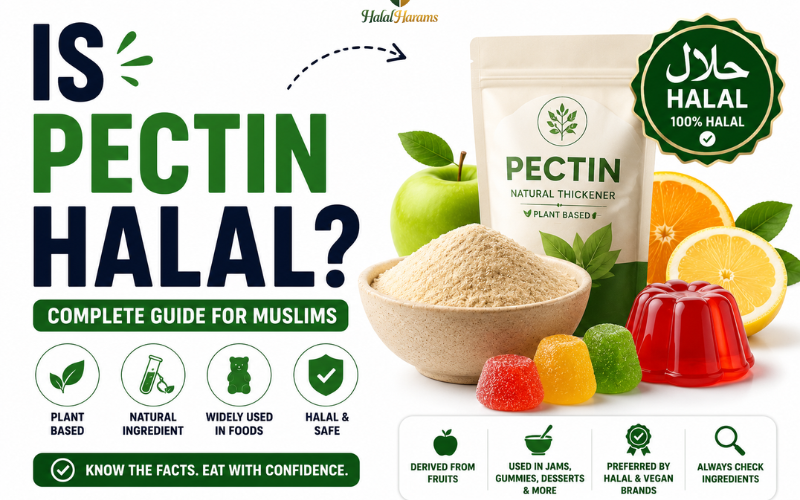
For Muslims, checking food ingredients is a good way to make sure what they eat follows Islamic dietary rules. One ingredient that often raises questions is pectin. You may see pectin listed on the labels of jams, candies, fruit snacks, yogurt, and other foods. So, is pectin halal?
The simple answer is yes, pectin is generally halal. Pectin is a natural substance found mainly in the cell walls of fruits, especially apples and citrus fruits. It is commonly used to make foods thicker or give them a jelly-like texture. Unlike gelatin, pectin does not normally come from animal skin, bones, or other animal parts.
For Muslims, this makes pectin a useful plant-based alternative to gelatin. However, the finished food still needs to be checked because other ingredients may not be halal. Flavors, colors, gelatin, or additives can change the halal status of a product.
So, pectin itself is generally halal, but Muslims should check the full ingredient list when buying processed foods. This helps avoid hidden haram ingredients and makes choosing halal products easier.
What Is Pectin?
Pectin is a natural carbohydrate found in the cell walls of fruits and vegetables. It acts as a thickening and stabilizing agent in food production.
Pectin is commonly extracted from:
- Apples
- Citrus fruits
- Lemon peels
- Orange peels
It is widely used to:
- Thicken jams
- Create gummy textures
- Stabilize desserts
- Improve texture in processed foods
Pectin is one of the most common plant-based alternatives to gelatin.
Is Pectin Halal in Islam?
Yes, pectin is generally considered halal by Islamic scholars because it is:
- Plant-based
- Non-intoxicating
- Free from animal slaughter concerns
Unlike gelatin, pectin does not usually come from:
- Pork
- Non-halal beef
- Animal bones or skin
Pure pectin is widely accepted as halal.
Why Pectin Is Popular in Halal Foods
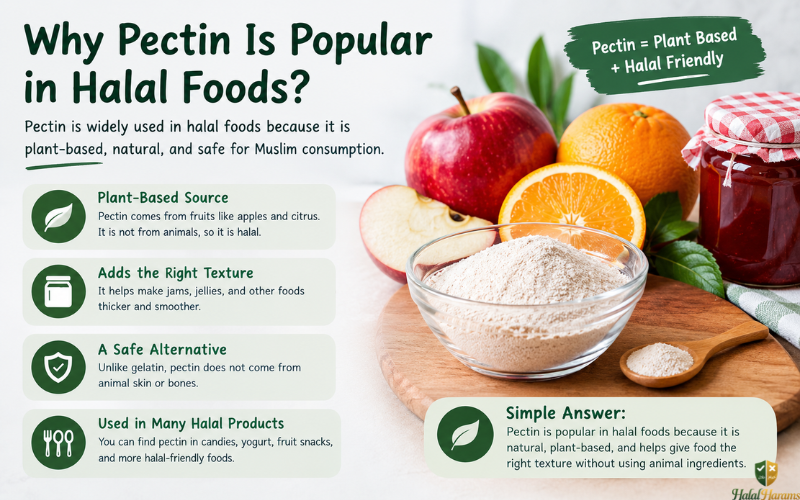
Many halal food manufacturers prefer pectin because:
- It is vegetarian-friendly
- It avoids animal sourcing concerns
- It works well in candies and desserts
Pectin vs Gelatin Comparison
| Ingredient | Source | Halal Status |
|---|---|---|
| Pectin | Fruits/plants | ✅ Halal |
| Pork gelatin | Pig source | ❌ Haram |
| Non-halal beef gelatin | Animal source | ❌ Haram |
| Halal beef gelatin | Halal cattle | ✅ Halal |
Pectin is often viewed as the safest gelling ingredient for Muslims.
Related Post: Are Eggs Halal? A Complete Guide for Muslims
How Is Pectin Made?
Pectin is extracted from fruit materials through:
- Heating
- Filtering
- Drying
- Processing into powder or liquid form
The process usually involves:
- Citrus peels
- Apple pomace
- Water-based extraction methods
Since the source is plant-based, halal concerns are usually minimal.
Common Foods That Contain Pectin
Pectin appears in many products including:
- Fruit jams
- Jelly candies
- Yogurt
- Fruit snacks
- Desserts
- Ice cream
- Soft drinks
Common Foods Using Pectin
| Food Product | Pectin Use |
|---|---|
| Jam | Thickener |
| Jelly | Gel texture |
| Gummies | Texture stabilizer |
| Yogurt | Consistency improvement |
| Fruit fillings | Thickening |
Pectin is extremely common in processed foods.
Is Pectin Better Than Gelatin for Muslims?
Many Muslims prefer pectin because:
- It avoids animal-source confusion
- It is plant-derived
- It is accepted by most halal certifiers
Pectin-based candies are often safer than gelatin-based candies.
Pectin in Gummies and Candies
Many modern gummy candies now use pectin instead of gelatin.
This is especially common in:
- Vegan gummies
- Vegetarian snacks
- Halal-certified sweets
Pectin helps create chewy textures without animal ingredients.
Can Pectin Ever Become Haram?
Pure pectin itself is halal, but products containing pectin may still become haram if:
- Alcohol is added
- Haram flavorings are included
- Cross-contamination occurs
- Other ingredients are non-halal
Muslims should always check the complete ingredient list.
Artificial Flavoring Concerns
Some foods containing pectin may also contain:
- Alcohol-based flavorings
- Artificial extracts
- Emulsifiers
Ingredient Concerns in Pectin Foods
| Ingredient | Concern Level |
|---|---|
| Pectin | Low |
| Alcohol flavoring | Medium |
| Gelatin additives | High |
| Artificial extracts | Medium |
The concern is usually with surrounding ingredients, not pectin itself.
Is Citrus Pectin Halal?
Yes, citrus pectin is generally halal because it comes from:
- Orange peels
- Lemon peels
- Citrus fruits
Citrus pectin is among the most common forms used commercially.
Is Apple Pectin Halal?
Apple pectin is also generally halal because it comes from apples.
It is commonly used in:
- Supplements
- Health products
- Jams
- Desserts
Apple pectin is plant-based and widely accepted.
Pectin in Halal Gummies
Halal gummy manufacturers often advertise:
- Pectin-based formulas
- Gelatin-free recipes
- Vegan-friendly ingredients
This makes pectin very important in halal confectionery products.
Why Some Muslims Still Verify Pectin Products
Even though pectin itself is halal, Muslims may still verify products because:
- Other ingredients may not be halal
- Manufacturing processes vary
- Cross-contamination may occur
Full ingredient awareness is still important.
Halal Certification and Pectin Products
Halal certification helps confirm:
- No haram ingredients are included
- Production standards are followed
- Cross-contamination is minimized
Benefits of Halal Certification
| Benefit | Importance |
|---|---|
| Ingredient verification | High |
| Consumer confidence | High |
| Safer manufacturing practices | High |
Certification provides additional reassurance for Muslims.
Is Pectin Vegan?
Yes, pectin is generally vegan because it comes from fruits and plants.
This makes it popular among:
- Vegans
- Vegetarians
- Halal-conscious consumers
Pectin works well for multiple dietary preferences.
Health Benefits of Pectin
Pectin is also known for certain health benefits.
These may include:
- Digestive support
- Fiber intake
- Improved texture in low-fat foods
Pectin is considered a form of soluble fiber.
Pectin and Digestive Health
Pectin may help:
- Support gut bacteria
- Improve digestion
- Slow sugar absorption
It is commonly used in health-focused foods.
Is Pectin Used in Medicine?
Yes, pectin may appear in:
- Supplements
- Syrups
- Medicinal gummies
Ingredient checking is still important for medicine products.
Common Misconceptions About Pectin
“Pectin is the same as gelatin”
Pectin is plant-based, while gelatin usually comes from animals.
“All gummies are halal if they contain pectin”
Other ingredients may still be questionable.
“Pectin requires halal certification”
Pure pectin is generally halal by nature, though certification adds reassurance.
How to Ensure Pectin Products Are Halal
To make sure pectin-containing foods are halal:
- Read ingredient labels carefully
- Check for gelatin or alcohol flavorings
- Look for halal certification
- Choose trusted brands
Careful verification helps avoid doubtful ingredients.
Why This Topic Matters
Understanding whether pectin is halal matters because:
- It is used in countless processed foods
- Many Muslims confuse it with gelatin
- Gummies and candies are extremely popular
Knowledge helps Muslims make informed dietary decisions.
Frequently Asked Questions
Is pectin halal
Yes, pectin is generally considered halal because it is derived from fruits and plants.
Is pectin made from animals
No, pectin is usually extracted from apples and citrus fruits.
Is pectin better than gelatin for Muslims
Many Muslims prefer pectin because it avoids animal-source concerns.
Are pectin gummies halal
Pectin gummies are usually halal if no haram ingredients are added.
Does pectin contain pork
No, pure pectin does not contain pork.
Can foods with pectin still be haram
Yes, other ingredients in the product may still be non-halal.
Final Remarks
Pectin is generally halal because it comes from fruits such as apples and citrus fruits, not from animal parts. This makes it a useful plant-based ingredient in many halal foods. Muslims can usually consume pectin in products like jam, jelly, yogurt, candy, and fruit snacks.
Still, pectin is only one ingredient. The complete product should be checked for other ingredients that may not be halal, such as gelatin or alcohol-based additives.
In short, pectin itself is halal, but checking the full ingredient list is the safest choice when buying processed foods.
