
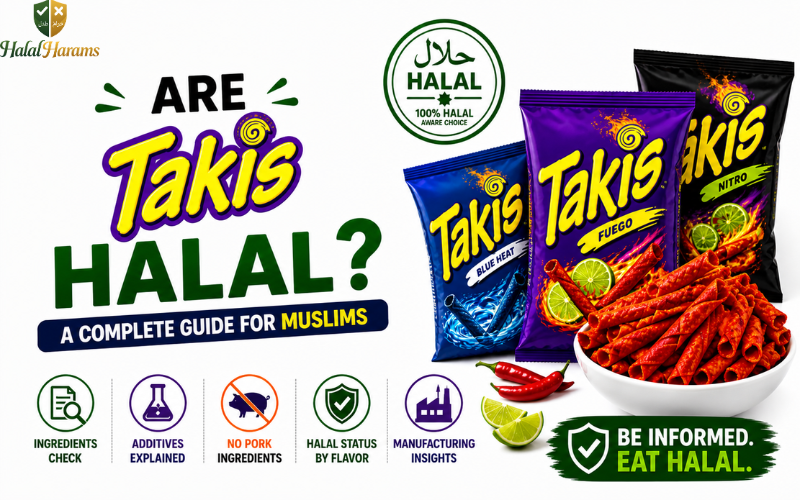
Takis are rolled tortilla chips known for their strong flavors, crunchy texture, and spicy taste. They come in several varieties, including different chili, lime, and cheese flavors. Because Takis contain several seasonings and additives, many Muslims ask, “Are Takis halal?”
The answer can depend on the specific Takis flavor, ingredients, and country where the product is made. Some ingredients may be simple, while others can include flavorings, cheese ingredients, enzymes, or food additives that Muslims may want to check more carefully. The source of certain ingredients is not always obvious from the name on the package.
Another important point is that Takis recipes can vary between countries. A flavor sold in one country may have different ingredients or halal certification than the same-looking product sold somewhere else.
If you follow a halal diet, do not judge all Takis by one flavor or one ingredient list. Instead, check the exact package, current ingredients, and halal certification when available.
In this guide, you will learn what Takis contain, which ingredients may need attention, and how to check whether a particular Takis product is halal before eating it.
Are Takis Halal Or Haram?
Short Answer:
Takis are generally considered halal in many cases because they do not contain obvious haram ingredients like pork or alcohol. However, some flavors may be doubtful due to flavorings, enzymes, or cross-contamination, so verification is recommended.
What Are Takis?
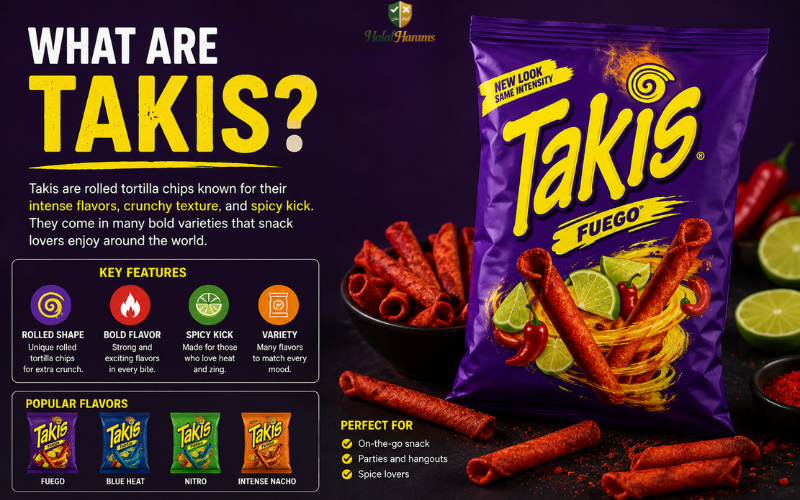
Takis are a brand of rolled corn tortilla chips produced by Barcel, which is owned by Grupo Bimbo.
They are known for:
- Intense spicy flavors
- Crunchy texture
- Unique rolled shape
Popular flavors include:
- Fuego
- Nitro
- Blue Heat
- Crunchy Fajitas
Each flavor may have different ingredients, which affects halal status.
Understanding Halal Criteria for Snacks
For any processed snack to be halal:
- It must not contain pork or pork derivatives
- It must not contain alcohol
- Ingredients must be from halal sources
- Cross-contamination with haram items must be avoided
Even small additives can affect the ruling.
Ingredients in Takis
Typical Takis ingredients include:
- Corn masa flour
- Vegetable oil
- Seasoning blends
- Artificial and natural flavors
- Citric acid
- Salt
- Food colorings
Ingredient Overview
| Ingredient | Source Type | Halal Status |
|---|---|---|
| Corn flour | Plant-based | ✅ Halal |
| Vegetable oil | Plant-based | ✅ Halal |
| Salt | Mineral | ✅ Halal |
| Citric acid | Fermented | ✅ Halal |
| Flavorings | Mixed | ⚠️ Check |
| Coloring agents | Synthetic | ⚠️ Depends |
Most ingredients are halal, but flavorings need attention.
Flavorings and Additives
Flavorings are the biggest concern in Takis.
They may include:
- Artificial flavors
- Natural extracts
- Flavor enhancers
Possible issues:
- Alcohol used as a solvent
- Animal-derived compounds
Manufacturers often do not disclose full details.
Do Takis Contain Gelatin?
No, Takis do not typically contain gelatin.
This is important because gelatin is a common haram ingredient in snacks.
Gelatin Comparison
| Snack Type | Gelatin Present | Halal Status |
|---|---|---|
| Takis | ❌ No | ✅ Likely Halal |
| Gummies | ✅ Yes | ❌ Often Not Halal |
| Marshmallows | ✅ Yes | ❌ Often Not Halal |
Being gelatin-free makes Takis more halal-friendly.
Halal Status by Flavor
Different Takis flavors may have slightly different formulations.
Flavor-Based Status
| Flavor | Halal Status |
|---|---|
| Fuego | ⚠️ Likely Halal |
| Blue Heat | ⚠️ Likely Halal |
| Nitro | ⚠️ Check |
| Crunchy Fajitas | ⚠️ Check |
Always check the ingredient list on the packaging.
Regional Differences
Ingredients may vary depending on where Takis are produced.
Regional Status
| Region | Halal Status |
|---|---|
| USA | ⚠️ Generally Halal |
| Mexico | ⚠️ Generally Halal |
| Middle East | ✅ Often Halal-certified |
| Europe | ⚠️ Check |
Regional variation matters.
Cross-Contamination Risks
Takis are produced in large facilities.
Cross-Contamination
| Area | Risk |
|---|---|
| Production lines | Medium |
| Equipment | Medium |
| Packaging | Low |
Shared equipment may introduce risk.
Halal Certification
Some Takis products in certain regions may carry halal certification.
Certification Benefits
| Factor | Benefit |
|---|---|
| Halal logo | Clear approval |
| Ingredient review | Verified |
| Consumer trust | High |
Certification is the safest option.
Related Post: Are Hot Cheetos Halal? A Complete Guide for Muslims
Why Takis Are Considered Halal
They are often considered halal because:
- No pork ingredients
- No gelatin
- Mostly plant-based ingredients
These factors support permissibility.
Why Some Takis May Be Doubtful
Concerns include:
- Unclear flavoring sources
- Possible alcohol traces
- Cross-contamination
These create a grey area.
Scholarly Opinions
Scholarly Views
| Opinion Type | View |
|---|---|
| Permissible | Allowed if no haram ingredients |
| Cautious | Avoid doubtful snacks |
| Strict | Only halal-certified products |
Many scholars advise caution with processed foods.
How to Check If Takis Are Halal
To ensure halal status:
- Read ingredient labels carefully
- Look for halal certification
- Check manufacturer statements
- Avoid doubtful ingredients
These steps help you make informed choices.
Halal Alternatives to Takis
If you prefer certainty, consider:
- Halal-certified chips
- Plain tortilla chips
- Homemade spicy snacks
These provide peace of mind.
Nutritional Considerations
Takis are a processed snack and should be consumed in moderation.
Nutritional Overview
| Factor | Impact |
|---|---|
| Calories | High |
| Sodium | High |
| Fat | High |
Moderation is encouraged in Islam.
Common Misconceptions
“All chips are halal”
Not always—flavorings matter.
“Spicy snacks are halal”
Ingredients determine the ruling.
“Same ingredients worldwide”
Formulas vary by region.
Why This Topic Matters
Understanding whether Takis are halal is important because:
- They are widely consumed
- Ingredients are complex
- It helps Muslims maintain halal diets
FAQs
Are Takis halal?
Takis are generally considered halal, but some flavors may be doubtful depending on ingredients and processing.
Do Takis contain pork?
No, Takis do not contain pork ingredients.
Do Takis contain gelatin?
No, Takis are gelatin-free.
Are Takis halal in the USA?
They are generally considered halal, but verification is recommended.
Are all Takis flavors halal?
Not necessarily. Some flavors may contain doubtful ingredients.
What is the safest option?
Choose halal-certified snacks or verify ingredients carefully.
Final Remarks
Takis are one of the most popular spicy snacks in the world, and their halal status is generally favorable due to the absence of pork and gelatin. However, like many processed foods, they are not entirely free from concern. Flavorings, additives, and manufacturing processes can introduce uncertainty, especially when ingredient sources are not fully disclosed. For Muslims who want to strictly adhere to halal dietary laws, the best approach is to check labels carefully, look for halal certification, and avoid doubtful products when necessary. Making informed decisions ensures that your food choices remain aligned with Islamic principles while still allowing you to enjoy modern snacks responsibly.
