
Is Jello halal? This is a common question among Muslims because traditional Jello products are made using gelatin, and the source of that gelatin determines whether the product is permissible to eat. Gelatin can come from pork, cattle, or other animal sources, so simply seeing the word “gelatin” on a package does not give the complete answer.
For Muslims, the key question is where the gelatin comes from and how the animal was sourced. Pork-derived gelatin is haram, while gelatin from a halal animal may be permissible when the Islamic requirements are met. Some Jello products may also carry halal certification, while others may require closer examination of their ingredients.
This guide explains how to identify halal Jello, what gelatin has to do with its Islamic ruling, and why different Jello products can have different answers. It also covers what to do when the gelatin source is not clearly stated on the package.
What Is Jello?
Jello is a gelatin-based dessert that becomes firm after being dissolved in hot water and cooled.
Although “Jell-O” is a well-known brand name, many people use the word “jello” to refer to gelatin desserts in general.
Common ingredients in Jello include:
- Gelatin
- Sugar
- Artificial flavors
- Natural flavors
- Food colorings
- Preservatives
The primary halal concern is usually the gelatin used in the product.
What Is Gelatin?
Gelatin is a protein obtained from animal collagen.
Manufacturers commonly produce gelatin by processing the skin, bones, and connective tissues of animals.
Gelatin is widely used in:
- Jello desserts
- Gummies
- Marshmallows
- Yogurt products
- Ice cream
- Capsules
- Cakes and desserts
Because gelatin originates from animals, its source becomes a crucial factor in determining halal status.
Why Gelatin Matters in Islam
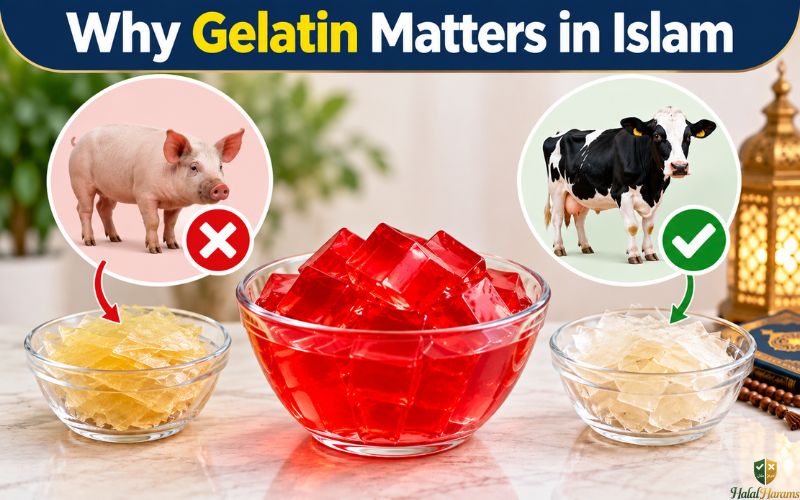
Islam places specific requirements on animal-derived ingredients.
When evaluating gelatin, scholars generally examine:
- The animal source
- Whether the animal is halal
- Whether proper Islamic slaughter was performed
- The transformation process used during gelatin production
As a result, gelatin is one of the most frequently discussed ingredients in halal food certification.
Related Post: Is HI-CHEW Halal? Complete Guide for Muslims(2026)
Sources of Gelatin
Gelatin can come from various animal sources.
Common Gelatin Sources
| Gelatin Source | Halal Status |
|---|---|
| Pork Gelatin | Haram |
| Non-Halal Beef Gelatin | Haram |
| Halal Beef Gelatin | Halal |
| Fish Gelatin | Generally Halal |
| Unknown Source Gelatin | Requires Verification |
The halal status of Jello depends heavily on which type of gelatin is used.
Is Traditional Jello Halal?
Many traditional Jello products sold in supermarkets are not considered halal because they often contain gelatin derived from non-halal sources.
In numerous markets, gelatin may originate from:
- Pork
- Non-halal slaughtered cattle
- Mixed animal sources
If the gelatin comes from pork, the product is considered haram according to all major Islamic schools of thought.
If the gelatin comes from cattle that were not slaughtered according to Islamic requirements, many scholars also consider it impermissible.
Is Pork Gelatin Halal?
No. Pork gelatin is considered haram according to the overwhelming majority of Islamic scholars.
The prohibition is based on the clear Islamic ruling regarding pork and pork-derived ingredients.
Examples of pork-derived ingredients include:
- Pork gelatin
- Pork fat
- Lard
- Pork enzymes
Any Jello containing pork gelatin is generally regarded as non-halal.
Is Beef Gelatin Halal?
The answer depends on the source of the beef.
Beef Gelatin Scenarios
Islamic scholars have debated gelatin for many years.
| Type of Beef Gelatin | Halal Status |
|---|---|
| Halal-Slaughtered Beef | Halal |
| Non-Halal Slaughtered Beef | Generally Not Halal |
| Unknown Source Beef | Requires Verification |
| Certified Halal Beef Gelatin | Halal |
Muslims should determine whether the cattle were slaughtered according to Islamic requirements before consuming products containing beef gelatin.
Related Post: Are Jolly Ranchers Halal
Scholarly Opinions on Gelatin
Two major viewpoints exist.
View One: Source Determines Halal Status
Many scholars maintain that gelatin retains the ruling of its original source.
Under this view:
- Pork gelatin remains haram.
- Non-halal beef gelatin remains haram.
- Halal beef gelatin is halal.
This opinion is widely followed throughout the Muslim world.
View Two: Transformation Changes the Ruling
Some scholars argue that extensive industrial processing transforms gelatin into a new substance.
This concept is known as Istihalah (transformation).
Under this interpretation, some scholars may permit certain forms of gelatin.
However, this view is not universally accepted and remains a topic of scholarly discussion.
Is Jell-O Brand Halal?
The halal status of Jell-O brand products depends on the specific formulation and country of manufacture.
Ingredients may vary by region.
In many markets, standard Jell-O products contain gelatin that is not halal-certified.
Therefore, Muslims should:
- Read ingredient labels carefully.
- Verify gelatin sources.
- Check certification status.
- Contact manufacturers when necessary.
Never assume that all Jell-O products are halal.
Are Sugar-Free Jello Products Halal?
Sugar-free versions often use similar gelatin ingredients as regular products.
Although they contain different sweeteners, the gelatin source remains the primary halal concern.
Therefore, the halal ruling depends on the gelatin rather than the sugar content.
Are Jello Cups Halal?
Ready-to-eat Jello cups generally contain the same gelatin base used in standard gelatin desserts.
Consumers should verify:
- Gelatin source
- Certification status
- Manufacturer information
The packaging should provide useful ingredient details.
What About Vegan Jello?
Vegan gelatin desserts have become increasingly popular.
These products replace animal gelatin with plant-based alternatives.
Common vegan gelling agents include:
- Agar-agar
- Carrageenan
- Pectin
- Konjac gum
Because these ingredients are plant-derived, they generally avoid the halal concerns associated with animal gelatin.
Halal Alternatives to Traditional Jello
Muslims seeking certainty often choose halal-certified alternatives.
Popular Halal Alternatives
| Alternative | Description |
|---|---|
| Halal Gelatin Desserts | Made with halal-certified gelatin |
| Agar-Agar Desserts | Seaweed-derived gelling agent |
| Pectin Desserts | Fruit-based gelling ingredient |
| Vegan Gel Desserts | Plant-based ingredients |
| Fish Gelatin Desserts | Made from halal fish sources |
These alternatives allow Muslims to enjoy similar desserts while maintaining halal compliance.
What Is Agar-Agar?
Agar-agar is a plant-based gelling agent derived from seaweed.
It is widely used as a gelatin substitute.
Benefits include:
- Plant-based origin
- No animal ingredients
- Strong gelling properties
- Wide availability
Many halal dessert manufacturers use agar-agar instead of traditional gelatin.
Related Post: Are Gushers Halal Or Haram?(2026)
Why Halal Certification Matters
Halal certification provides confidence that a product has been independently evaluated.
Certification bodies typically review:
- Ingredient sourcing
- Gelatin origins
- Manufacturing processes
- Cross-contamination risks
- Quality assurance procedures
A halal certification logo often simplifies purchasing decisions for Muslim consumers.
Benefits of Halal Certification
| Benefit | Explanation |
|---|---|
| Ingredient Verification | Confirms halal ingredients |
| Production Oversight | Reviews manufacturing methods |
| Consumer Confidence | Easier purchasing decisions |
| Reduced Uncertainty | Clarifies product status |
| Independent Assessment | Third-party review |
Certification can be especially valuable for products containing gelatin.
Can Muslims Eat Jello at Restaurants?
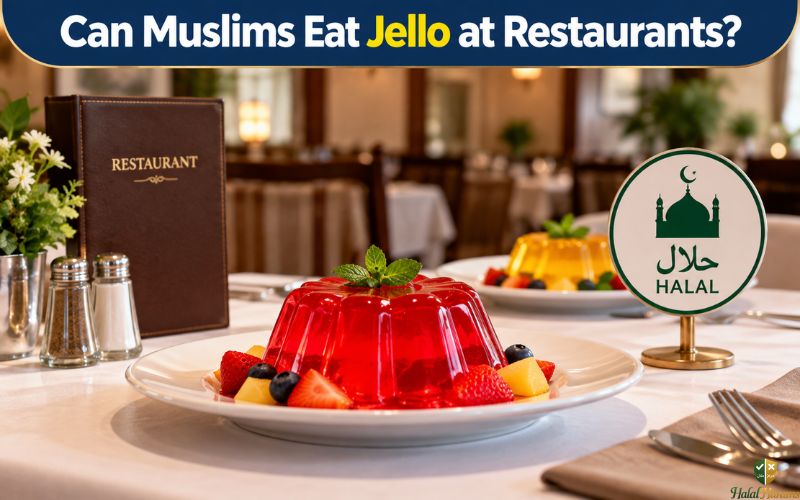
Restaurant desserts may not always provide detailed ingredient information.
When ordering gelatin desserts, Muslims should consider asking:
- What type of gelatin is used?
- Is the gelatin halal-certified?
- Does the supplier provide halal documentation?
If ingredient information is unavailable, some consumers choose a more cautious approach.
Cross-Contamination Concerns
Some Muslims also consider how products are manufactured.
Potential concerns include:
- Shared equipment
- Shared storage facilities
- Shared production lines
Halal-certified facilities often implement procedures to reduce contamination risks.
How to Determine Whether Jello Is Halal
The simplest way to check whether Jello is halal is to find out the source of its gelatin. Gelatin can come from pork, cattle, or other animal sources, so the source matters.
Check the Gelatin Source
Read the ingredient label carefully. Pork gelatin is haram, while gelatin from a halal animal may be permissible when Islamic requirements are met.
Look for Halal Certification
A reliable halal certification mark can make checking easier. It indicates that the product has been reviewed according to the certifier’s halal requirements.
Check the Exact Product
Different Jello flavors and varieties may use different ingredients. Always check the package you are buying rather than assuming every Jello product has the same formula.
When the Source Is Unclear
If the label only says “gelatin,” verify its source before eating it. You can contact the manufacturer or ask a qualified scholar if you prefer a cautious approach.
Common Misconceptions About Jello
All Jello Is Halal
This is incorrect. Many traditional products contain gelatin from non-halal sources.
All Gelatin Is Haram
Not all gelatin is haram. Halal-certified beef gelatin and fish gelatin are generally permissible.
Vegan Jello Is Automatically Halal
Most vegan gelatin alternatives are halal, but other ingredients should still be reviewed.
Gelatin Source Does Not Matter
For many scholars, the source of gelatin is one of the most important factors in determining halal status.
Jello and Jelly Are Always the Same
The term “jelly” can refer to different products depending on the country and recipe.
The Growing Market for Halal Gelatin Products
As demand for halal foods continues to increase, manufacturers are producing more halal-friendly dessert options.
Modern consumers can find:
- Halal-certified gelatin desserts
- Halal gummies
- Halal marshmallows
- Halal candies
- Plant-based alternatives
This growing market makes it easier than ever for Muslims to find suitable products.
More Related Halal-Harams Guide:
- Is Chocolate Liquor Halal
- Is Kombucha Halal
- What Does Halal Food Mean
- Is Dr Pepper Halal
- Is Butter Halal
- Is Mirin Halal
- Is Tuna Halal
Frequently Asked Questions
Is Jello halal?
It depends on the gelatin source. Traditional Jello products are often not halal because they may contain pork or non-halal beef gelatin.
Does Jello contain gelatin?
Yes. Gelatin is one of the primary ingredients in most traditional Jello products.
Is pork gelatin halal?
No. Pork gelatin is considered haram by the vast majority of Islamic scholars.
Is beef gelatin halal?
Only if it comes from cattle slaughtered according to Islamic requirements or carries recognized halal certification.
Is vegan Jello halal?
Generally yes, provided all ingredients are permissible and free from haram additives.
What is the best halal alternative to Jello?
Halal-certified gelatin desserts and agar-agar-based products are among the most popular alternatives.
Does Jell-O brand offer halal products?
Product formulations vary by market. Consumers should check labels and certification information for each product.
Can Muslims eat fish gelatin desserts?
In most cases, yes. Fish gelatin is generally considered halal by Islamic scholars.
Final Remarks
So, is Jello halal? The answer depends mainly on the source of the gelatin used in the specific product. If the gelatin is confirmed to come from a permissible halal source and the other ingredients are also acceptable, the Jello may be halal. If it contains pork gelatin, it is not permissible for Muslims to consume.
The safest habit is to check the exact product’s current ingredient list and look for reliable halal certification when available. Do not assume that every Jello flavor or variety has the same ingredients, as formulas can differ between products and markets.
When the gelatin source is unclear, Muslims who want certainty should verify the source with the manufacturer or ask a qualified scholar. This is especially useful when the product is being served at a gathering and the original packaging is unavailable.
