
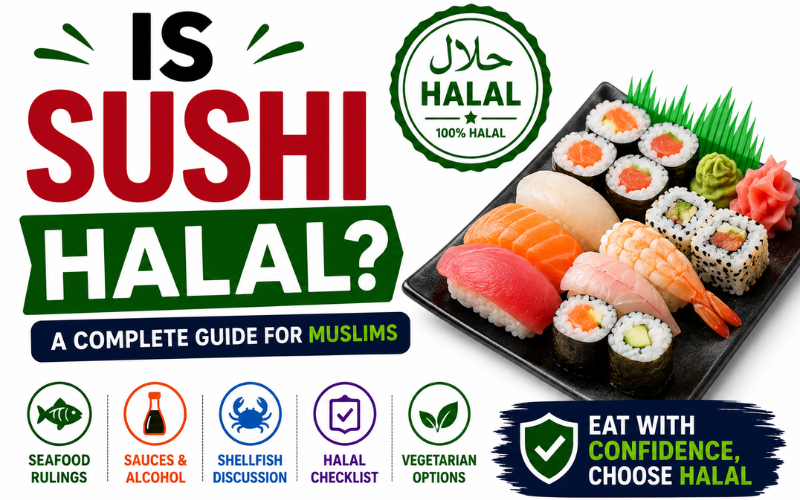
Sushi is a popular Japanese dish made with seasoned rice, seafood, vegetables, and seaweed. It comes in many forms, including rolls, nigiri, and sashimi. While sushi may look simple, its halal status can depend on the ingredients used and how the dish is prepared.
So, is sushi halal? In many cases, sushi can be halal, especially when it contains halal seafood, rice, vegetables, and other permissible ingredients. However, some sushi dishes may include ingredients that Muslims need to check carefully. Mirin, sake, and other cooking alcohols can be used in certain sauces or rice preparations. Imitation crab may also contain ingredients that need further checking.
The type of seafood matters too. Most scholars allow fish and other commonly accepted seafood, but Islamic schools have different views about some sea animals. Cross-contact with non-halal ingredients can also be a concern at restaurants.
In this guide, you will learn which sushi ingredients are halal, which ones may cause concern, and what to check when ordering sushi. Reading the ingredient list and asking about sauces and preparation can help you make a safer choice.
Is Sushi Halal?
Short Answer:
Many types of sushi are halal, especially those made with fish, vegetables, and halal ingredients. However, certain sushi may contain alcohol-based sauces, imitation crab, or other questionable ingredients that require careful checking.
What Is Sushi?
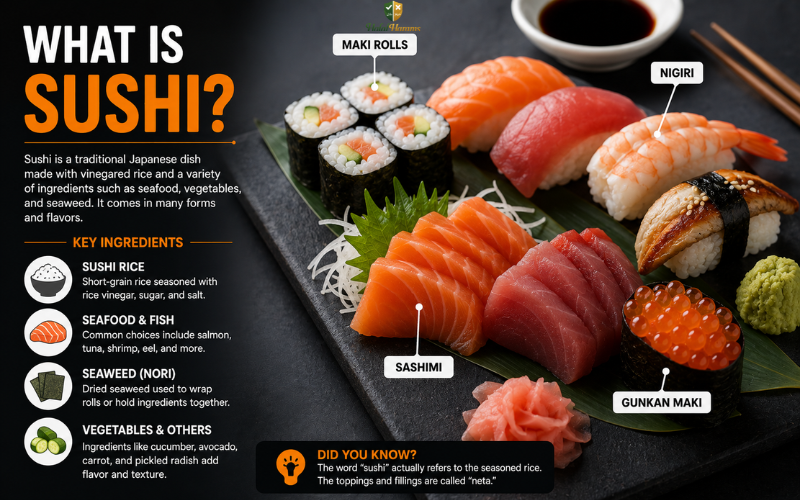
Sushi is a traditional Japanese dish made with:
- Vinegared rice
- Seafood or vegetables
- Seaweed
- Sauces and seasonings
Common sushi types include:
- Nigiri
- Maki rolls
- Sashimi
- Temaki
- California rolls
Not all sushi contains raw fish, and not all sushi is automatically halal.
Why Halal Status Matters
For food to be halal in Islam:
- Ingredients must be permissible
- Seafood must meet Islamic dietary rules
- Alcohol and pork ingredients must be avoided
- Cross-contamination with haram food should not occur
Sushi can include hidden ingredients that Muslims may overlook.
Related Post: Is Shrimp Halal? Complete Guide for Muslims(2026)
Basic Ingredients in Sushi
Most sushi contains:
- Rice
- Seaweed
- Fish or seafood
- Vegetables
- Soy sauce
Basic Sushi Ingredients
| Ingredient | Source | Halal Status |
|---|---|---|
| Rice | Plant-based | ✅ Halal |
| Seaweed | Marine plant | ✅ Halal |
| Fish | Seafood | ✅ Usually halal |
| Vegetables | Plant-based | ✅ Halal |
| Soy sauce | Fermented | ⚠️ Check |
| Vinegar | Fermented | ✅ Usually halal |
The main concerns usually involve sauces and additives.
Is Raw Fish Halal?
In Islam, most seafood is considered halal by many scholars.
Seafood Halal Status
| Seafood Type | Halal Status |
|---|---|
| Salmon | ✅ Halal |
| Tuna | ✅ Halal |
| Shrimp | ✅ Halal |
| Crab | ⚠️ Scholarly difference |
| Octopus | ⚠️ Scholarly difference |
Fish-based sushi is generally considered halal.
Types of Sushi and Their Halal Status
Different sushi varieties have different ingredients.
Sushi Types
| Sushi Type | Halal Status |
|---|---|
| Salmon Nigiri | ✅ Halal |
| Tuna Roll | ✅ Halal |
| Vegetable Roll | ✅ Halal |
| California Roll | ⚠️ Check ingredients |
| Tempura Roll | ⚠️ Depends |
| Eel Sushi | ⚠️ Check sauces |
Ingredients and sauces matter greatly.
Is Sushi Rice Halal?
Sushi rice itself is usually halal because it contains:
- Rice
- Vinegar
- Sugar
- Salt
However, some restaurants may use rice vinegar mixtures containing alcohol traces.
Soy Sauce and Halal Concerns
Soy sauce is commonly served with sushi.
Soy Sauce Status
| Type | Halal Status |
|---|---|
| Traditional soy sauce | ⚠️ Scholarly debate |
| Alcohol-free soy sauce | ✅ Halal |
| Tamari sauce | ✅ Usually halal |
Some soy sauces contain small amounts of alcohol due to fermentation.
Is Sushi Vinegar Halal?
Sushi vinegar is generally considered halal because:
- Alcohol transforms during fermentation
- Vinegar is accepted in Islamic law by many scholars
Most scholars consider vinegar permissible.
California Rolls and Imitation Crab
California rolls often use imitation crab meat.
Imitation Crab Concerns
| Ingredient Concern | Risk |
|---|---|
| Flavor additives | Medium |
| Fish extracts | Low |
| Alcohol-based flavoring | Medium |
Always verify imitation seafood ingredients.
Tempura Sushi and Halal Issues
Tempura rolls may include:
- Batter
- Frying oils
- Sauces
See Also: Are Pop-Tarts Halal
Tempura Concerns
| Area | Concern |
|---|---|
| Shared fryers | Cross-contamination |
| Batter ingredients | Additives |
| Sauces | Alcohol content |
Shared cooking equipment may affect halal status.
Sushi Sauces That May Be Doubtful
Certain sauces may contain questionable ingredients.
Sauce Halal Status
| Sauce | Halal Status |
|---|---|
| Soy sauce | ⚠️ Check |
| Teriyaki sauce | ⚠️ May contain alcohol |
| Spicy mayo | ✅ Usually halal |
| Eel sauce | ⚠️ Check ingredients |
Sauces are often overlooked by consumers.
Cross-Contamination Risks
Many sushi restaurants also serve non-halal items.
Cross-Contamination
| Area | Risk |
|---|---|
| Cutting boards | Medium |
| Knives | Medium |
| Fryers | High |
| Shared prep areas | Medium |
Cross-contact may concern strict halal observers.
Is Vegetarian Sushi Halal?
Vegetarian sushi is usually halal if:
- No alcohol-based sauces are used
- No contamination occurs
Examples include:
- Avocado rolls
- Cucumber rolls
- Vegetable maki
Vegetarian sushi is often the safest choice.
Halal Sushi Restaurants
Some restaurants offer halal-certified sushi.
Benefits of Halal Sushi Restaurants
| Benefit | Importance |
|---|---|
| Halal-certified seafood | High |
| Alcohol-free ingredients | High |
| Separate preparation | High |
Halal-certified restaurants provide greater confidence.
Scholarly Opinions on Sushi
Islamic scholars generally agree that seafood sushi is halal, but opinions differ regarding:
- Fermented sauces
- Shellfish
- Cross-contamination
Scholarly Views
| Opinion Type | View |
|---|---|
| Strict | Avoid doubtful sauces |
| Moderate | Most seafood sushi allowed |
| Lenient | Sushi generally halal unless haram ingredients exist |
Individual interpretation may vary.
Is Sushi in Japan Halal?
Japan has increasing halal awareness, but not all sushi there is halal.
Sushi in Japan
| Factor | Status |
|---|---|
| Halal restaurants | Growing |
| Alcohol-free sauces | Limited |
| Pork-free kitchens | Varies |
Muslims should research carefully while traveling.
Common Haram Ingredients in Sushi
Potentially haram ingredients include:
- Mirin (sweet rice wine)
- Cooking sake
- Non-halal gelatin
- Alcohol-based sauces
Haram Ingredient Risks
| Ingredient | Concern |
|---|---|
| Mirin | Alcohol |
| Sake | Alcohol |
| Gelatin | Animal source |
| Flavorings | Unknown source |
These ingredients are common in Japanese cuisine.
How to Check If Sushi Is Halal
To verify halal status:
- Ask about sauces
- Avoid alcohol-based ingredients
- Choose halal-certified restaurants
- Request ingredient information
Asking questions helps avoid doubtful food.
Health Benefits of Sushi
Sushi can provide several nutritional benefits.
Sushi Nutrition Overview
| Nutrient | Benefit |
|---|---|
| Omega-3 fats | Heart health |
| Protein | Muscle support |
| Seaweed minerals | Nutrient-rich |
| Rice carbohydrates | Energy |
Sushi can be part of a balanced diet.
Common Misconceptions
“All sushi is halal”
Not true—some contain alcohol-based sauces.
“All seafood is accepted by every scholar”
There are differences regarding shellfish.
“Vegetarian sushi is always safe”
Sauces and preparation still matter.
Why This Topic Matters
Understanding whether sushi is halal is important because:
- Sushi is globally popular
- Hidden ingredients are common
- Muslims want confidence in their food choices
Many sushi types are halal, especially fish and vegetable sushi made without alcohol-based ingredients.
Related Post: Is Cheese Halal? A Complete Guide for Muslims
FAQS
Is raw fish halal in Islam
Yes, most scholars consider raw fish halal.
Is California roll halal
It depends on the imitation crab ingredients and sauces used.
Does sushi contain alcohol
Some sushi sauces and seasonings may contain alcohol-based ingredients like mirin or sake.
Is vegetarian sushi halal
Vegetarian sushi is generally halal if no alcohol or contamination is involved.
What is the safest sushi option
Halal-certified sushi restaurants and simple fish or vegetable rolls are usually safest.
Final Remarks
Sushi can be a halal and enjoyable meal for Muslims when prepared with permissible ingredients and proper care. Many sushi varieties made with fish, rice, vegetables, and seaweed are generally halal, but sauces, imitation seafood, and alcohol-based seasonings can create concerns. Cross-contamination in restaurants that serve non-halal foods is another important factor to consider. The safest approach is to choose halal-certified sushi restaurants or carefully verify ingredients before eating. By staying informed and asking questions, Muslims can enjoy sushi while remaining faithful to halal dietary principles.
