
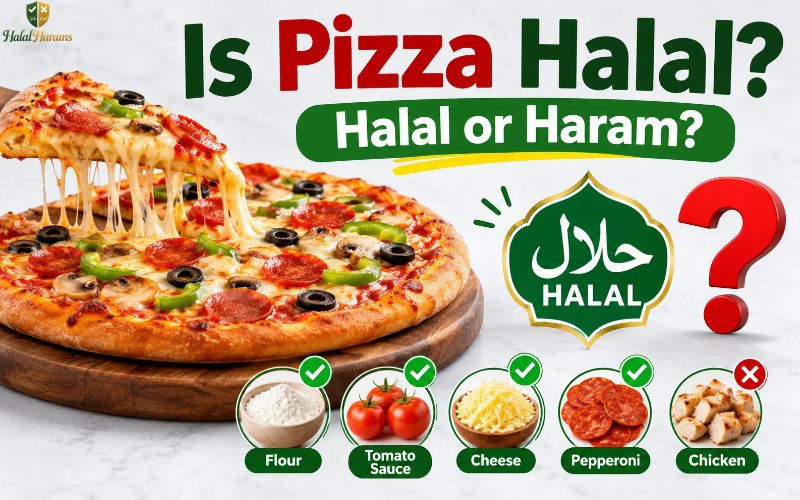
Is pizza halal? The answer depends on its ingredients, meat, cheese, and preparation. Pizza is a popular food enjoyed by Muslims around the world, but not every pizza is automatically halal. A simple cheese pizza may be permissible, while a meat pizza containing pork pepperoni, non-halal chicken, or prohibited ingredients can make it unsuitable for Muslims. Even ingredients that seem harmless, such as cheese, enzymes, and sauces, sometimes require closer attention.
Islamic dietary rules do not prohibit pizza itself; they focus on what goes into the food and how it is prepared. Whether you order from a famous pizza chain, buy a frozen pizza, or make one at home, understanding these details can help you make the right choice.
Let’s look at what Islam says about pizza and how Muslims can identify a genuinely halal option.
Is Pizza Halal or Haram in Islam?
Pizza is generally halal in Islam because its basic ingredients, such as flour, vegetables, tomato sauce, and ordinary spices, are permissible to eat.
However, its halal status changes when prohibited ingredients are added or halal dietary requirements are not followed.
| Pizza Type | Halal Status | Reason |
|---|---|---|
| Plain cheese pizza | Generally halal | Depends on cheese ingredients |
| Vegetable pizza | Generally halal | Check cheese and sauces |
| Chicken pizza | Depends | Chicken must be halal-slaughtered |
| Beef pizza | Depends | Beef must come from halal slaughter |
| Pork pepperoni pizza | Haram | Contains pork |
| Seafood pizza | Generally halal | Depends on seafood and preparation |
Muslims should not judge pizza only by its name or appearance. The ingredients and preparation methods determine whether it is permissible.
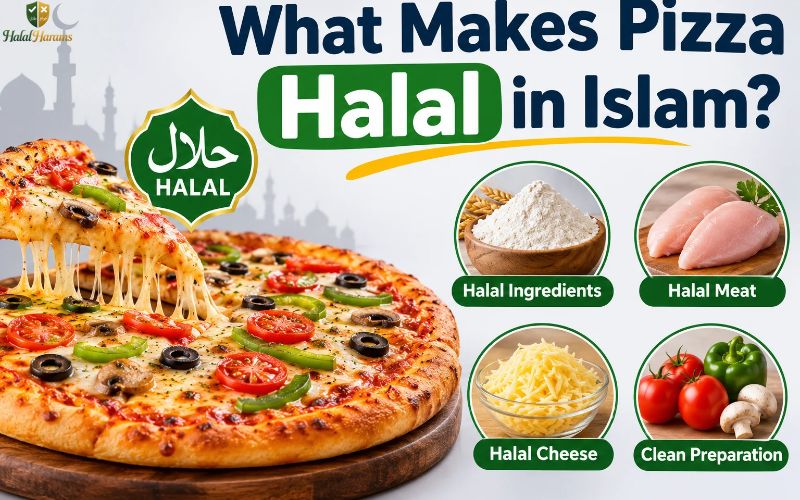
What Makes Pizza Halal in Islam?
Islamic dietary rules provide clear guidance about which foods Muslims can eat. Allah says in the Quran:
“Eat of the good things which We have provided for you.” (Surah Al-Baqarah 2:172)
This guidance encourages Muslims to choose permissible and wholesome food.
For pizza to be halal, its ingredients must be permissible, and its meat must meet Islamic slaughter requirements where applicable.
There are four main areas to consider:
Halal Ingredients
Pizza dough, tomato sauce, vegetables, and ordinary seasonings are generally halal. However, some processed ingredients may contain animal-derived substances or alcohol-based additives.
Halal Meat
Chicken, beef, and other permissible animals must meet Islamic slaughter requirements. Meat from an animal that was not slaughtered according to the applicable Islamic rules is not halal.
Halal Cheese
Cheese can contain animal-derived rennet, which requires attention. Its ruling depends on the source of the rennet and the scholarly position being followed.
Clean Preparation
Pizza should not be contaminated by pork, non-halal meat, or other prohibited substances during preparation, cooking, or serving.
Related Post: Is Bitcoin Halal or Haram? An Islamic Guide to Cryptocurrency
Which Pizza Ingredients Can Make It Haram?
Not every pizza ingredient creates a concern. Some are clearly permissible, while others require checking their source.
| Ingredient | Islamic Status | What to Check |
|---|---|---|
| Wheat flour | Halal | Ordinary ingredients |
| Tomato sauce | Generally halal | Added wine or prohibited additives |
| Mozzarella cheese | Depends | Rennet source |
| Vegetables | Halal | No prohibited additives |
| Chicken | Depends | Islamic slaughter |
| Beef | Depends | Islamic slaughter |
| Pork pepperoni | Haram | Contains pork |
| Bacon | Haram if pork-based | Meat source |
| Animal enzymes | Depends | Animal source and processing |
The most common concerns are processed meat, cheese enzymes, and certain food additives.
A pizza does not become halal simply because it contains vegetables or cheese. Every questionable ingredient should be checked.
Is Pizza Dough Halal?
Traditional pizza dough is made using flour, water, yeast, salt, and sometimes olive oil or sugar. These ingredients are generally halal.
The concern usually comes from commercial dough recipes that may contain additional ingredients.
For example, some manufacturers use dough conditioners, emulsifiers, or other additives. Their halal status depends on their sources and manufacturing processes.
| Dough Ingredient | Halal Status |
|---|---|
| Flour | Halal |
| Water | Halal |
| Yeast | Generally halal |
| Salt | Halal |
| Olive oil | Halal |
| Sugar | Halal |
| Animal-based additives | Requires checking |
| Alcohol-based ingredients | Requires scholarly assessment |
Practical advice: If you are buying frozen pizza or ready-made dough, check the ingredient list for questionable additives. Ordinary homemade pizza dough is usually a straightforward halal option.
Is Pizza Cheese Halal?
Cheese is one of the ingredients that Muslims sometimes overlook when checking pizza.
Most traditional mozzarella cheese is made using milk, cultures, salt, and an enzyme called rennet. Rennet helps milk form curds during cheese production.
The source of this enzyme matters.
- Microbial rennet: Generally accepted as halal.
- Vegetable rennet: Generally accepted as halal.
- Animal rennet: Requires checking its animal source and slaughter status, particularly under the Hanafi school.
- Pork-derived enzymes: Not permissible.
There are differences among Islamic schools regarding animal rennet. Hanafi scholars generally have a more restrictive position on rennet taken from animals that were not Islamically slaughtered. Some other scholars permit certain forms of rennet based on their understanding of the relevant evidence.
For Muslims who want to avoid uncertainty, choosing cheese with microbial or vegetable rennet is a practical option.
Related Post: Is Milk Halal? Complete Islamic Rulings on Milk(2026)
Is Pepperoni Pizza Halal?
Traditional pepperoni is commonly made from pork or a mixture of pork and beef. Therefore, ordinary pork pepperoni pizza is haram for Muslims.
However, some manufacturers produce beef or turkey pepperoni as alternatives.
These alternatives are not automatically halal. Their meat must come from permissible animals slaughtered according to Islamic requirements, and their ingredients must also be halal.
| Pepperoni Type | Halal Status |
|---|---|
| Pork pepperoni | Haram |
| Non-halal beef pepperoni | Haram |
| Halal-certified beef pepperoni | Halal |
| Halal-certified turkey pepperoni | Halal |
| Vegetable pepperoni | Depends on ingredients |
Always check the packaging or ask the restaurant whether its pepperoni is genuinely halal-certified.
Is Chicken and Beef Pizza Halal?
Chicken and beef are permissible animals in Islam. However, eating their meat requires more than simply knowing which animal it came from.
The animal must be slaughtered according to Islamic requirements, and the meat should remain free from prohibited contamination.
For example, a chicken pizza made with ordinary supermarket chicken is not automatically halal. You need to know whether the chicken meets Islamic slaughter requirements.
The same rule applies to beef pizza.
Important Difference Between Halal and Non-Halal Meat
| Meat Source | Islamic Ruling |
|---|---|
| Halal-slaughtered chicken | Halal |
| Chicken without verified halal slaughter | Cannot automatically be considered halal |
| Halal-slaughtered beef | Halal |
| Non-halal beef | Haram |
| Pork sausage | Haram |
A restaurant using chicken or beef does not necessarily mean its pizza is suitable for Muslims.
Is Vegetable Pizza Halal?
Vegetable pizza is generally a good option for Muslims because vegetables, mushrooms, olives, onions, tomatoes, and peppers are permissible foods.
However, there are still a few things to consider.
First, check whether the cheese contains questionable animal-derived rennet. Second, make sure the sauces do not contain prohibited ingredients.
Finally, consider how the pizza is prepared. If a restaurant uses the same utensils, cutting equipment, or cooking surfaces for pork products without proper cleaning, cross-contamination may become a concern.
A vegetable pizza with halal ingredients and clean preparation is generally permissible.
Related Post: Is Lamb Halal or Haram? Can Muslims Eat It(2026)
Can Muslims Eat Pizza From Restaurants?
Yes, Muslims can eat restaurant pizza when its ingredients and preparation meet Islamic dietary requirements.
The challenge is that restaurants do not all follow the same ingredient standards. Some use halal-certified meat, while others use ordinary meat from suppliers whose slaughter practices are not verified.
Before ordering, ask the restaurant a few direct questions:
- Is your chicken or beef halal-certified?
- Does your pepperoni contain pork?
- What type of rennet is used in your cheese?
- Are vegetarian pizzas prepared separately from pork products?
- Do your sauces contain wine or other prohibited ingredients?
You do not need to investigate every ordinary ingredient without reason. Focus on ingredients that have a genuine possibility of being haram.
Are Pizza Chains Halal?
Many Muslims wonder whether popular pizza chains are halal. The answer is not always the same because restaurants can use different suppliers, recipes, and preparation methods in different countries.
A pizza chain may offer halal chicken in one country but use non-halal meat in another.
Even individual branches may have different certification arrangements.
| Restaurant Type | What Muslims Should Check |
|---|---|
| International pizza chains | Country-specific ingredients and certification |
| Local pizza restaurants | Meat suppliers and preparation |
| Halal-certified restaurants | Valid certification and covered menu items |
| Vegetarian pizza outlets | Cheese, sauces, and food preparation |
Do not assume that a restaurant is halal simply because it operates in a Muslim-majority country.
Likewise, a restaurant without an entirely halal menu may still offer specific halal-certified products. Check the particular branch and product rather than relying on the brand name.
What Does the Quran Say About Eating Pizza?
The Quran does not mention pizza specifically because it is a modern food. However, it provides general principles that apply to all foods, including pizza.
Allah says:
“He has only forbidden to you dead animals, blood, the flesh of swine…” (Surah Al-Baqarah 2:173)
This verse identifies important prohibited foods.
The Quran also instructs Muslims to eat what is lawful and good. These principles mean that Muslims should avoid pork, prohibited meat, and harmful or unlawful ingredients.
The Prophet Muhammad (peace be upon him) also taught that halal and haram matters should be taken seriously. In an authentic hadith recorded in Sahih al-Bukhari and Sahih Muslim, he explained that lawful and unlawful matters are clear, while some matters between them are doubtful.
This provides a useful lesson for modern food choices: Muslims should avoid clearly prohibited ingredients and seek reliable information when an ingredient is genuinely uncertain.
Related Post: Is Sugar Alcohol Halal? Complete Guide For Muslims
What Should You Do If You Are Unsure About Pizza?
Sometimes a restaurant employee cannot explain the ingredients, or the packaging does not provide enough information.
In such situations, use a practical approach rather than guessing.
- Check the ingredient label: Look for pork, animal enzymes, and questionable additives.
- Ask about meat: Confirm whether chicken and beef are halal-slaughtered.
- Look for certification: Check whether the certification applies to the specific product or branch.
- Consider preparation: Ask about shared equipment when cross-contamination is a realistic concern.
- Choose a simple alternative: A homemade vegetable pizza with verified halal cheese can avoid many common doubts.
If you have already eaten something without knowing that it contained a prohibited ingredient, do not confuse an honest mistake with deliberately eating haram food. Islamic teachings recognize the importance of intention and knowledge.
Frequently Asked Questions
Is all pizza halal?
No. Pizza is not automatically halal. Its status depends on the meat, cheese, sauces, additives, and preparation methods used.
Is cheese pizza halal for Muslims?
Cheese pizza is generally halal if its cheese contains permissible ingredients and its preparation does not involve prohibited substances or contamination.
Can Muslims eat pepperoni pizza?
Muslims cannot eat traditional pork pepperoni pizza. Halal-certified beef or turkey pepperoni can be permissible alternatives.
Is Domino’s pizza halal?
Domino’s halal status varies by country and branch. Muslims should check local ingredients, meat suppliers, and halal certification before ordering.
Is frozen pizza halal?
Frozen pizza can be halal if its ingredients, meat, cheese, and additives are permissible. Always check the product label and certification.
Can Muslims eat pizza without halal certification?
Yes, a lack of certification does not automatically make pizza haram. However, Muslims should verify questionable ingredients and meat sources before eating.
Related Post: Are Oysters Halal? Complete Islamic Rulings(2026)
Final Verdict: Is Pizza Halal?
Pizza is generally halal in Islam, but its permissibility depends on what goes into it and how it is prepared. Plain vegetable pizza and simple cheese pizza are often suitable choices, provided their ingredients are permissible.
The biggest concerns are pork pepperoni, non-halal chicken or beef, animal-derived rennet, and prohibited additives. Muslims should not assume that every pizza from a popular restaurant or food chain is halal.
The safest approach is to check the meat source, cheese ingredients, and preparation methods before ordering. When possible, choose halal-certified meat and verified ingredients. This allows you to enjoy pizza without ignoring Islamic dietary responsibilities.
