
Fish is one of the most common types of seafood eaten around the world. It is used in many dishes, including fried fish, grilled fish, fish curry, sushi, and fish sandwiches. For Muslims, fish is also an important food because Islamic teachings give clear guidance about seafood. This leads to a common question: Is fish halal?
In general, fish is halal in Islam and can be eaten without requiring the same type of slaughter used for land animals. This makes fish different from animals such as chicken, beef, and lamb, which have specific slaughter requirements.
Most Islamic scholars agree that fish are permissible to eat. However, some differences can appear when discussing sea animals that are not considered fish, such as certain shellfish and other marine creatures. These differences can depend on the Islamic school of thought.
The way fish is prepared should also be considered. A fish dish may contain haram ingredients, such as alcohol-based sauces or other prohibited additives.
In this guide, you will learn why fish is halal, what Islamic scholars say about seafood, and which things Muslims should check when buying or eating fish.
Short Answer:
Most fish are considered halal in Islam by all major schools of thought. However, preparation methods and certain seafood categories may still require attention.
What Is Fish?
A fish is a cold-blooded aquatic animal that lives in freshwater or saltwater, breathes through gills, and swims using fins. Fish are an important source of protein, vitamins, and omega-3 fatty acids. Popular edible fish include salmon, tuna, cod, tilapia, catfish, and mackerel. In Islam, fish is widely accepted as a halal food, making it a common choice for Muslims around the world.
Popular fish varieties include:
- Salmon
- Tuna
- Cod
- Tilapia
- Sardines
- Mackerel
Fish is generally accepted as halal by the majority of Islamic scholars.
Why Halal Status Matters
For food to be halal in Islam:
- It must be permissible according to Islamic teachings
- It must not contain haram ingredients
- It should avoid contamination from prohibited substances
Even halal foods can become questionable if prepared improperly.
What Does the Quran Say About Seafood?
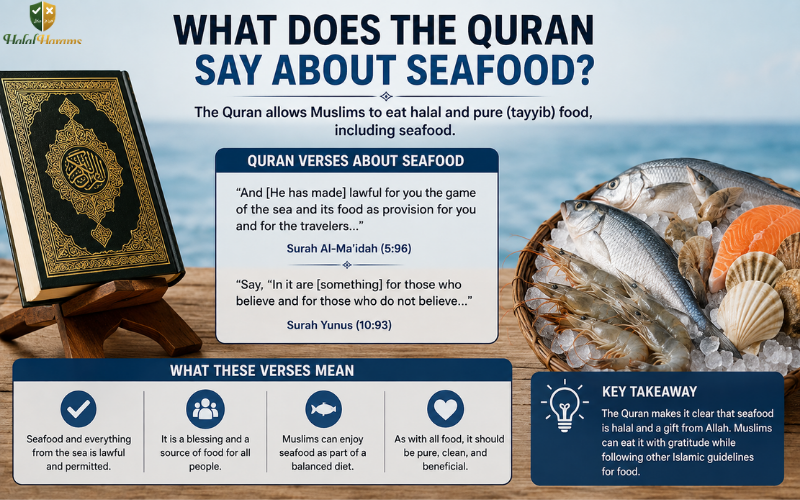
The Quran broadly permits food from the sea.
Quranic Perspective on Seafood
| Topic | Islamic Understanding |
|---|---|
| Seafood from the sea | Generally permissible |
| Fish consumption | Widely accepted |
| Marine food | Allowed for believers |
Many scholars use Quranic verses as evidence that fish is halal.
Related Post: Is Alligator Halal
Is Fish Halal in All Schools of Thought?
Most Islamic schools agree that fish is halal.
Islamic School Opinions
| School of Thought | Fish Ruling |
|---|---|
| Hanafi | ✅ Halal |
| Shafi’i | ✅ Halal |
| Maliki | ✅ Halal |
| Hanbali | ✅ Halal |
Fish has one of the strongest agreements in Islamic dietary law.
Why Fish Is Generally Considered Halal
Fish is usually considered halal because:
- It comes from water
- It is specifically permitted in Islamic teachings
- It does not require traditional slaughter like land animals
Seafood has simpler halal rulings than meat from land animals.
Does Fish Need Halal Slaughter?
Unlike chickens, cows, and goats, fish generally do not require Islamic slaughter.
Slaughter Requirement Comparison
| Animal Type | Halal Slaughter Required |
|---|---|
| Chicken | ✅ Yes |
| Cow | ✅ Yes |
| Goat | ✅ Yes |
| Fish | ❌ No |
This makes fish easier for Muslims to consume confidently.
Types of Fish Muslims Commonly Eat
Many fish varieties are widely accepted as halal.
Popular Halal Fish Types
| Fish Type | Halal Status |
|---|---|
| Salmon | ✅ Halal |
| Tuna | ✅ Halal |
| Cod | ✅ Halal |
| Sardines | ✅ Halal |
| Tilapia | ✅ Halal |
Ordinary fish are generally permissible across all schools.
Difference Between Fish and Other Seafood
Some seafood categories create scholarly debate.
Fish vs Other Seafood
| Seafood Type | Halal Status |
|---|---|
| Fish | ✅ Halal |
| Shrimp | ⚠️ Minor debate |
| Crab | ⚠️ Scholarly differences |
| Lobster | ⚠️ Different opinions |
| Octopus | ⚠️ Different opinions |
Fish itself is the least controversial seafood category.
Is Raw Fish Halal?
Raw fish is generally halal if:
- The fish itself is halal
- No haram ingredients are added
- Preparation remains clean
Sushi-grade fish is usually permissible.
Is Fried Fish Halal?
Fried fish is halal if:
- The batter ingredients are halal
- Frying oil is clean
- No cross-contamination occurs
Fried Fish Concerns
| Factor | Concern |
|---|---|
| Shared fryers | Medium |
| Batter additives | Medium |
| Cooking oil | Low |
Restaurant preparation methods matter.
Fish and Cross-Contamination
Even halal fish can become doubtful if prepared with haram foods.
Cross-Contamination Risks
| Area | Risk Level |
|---|---|
| Shared fryers | Medium |
| Cooking grills | Medium |
| Utensils | Medium |
| Sauces | Medium |
Strict halal followers often check preparation methods carefully.
Fish Sauces and Ingredient Concerns
Some fish dishes contain sauces that may include:
- Alcohol
- Non-halal flavorings
- Gelatin
- Unknown additives
Ingredient labels should always be checked.
Is Fish Oil Halal?
Fish oil is usually halal because it comes from halal seafood.
Fish Oil Guide
| Product | Halal Status |
|---|---|
| Fish oil supplements | ✅ Usually halal |
| Cod liver oil | ✅ Halal |
| Omega-3 capsules | ⚠️ Check capsule ingredients |
Gelatin capsules may require verification.
Fish in Restaurants
Restaurant fish dishes may contain:
- Alcohol-based marinades
- Non-halal sauces
- Shared fryer contamination
Muslims should ask about preparation details when dining out.
Is Farmed Fish Halal?
Farmed fish is generally halal if:
- The fish species is halal
- Feed ingredients are acceptable
Most scholars still consider farmed fish halal.
Related Post: Is Catfish Halal? Complete Guide For Muslims(2026)
Fish in Processed Foods
Processed fish products may include:
- Artificial flavorings
- Emulsifiers
- Preservatives
- Gelatin additives
Reading ingredient labels is important.
Why Fish Is Widely Accepted in Islam
Fish is commonly accepted because:
- Quranic teachings permit seafood
- Fish is not considered predatory land meat
- Early Muslims consumed seafood
Fish remains one of the clearest halal food categories.
Nutritional Benefits of Fish
Fish provides many health benefits.
Fish Nutrition Overview
| Nutrient | Benefit |
|---|---|
| Omega-3 fats | Heart health |
| Protein | Muscle growth |
| Vitamin D | Bone support |
| Selenium | Immune health |
Fish is considered one of the healthiest protein sources.
Common Misconceptions
“All seafood is identical”
Different seafood categories may have different rulings.
“Fish requires halal slaughter”
Most scholars say fish does not require traditional slaughter.
“Restaurant fish is always halal”
Sauces and preparation methods still matter.
Why Muslims Prefer Fish
Many Muslims choose fish because:
- It is widely accepted as halal
- It is nutritious
- It avoids many meat-related halal concerns
Fish is often viewed as a safe halal option.
Safer Ways to Consume Fish
To ensure fish remains halal:
- Avoid alcohol-based marinades
- Choose clean preparation areas
- Verify sauces and additives
- Prefer halal-certified seafood restaurants
Awareness helps avoid doubtful ingredients.
Fish and Global Muslim Diets
Fish plays an important role in many Muslim cultures:
- Middle Eastern cuisine
- South Asian seafood dishes
- Southeast Asian cooking
- Mediterranean diets
Fish is deeply connected to halal culinary traditions worldwide.
Why This Topic Matters
Understanding whether fish is halal matters because:
- Seafood rulings can confuse some Muslims
- Restaurant preparation varies
- Muslims want confidence in their dietary choices
Proper knowledge supports informed halal decisions.
FAQs
Is fish halal
Yes, most fish are considered halal by all major Islamic schools of thought.
Does fish require halal slaughter
No, fish generally does not require traditional halal slaughter.
Is fried fish halal
Yes, if halal ingredients and clean preparation methods are used.
Is raw fish halal
Raw fish is generally halal if no haram ingredients are added.
Why do some seafood items have different rulings
Some seafood types are not classified as ordinary fish, leading to scholarly differences.
What is the safest seafood option
Ordinary fish such as salmon, tuna, and cod are usually the safest halal seafood choices.
Final Remarks
Fish is one of the clearest and most widely accepted halal foods in Islam. All major Islamic schools generally agree that ordinary fish are permissible to eat, making seafood an important and trusted source of nutrition for Muslims around the world. However, preparation methods, sauces, additives, and restaurant contamination can still affect halal status in certain situations. By checking ingredients carefully and choosing clean preparation methods, Muslims can confidently enjoy fish while following Islamic dietary principles. Understanding these rulings helps believers make informed choices and avoid unnecessary confusion about halal seafood consumption.
