
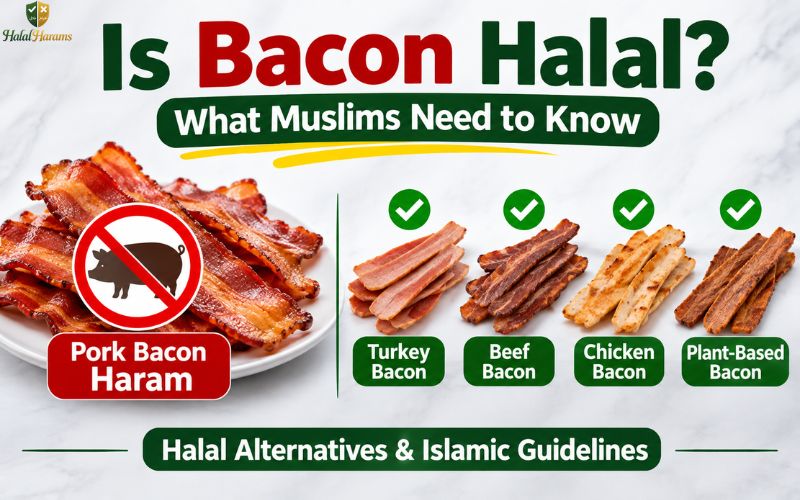
Is bacon halal? For Muslims, this is an important question because bacon is commonly associated with pork, one of the foods clearly forbidden in Islam. However, not every product sold as bacon is made from pork. Some manufacturers produce turkey bacon, beef bacon, and even plant-based bacon as alternatives. This creates confusion about whether Muslims can eat these products or whether all types of bacon should be avoided.
The Islamic ruling depends on the animal used, how its meat was slaughtered, the ingredients added during processing, and how the product is prepared. Understanding these differences can help Muslims make better food choices without unnecessarily avoiding every bacon-style product.
In this guide, we will explain what Islam says about bacon, why pork bacon is haram, and when turkey or beef bacon can be considered halal.
Is Bacon Halal or Haram in Islam?
Traditional bacon is made from pork, which is strictly prohibited in Islam. Muslims cannot eat pork bacon, whether it is fried, smoked, cured, or added to another dish.
However, bacon made from other animals is not automatically haram. Beef bacon and turkey bacon can be halal if the meat comes from animals slaughtered according to Islamic requirements and the remaining ingredients are permissible.
| Type of Bacon | Islamic Ruling |
|---|---|
| Pork bacon | Haram |
| Turkey bacon | Depends on ingredients and slaughter |
| Beef bacon | Depends on ingredients and slaughter |
| Chicken bacon | Can be halal if properly sourced |
| Plant-based bacon | Generally halal, depending on ingredients |
The main rule is simple: Pork bacon is always haram, but non-pork bacon can be halal under the right conditions.
What Is Bacon Made From?
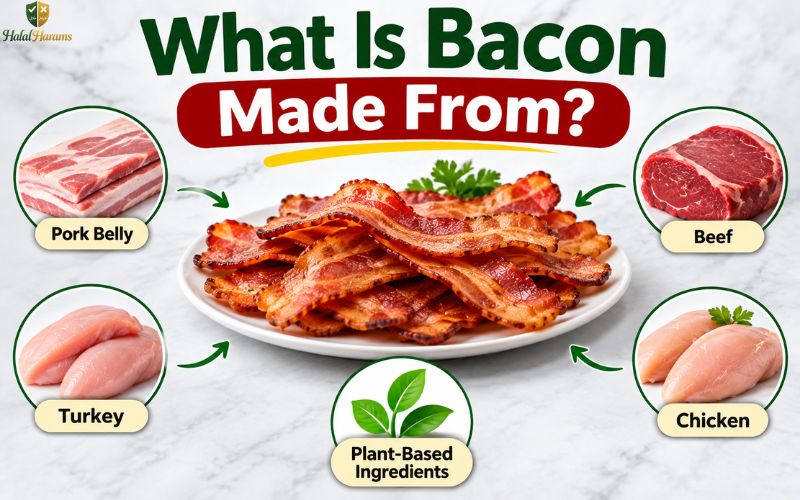
Traditional bacon is a processed meat product usually made from pork belly or other cuts of pork. The meat is cured with salt and other ingredients to preserve it and develop its familiar taste.
Some varieties are smoked to create a stronger flavor. Manufacturers may also add sugar, spices, preservatives, and flavorings.
Today, bacon-style products are made from different ingredients, including:
- Pork belly
- Beef
- Turkey
- Chicken
- Plant-based ingredients
Although these products may look similar, their Islamic rulings are different. Muslims should check the actual meat source instead of judging a product by its appearance or name.
Related Post: Is Pizza Halal or Haram? A Complete Islamic Guide
Why Is Pork Bacon Haram in Islam?
Islam clearly prohibits eating pork. This ruling comes directly from the Quran and is not dependent on personal preference, cooking methods, or the way the meat is processed.
Allah says:
“He has only forbidden to you dead animals, blood, the flesh of swine…” (Surah Al-Baqarah 2:173)
The Quran also mentions the prohibition of pork in Surah Al-Ma’idah 5:3 and Surah Al-An’am 6:145.
These verses establish that pork is forbidden for Muslims.
This means cooking pork bacon at a high temperature, smoking it, curing it with salt, or mixing it with other ingredients does not make it halal.
The prohibition applies to pork itself, regardless of how it is prepared or served.
Can Muslims Eat Turkey Bacon?
Yes, Muslims can eat turkey bacon if it meets Islamic dietary requirements. Turkey is a halal animal, so its meat is permissible when slaughtered according to Islamic rules.
However, turkey bacon sold in supermarkets is not automatically halal.
Some products may contain turkey from unverified slaughter sources, questionable flavorings, or other non-halal ingredients.
Before buying turkey bacon, check:
- Whether the turkey is halal-slaughtered.
- Whether the product contains permissible seasonings and preservatives.
- Whether animal-derived additives come from halal sources.
- Whether the product has reliable halal certification.
A halal-certified turkey bacon product from a trustworthy manufacturer is generally a suitable choice for Muslims.
Is Beef Bacon Halal?
Beef bacon can be halal because cattle are permissible animals in Islam. However, the animal must be slaughtered according to Islamic requirements.
The processing method also matters. Some beef bacon products contain flavorings, preservatives, or other additives that require checking.
For example, a manufacturer may use beef from a non-halal source or process the product using equipment contaminated with pork.
| Beef Bacon Condition | Islamic Status |
|---|---|
| Halal-slaughtered beef | Permissible |
| Beef from non-halal slaughter | Not permissible |
| Beef with halal ingredients | Permissible if other conditions are met |
| Beef containing pork additives | Haram |
| Halal-certified beef bacon | Generally permissible |
Muslims should look beyond the words “100% beef.” This label identifies the meat source but does not confirm Islamic slaughter or halal processing.
Related Post: Is Bitcoin Halal or Haram? An Islamic Guide to Cryptocurrency
Is Chicken Bacon Halal?
Chicken bacon is another alternative for people who avoid pork. Since chicken is a permissible animal in Islam, chicken bacon can be halal when the chicken is slaughtered according to Islamic requirements.
The seasoning and processing must also meet halal standards. Some manufacturers use animal-based flavorings or additives that may come from prohibited sources.
Do not assume chicken bacon is halal just because it contains no pork. Check its certification, meat source, and ingredient list before purchasing.
Is Plant-Based Bacon Halal?
Plant-based bacon is usually made from ingredients such as soy, mushrooms, coconut, wheat protein, or other plant materials. It is designed to provide a bacon-like taste and texture without using traditional meat.
Most basic plant ingredients are halal. However, the finished product still needs checking.
Some manufacturers use artificial smoke flavor, flavor enhancers, enzymes, or other additives. Their sources and processing methods can affect the final ruling.
For example, a plant-based bacon product containing only permissible plant ingredients and halal additives is generally permissible.
Remember: Vegan does not always mean halal. A product can contain no animal meat but still include ingredients that Muslims need to avoid.
Which Bacon Ingredients Should Muslims Avoid?
Processed bacon may contain more than meat and salt. Manufacturers sometimes add preservatives, flavorings, and other ingredients to improve taste, texture, and shelf life.
Most ordinary food preservatives are not automatically haram. The concern is whether an ingredient comes from a prohibited source or contains something Islam forbids.
| Ingredient | What Muslims Should Know |
|---|---|
| Pork fat | Haram |
| Pork-derived gelatin | Haram |
| Animal enzymes | Check the source |
| Artificial smoke flavor | Generally permissible if ingredients are halal |
| Salt and sugar | Halal |
| Vegetable oil | Halal |
| Permissible spices | Halal |
| Alcohol-based flavoring | Requires checking and scholarly assessment |
An unfamiliar ingredient name does not automatically mean that a product is haram. Muslims should identify its source before making a judgment.
Related Post: Is Milk Halal? Complete Islamic Rulings on Milk(2026)
Does Cooking or Processing Make Pork Bacon Halal?
No. Cooking, frying, smoking, drying, and curing do not change the Islamic ruling on pork.
Some people believe that processing removes the original nature of an ingredient. However, ordinary food preparation does not make pork permissible.
Islamic scholars discuss a concept called Istihalah, which refers to a complete transformation of a substance into something different.
Scholars have different views about the scope and application of this principle in certain processed products. However, ordinary bacon production does not turn pork into halal meat.
Therefore, pork bacon remains prohibited even after it has been cooked, smoked, or processed.
Can Muslims Eat Food Cooked With Bacon Fat?
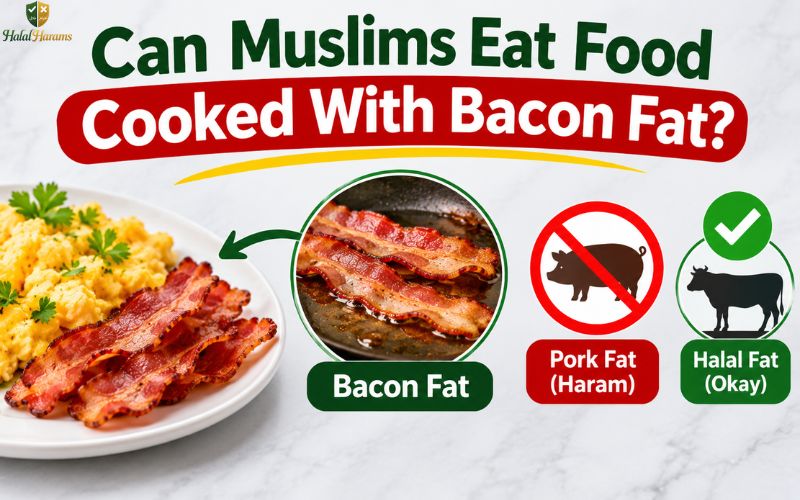
Muslims should avoid food prepared using pork fat because it comes from a prohibited animal.
For example, if a restaurant fries eggs using pork bacon grease, the eggs become unsuitable for Muslims because they have been prepared with a prohibited substance.
The same concern applies to vegetables, potatoes, burgers, and other dishes cooked in pork fat.
However, ordinary beef or turkey fat is not automatically haram. Its permissibility depends on the animal source and Islamic slaughter requirements.
| Cooking Fat | Islamic Status |
|---|---|
| Pork bacon grease | Haram |
| Halal beef fat | Halal |
| Halal turkey fat | Halal |
| Vegetable oil | Halal |
| Unknown animal fat | Requires verification |
If you are eating outside, ask the restaurant what type of fat or oil it uses for cooking.
What If Bacon Is Cooked With Halal Meat?
Cooking pork bacon together with halal chicken, beef, or another permissible food does not make the pork acceptable.
For example, a burger containing halal beef but topped with pork bacon is still haram to eat. The halal meat does not cancel out the prohibited ingredient.
The same applies to pizza, sandwiches, breakfast plates, and pasta dishes.
There is also a difference between actual contact and simply using the same kitchen. Shared equipment requires proper cleaning if it has been contaminated with pork.
Muslims should avoid food that contains pork or has been contaminated with it.
Islamic Schools of Thought About Bacon?
The four major Sunni schools of Islamic jurisprudence (Hanafi, Maliki, Shafi’i, and Hanbali) agree that eating pork is prohibited.
There is no meaningful disagreement among these schools about the basic ruling on pork bacon.
Some differences arise when discussing modern processed foods, animal-derived additives, and the transformation of prohibited substances.
For example, scholars may examine whether a particular enzyme or flavoring has undergone a transformation that changes its legal status.
These discussions do not make ordinary pork bacon permissible. For non-pork alternatives, Muslims should follow reliable halal standards and the guidance of scholars they trust.
Related Post: Is Sugar Alcohol Halal? Complete Guide For Muslims
How to Identify Halal Bacon at the Grocery Store?
Buying bacon alternatives requires more attention than simply reading the product name. A package labeled turkey bacon or beef bacon does not guarantee that it meets Islamic requirements.
Use these practical checks before purchasing:
- Read the meat source: Confirm whether the product contains turkey, beef, chicken, or pork.
- Check halal certification: Look for a trustworthy certification covering the actual product.
- Read the ingredients: Check for animal fats, gelatin, enzymes, and questionable flavorings.
- Check the manufacturer: If information is unclear, contact the manufacturer.
- Check storage and handling: Make sure the product has not been contaminated with pork.
A clear halal label from a reliable certifying organization can make shopping easier, especially when buying processed meat.
Common Misconceptions About Bacon in Islam
There are several misunderstandings about bacon that can lead Muslims to make incorrect food choices.
- All bacon is pork: Not necessarily. Turkey, beef, chicken, and plant-based alternatives also exist.
- Turkey bacon is always halal: False. Its slaughter source and additional ingredients matter.
- Cooking removes the haram status: False. Frying or smoking does not make pork permissible.
- Vegan bacon is automatically halal: Not always. Additives and flavorings still need consideration.
- Halal meat makes the entire dish halal: False. Other ingredients and preparation methods must also be permissible.
Understanding these differences helps Muslims avoid both prohibited foods and unnecessary confusion.
Related Post: Is Lamb Halal or Haram? Can Muslims Eat It(2026)
Frequently Asked Questions About Bacon
Is bacon haram in Islam?
Traditional pork bacon is haram because pork is explicitly prohibited in the Quran. Beef and turkey bacon may be halal if they meet Islamic requirements.
Is turkey bacon halal for Muslims?
Turkey bacon can be halal if the turkey is slaughtered according to Islamic rules and the product contains no prohibited ingredients or contaminants.
Is beef bacon halal or haram?
Beef bacon can be halal when the cattle are properly slaughtered according to Islamic requirements and all additional ingredients are permissible.
Can Muslims eat bacon made without pork?
Yes, Muslims can eat non-pork bacon made from halal meat or permissible plant ingredients, provided its processing and ingredients meet Islamic dietary requirements.
Is bacon grease haram?
Pork bacon grease is haram because it comes from pork. Grease from properly slaughtered halal animals or permissible vegetable oils can be halal.
Does halal-certified bacon contain pork?
Genuine halal-certified bacon should not contain pork. However, Muslims should check that the certification is reliable and applies to the specific product.
Final Verdict: Is Bacon Halal?
Is bacon halal? Traditional pork bacon is completely haram in Islam, and no amount of cooking, smoking, or seasoning changes this ruling.
However, Muslims do not have to avoid every product called bacon. Beef bacon, turkey bacon, and chicken bacon can be permissible when their meat comes from halal-slaughtered animals and their remaining ingredients meet Islamic requirements. Plant-based bacon can also be halal when made with permissible ingredients.
The safest choice is to purchase properly halal-certified bacon alternatives and check their ingredients before eating. Do not rely on product names alone.
Islam teaches Muslims to be careful about what they consume. Understanding the difference between pork bacon and halal alternatives makes it easier to follow Islamic dietary rules while enjoying different foods.
