
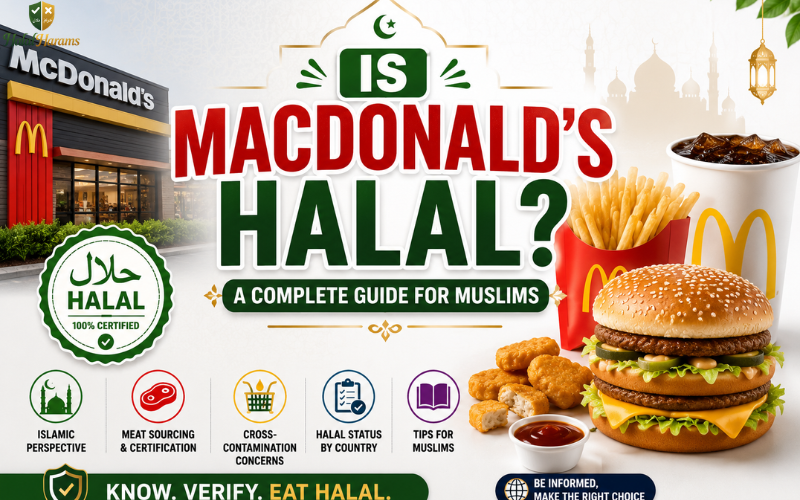
McDonald’s is one of the most well-known fast-food chains in the world, serving burgers, chicken, fries, breakfast items, and desserts. Because Muslims have specific rules about what they can eat, many people ask, “Is McDonald’s halal?”
The answer is not the same everywhere. McDonald’s halal status depends on the country, restaurant, ingredients, and food preparation methods. In some Muslim-majority countries, McDonald’s offers halal-certified food. In other countries, its restaurants may not be halal certified, and some menu items may contain ingredients that Muslims avoid.
It is also important to check more than just the meat. Sauces, cheese, buns, seasonings, and other ingredients can sometimes affect whether a menu item is suitable for a halal diet. Preparation practices may also differ from one location to another.
For this reason, you should not assume that McDonald’s is halal worldwide simply because the restaurant has the same name and logo. The safest approach is to check the specific McDonald’s location and its current halal information before ordering.
In this guide, you will learn how McDonald’s halal status differs by country and what Muslims should check before eating there.
Short Answer:
McDonald’s is halal only in certain countries and locations where halal-certified meat and ingredients are used. Most McDonald’s locations in the United States are not halal-certified.
What Is McDonald’s?
McDonald’s is a global fast-food company famous for:
- Burgers
- Fries
- Chicken nuggets
- Breakfast sandwiches
- Desserts
- Soft drinks
McDonald’s operates in over 100 countries and adjusts its menu based on local culture and dietary laws.
Because suppliers differ by country, halal status also varies.
Why Halal Status Matters
For food to be halal in Islam:
- Meat must come from halal-slaughtered animals
- Pork and alcohol must be avoided
- Cross-contamination with haram ingredients should not occur
- Ingredients and additives must be permissible
Fast-food restaurants often use different suppliers and preparation methods worldwide.
Is McDonald’s Halal?
The General Answer
Some McDonald’s branches are halal-certified, while many are not.
Halal availability depends on:
- Country regulations
- Local suppliers
- Restaurant certification
- Kitchen preparation practices
Muslims should never assume every McDonald’s location is halal.
McDonald’s Halal Status by Country
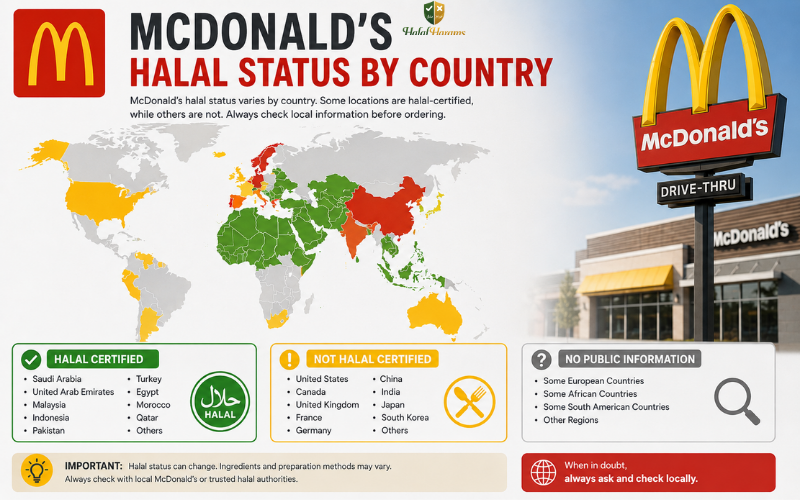
Different countries follow different sourcing policies.
McDonald’s Halal Status Worldwide
| Country | Halal Status |
|---|---|
| Saudi Arabia | ✅ Halal |
| UAE | ✅ Halal |
| Pakistan | ✅ Halal |
| Malaysia | ✅ Halal |
| Indonesia | ✅ Halal |
| USA | ❌ Mostly not halal |
| Canada | ❌ Mostly not halal |
| UK | ⚠️ Limited halal items in some areas |
| India | ⚠️ Different menu system |
Muslim-majority countries usually require halal-certified meat.
Why Most US McDonald’s Are Not Halal
Most McDonald’s restaurants in the United States:
- Do not use halal-certified meat
- Use conventional meat suppliers
- Do not separate halal and non-halal foods
This makes most American McDonald’s meals unsuitable for strict halal consumers.
Chicken and Beef Concerns
The halal status mainly depends on slaughter methods.
Meat Source Concerns
| Factor | Concern |
|---|---|
| Slaughter method | Major concern |
| Halal certification | Usually unavailable |
| Shared preparation | Medium concern |
Without halal slaughter, meat is generally considered non-halal in Islam.
Are McDonald’s Fries Halal?
McDonald’s fries are one of the most discussed menu items.
Fries Halal Status
| Country | Halal Status |
|---|---|
| USA | ⚠️ Ingredient concerns |
| Muslim countries | ✅ Usually halal |
| Europe | ⚠️ Varies |
Flavorings and shared fryers may create concerns.
See Also: Is Shrimp Halal
Why US Fries Are Controversial
In the United States, McDonald’s fries contain:
- Natural beef flavoring
- Added ingredients for taste
Some Muslims avoid them because:
- Beef flavor source may not be halal
- Shared fryers may be used
Ingredient transparency is important.
Are Fish Sandwiches Halal?
Fish products may seem safer, but preparation matters.
Fish Item Concerns
| Item | Halal Status |
|---|---|
| Filet-O-Fish | ⚠️ Check preparation |
| Fish fillets | ⚠️ Shared fryers |
| Tartar sauce | ✅ Usually halal |
Cross-contamination remains a concern.
Breakfast Menu Concerns
Breakfast items may contain:
- Pork bacon
- Sausage
- Non-halal meat products
Breakfast Item Guide
| Breakfast Item | Halal Status |
|---|---|
| Egg McMuffin | ⚠️ Depends |
| Sausage biscuit | ❌ Haram |
| Pancakes | ✅ Usually halal |
| Hash browns | ⚠️ Fryer concerns |
Pork products are common in many locations.
Cross-Contamination Risks
McDonald’s kitchens often prepare:
- Pork
- Non-halal beef
- Non-halal chicken
Cross-Contamination Areas
| Area | Risk Level |
|---|---|
| Fryers | High |
| Grills | Medium |
| Utensils | Medium |
| Preparation counters | Medium |
Strict halal followers may avoid shared kitchens entirely.
Halal McDonald’s in Muslim Countries
In countries such as:
- Saudi Arabia
- UAE
- Malaysia
- Pakistan
McDonald’s usually follows halal regulations and uses certified suppliers.
These locations often display halal certificates publicly.
Why Some Muslims Avoid McDonald’s Entirely
Some Muslims avoid McDonald’s because:
- Global policies differ
- Ingredient sourcing changes
- Cross-contamination risks exist
- Certification may not always be visible
Avoiding doubtful food is encouraged in Islamic teachings.
Why Some Muslims Eat at Certain Locations
Other Muslims may eat at:
- Halal-certified branches
- Muslim-majority country locations
- Restaurants with verified suppliers
Local verification is extremely important.
Scholarly Opinions on Fast Food
Islamic scholars often advise caution regarding fast-food chains without halal certification.
Scholarly Perspectives
| Opinion Type | View |
|---|---|
| Strict | Only halal-certified restaurants allowed |
| Moderate | Fish/vegetarian items may be acceptable |
| Lenient | Allowed unless clearly haram |
Individual interpretation may vary.
Vegetarian Items at McDonald’s
Some Muslims choose:
- Salads
- Fries
- Desserts
- Soft drinks
However:
- Shared equipment may still be used
- Additives should be checked carefully
Vegetarian does not always mean halal.
How to Check If Your McDonald’s Is Halal
To verify halal status:
- Ask restaurant management
- Look for halal certification
- Check local McDonald’s websites
- Verify supplier information
Never rely solely on assumptions or social media claims.
Halal Alternatives to McDonald’s
If your local McDonald’s is not halal, alternatives include:
- Local halal burger restaurants
- Halal-certified fast-food chains
- Homemade burgers and fries
Halal-certified restaurants provide greater certainty.
Nutrition and Health Considerations
McDonald’s food is often high in:
- Calories
- Sodium
- Saturated fat
Nutrition Overview
| Nutrient Factor | Level |
|---|---|
| Calories | High |
| Sodium | High |
| Protein | Moderate |
| Fiber | Low |
Moderation is important for overall health.
Common Misconceptions
“McDonald’s is halal everywhere”
Not true—halal status depends on the country and suppliers.
“Fish items are automatically halal”
Preparation methods and shared fryers still matter.
“Vegetarian items are always halal”
Cross-contamination and additives may still create concerns.
Why This Topic Matters
Understanding whether McDonald’s is halal matters because:
- It is one of the world’s largest restaurant chains
- Millions of Muslims eat fast food regularly
- Ingredient sourcing differs worldwide
Awareness helps Muslims make informed dietary choices.
Related Posts:
- Is Sushi Halal? A Complete Guide for Muslims
- Is Raising Cane’s Halal? A Complete Guide for Muslims
- Are Pop-Tarts Halal? A Complete Guide for Muslims
- Is Cheese Halal? A Complete Guide for Muslims
FAQs
Is McDonald’s halal
McDonald’s is halal only in certain countries and locations with halal-certified meat and ingredients.
Is McDonald’s halal in the USA
No, most McDonald’s locations in the United States are not halal-certified.
Are McDonald’s fries halal
Fries may contain questionable flavorings and shared fryer concerns depending on the country.
Is Filet-O-Fish halal
The fish itself may be halal, but preparation methods and cross-contamination should be checked.
Why does McDonald’s halal status vary
Different countries use different suppliers, regulations, and certification systems.
What is the safest option for Muslims
Halal-certified McDonald’s branches or verified halal restaurants are the safest choices.
Final Remarks
So, is McDonald’s halal? There is no single answer for every country. Some McDonald’s locations offer halal-certified food, while others do not. The ingredients, suppliers, and food preparation methods can also vary by location.
If you follow a halal diet, it is best to check the specific McDonald’s restaurant before ordering. Look for halal certification and check the ingredients of the meat, sauces, buns, and other menu items. When information is unclear, asking the restaurant directly is a simple way to avoid making assumptions.
The main thing to remember is that McDonald’s halal status depends on the location, not just the brand name. Checking current local information can help you make a confident and informed choice.
