
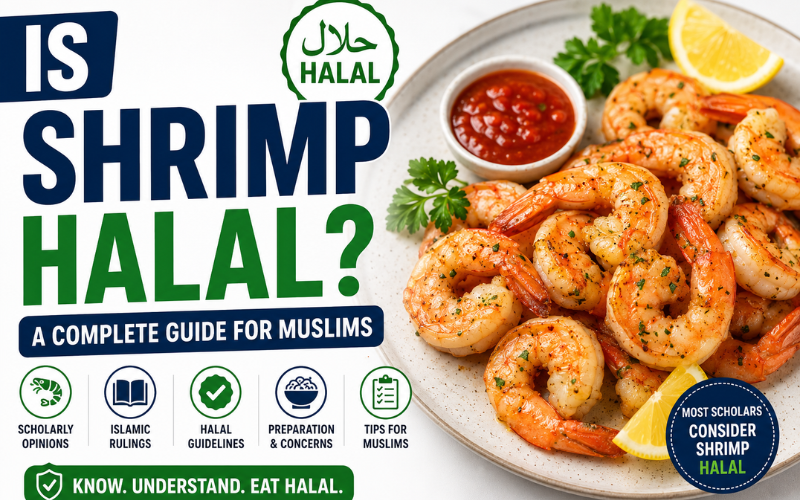
Shrimp is one of the most popular types of seafood and is enjoyed in many dishes, from fried shrimp to curries, pasta, and rice. For Muslims who follow Islamic dietary rules, a common question is, “Is shrimp halal?”
In general, shrimp is considered halal by many Islamic scholars because it is a sea animal. The Quran permits food from the sea, which is why seafood is widely accepted as permissible. However, there is some difference of opinion among Islamic schools of thought, especially within the Hanafi school. Some Hanafi scholars consider shrimp permissible, while others have had a more cautious view based on how shrimp is classified.
The way shrimp is prepared also matters. Plain shrimp can be halal, but a shrimp dish may contain haram ingredients, such as alcohol-based sauces or pork products. Cross-contact with non-halal foods can also be important for some Muslims.
In this guide, you will learn why shrimp is generally considered halal, how different scholars view it, and what to check when ordering shrimp at a restaurant. This information can help you make a choice that follows your understanding of Islamic dietary rules.
Is Shrimp Halal or Haram?
Short Answer:
Most Islamic scholars consider shrimp halal because it is seafood. However, some scholars in the Hanafi school classify shrimp differently and consider it makruh or doubtful.
What Is Shrimp?
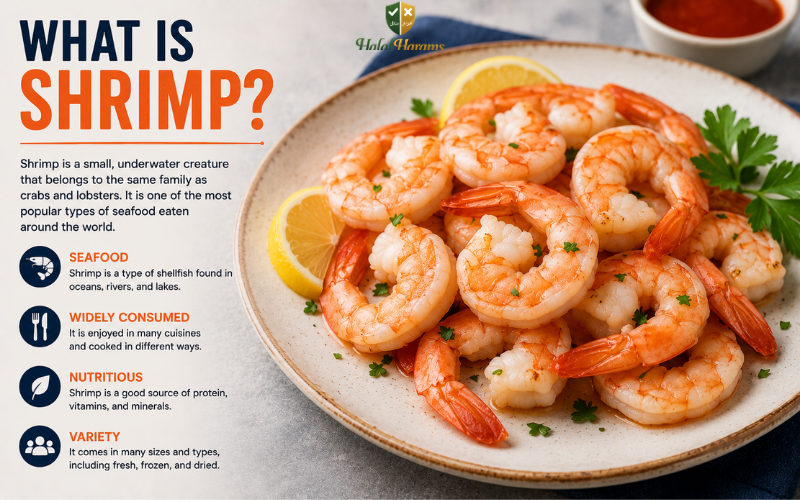
Shrimp is a small shellfish that lives in oceans, rivers, and other bodies of water. It belongs to the crustacean family and is closely related to:
- Prawns
- Lobsters
- Crabs
Shrimp is popular because it is:
- High in protein
- Low in calories
- Easy to cook
- Used in many cuisines worldwide
Shrimp is considered seafood, but scholarly interpretations differ regarding shellfish.
Why Halal Status Matters
For food to be halal in Islam:
- It must be permissible according to Islamic teachings
- It must not contain haram ingredients
- It should be prepared without contamination from prohibited substances
Seafood rulings vary among Islamic schools of thought.
What Does the Quran Say About Seafood?
The Quran generally allows seafood consumption.
Quranic Perspective on Seafood
| Source | Meaning |
|---|---|
| Quranic teachings | Seafood from the sea is generally permissible |
| Scholarly interpretation | Most seafood considered halal |
Many scholars use these verses to support the permissibility of shrimp.
Scholarly Opinions on Shrimp
Islamic scholars have different opinions regarding shrimp.
Major Scholarly Views
| School of Thought | View on Shrimp |
|---|---|
| Shafi’i | ✅ Halal |
| Maliki | ✅ Halal |
| Hanbali | ✅ Halal |
| Hanafi | ⚠️ Differing opinions |
Most scholars consider shrimp halal.
Why Some Hanafi Scholars Differ
Some Hanafi scholars distinguish between:
- Fish
- Shellfish/crustaceans
They argue shrimp resembles shellfish more than fish.
Hanafi Perspectives
| Opinion | View |
|---|---|
| Strict Hanafi | Shrimp is makruh |
| Moderate Hanafi | Shrimp is permissible |
| Contemporary Hanafi scholars | Many allow shrimp |
Modern Hanafi scholars often permit shrimp consumption.
Related Post: Is Raising Cane’s Halal
Is Shrimp Considered Fish?
Scientifically, shrimp is not classified as fish.
However, Islamic rulings do not always follow scientific classifications exactly.
Shrimp Classification
| Category | Classification |
|---|---|
| Scientific | Crustacean |
| Culinary | Seafood |
| Islamic scholarly view | Usually halal seafood |
Most Islamic scholars still permit shrimp despite its crustacean classification.
Types of Shrimp and Halal Status
Different shrimp products may contain additional ingredients.
Shrimp Product Guide
| Product Type | Halal Status |
|---|---|
| Fresh shrimp | ✅ Halal |
| Frozen shrimp | ✅ Usually halal |
| Breaded shrimp | ⚠️ Check ingredients |
| Shrimp sushi | ⚠️ Sauce concerns |
| Shrimp chips | ⚠️ Flavoring concerns |
Added ingredients can affect halal status.
Is Fried Shrimp Halal?
Fried shrimp is halal if:
- The batter ingredients are halal
- Frying oil is clean
- No cross-contamination occurs
Fried Shrimp Concerns
| Factor | Concern |
|---|---|
| Shared fryers | Medium |
| Batter additives | Medium |
| Cooking oil | Low |
Restaurant preparation methods matter.
Is Shrimp Sushi Halal?
Shrimp sushi is generally halal if:
- No alcohol-based sauces are used
- Ingredients are halal
- Cross-contamination is avoided
Sauces such as mirin-based glaze may create concerns.
Shrimp and Cross-Contamination
Seafood restaurants may also serve non-halal foods.
Cross-Contamination Risks
| Area | Risk Level |
|---|---|
| Fryers | Medium |
| Shared grills | Medium |
| Utensils | Medium |
| Sauces | Medium |
Strict halal observers often pay attention to preparation areas.
Processed Shrimp Products
Processed shrimp foods may contain:
- Artificial flavorings
- Gelatin
- Emulsifiers
- Alcohol-based seasonings
Ingredient labels should always be checked carefully.
Is Shrimp Halal in All Islamic Schools?
Most schools agree shrimp is permissible, but differences remain.
Islamic School Comparison
| School | Shrimp Ruling |
|---|---|
| Shafi’i | Halal |
| Hanbali | Halal |
| Maliki | Halal |
| Hanafi | Mixed opinions |
Muslims often follow the ruling of their preferred scholars.
Why Many Muslims Eat Shrimp
Many Muslims consume shrimp because:
- Most scholars permit it
- It is considered seafood
- It is commonly eaten in Muslim countries
Shrimp is widely accepted globally.
Why Some Muslims Avoid Shrimp
Some Muslims avoid shrimp because:
- Certain Hanafi scholars discourage it
- Shellfish classification creates doubts
- Restaurant contamination concerns exist
Avoiding doubtful food is encouraged in Islam.
Nutritional Benefits of Shrimp
Shrimp contains many nutrients.
Shrimp Nutrition Overview
| Nutrient | Benefit |
|---|---|
| Protein | Muscle support |
| Omega-3 fats | Heart health |
| Selenium | Immune support |
| Vitamin B12 | Energy production |
Shrimp can be part of a healthy diet.
Common Misconceptions
“All seafood is automatically halal”
Some schools differentiate between fish and shellfish.
“Shrimp is haram everywhere”
Most scholars actually consider it halal.
“Restaurant shrimp is always safe”
Preparation methods and sauces still matter.
How to Ensure Shrimp Is Halal
To confirm halal suitability:
- Check ingredients
- Avoid alcohol-based marinades
- Ask restaurants about preparation
- Choose halal-certified seafood restaurants
Verification helps avoid doubtful situations.
Halal Alternatives for Cautious Muslims
If someone avoids shrimp, alternatives include:
- Fish
- Salmon
- Tuna
- Vegetarian seafood substitutes
These options may provide more certainty for some Muslims.
Shrimp in Different Cuisines
Shrimp is popular worldwide.
Examples include:
- Japanese sushi
- Chinese stir-fry
- Cajun shrimp
- Mediterranean seafood dishes
Ingredients vary greatly between cuisines.
Why This Topic Matters
Understanding whether shrimp is halal is important because:
- It is consumed worldwide
- Scholarly differences exist
- Muslims want confidence in dietary choices
See Also: Is Sushi Halal
FAQs
Is shrimp halal
Most Islamic scholars consider shrimp halal.
Is shrimp haram in Hanafi Islam
Some Hanafi scholars consider shrimp makruh, while many modern Hanafi scholars permit it.
Is fried shrimp halal
Yes, if halal ingredients and clean preparation methods are used.
Is shrimp sushi halal
Usually yes, but sauces and additives should be checked carefully.
Why do scholars differ about shrimp
Differences arise from how scholars classify shellfish and seafood.
What is the safest option
Fresh shrimp prepared with halal ingredients is usually the safest choice.
Final Remarks
Shrimp remains one of the most discussed seafood items in Islamic dietary law. While the majority of Islamic scholars consider shrimp halal, some Hanafi scholars have historically viewed it as makruh or doubtful due to its classification as shellfish rather than fish. Despite these differences, shrimp is widely consumed in many Muslim communities around the world. The most important factor for Muslims today is ensuring that shrimp dishes are prepared with halal ingredients and without contamination from haram substances. By understanding scholarly opinions and checking preparation methods carefully, Muslims can make informed choices that align with their beliefs and level of comfort.
