
Hot Cheetos are a popular spicy snack known for their crunchy texture, bold red color, and strong chili flavor. They are sold in different varieties and are especially popular with people who enjoy hot and spicy snacks. For Muslims, however, taste is not the only thing to consider. Many people ask, “Are Hot Cheetos halal?”
The answer can depend on the exact Hot Cheetos product, ingredients, and country where it is made. Different flavors may contain different seasonings, cheese ingredients, enzymes, flavorings, and other additives. Some of these ingredients can have animal or other sources that Muslims may want to check before eating the product.
Another important point is that Hot Cheetos recipes can vary between countries. A product sold in the United States may not have the same ingredients or halal certification as one sold in another country. Because of this, checking a general answer online may not always be enough.
In this guide, you will learn what Hot Cheetos contain, which ingredients may raise halal concerns, and how to check the halal status of the specific product you have. We will also explain why checking the package and local certification can help you make a more informed choice.
Are Hot Cheetos Halal Or Haram?
Short Answer
Hot Cheetos are not universally halal. Some versions may be halal-friendly, but many are considered doubtful or not halal due to cheese enzymes, flavorings, and lack of halal certification.
What Are Hot Cheetos Made Of?
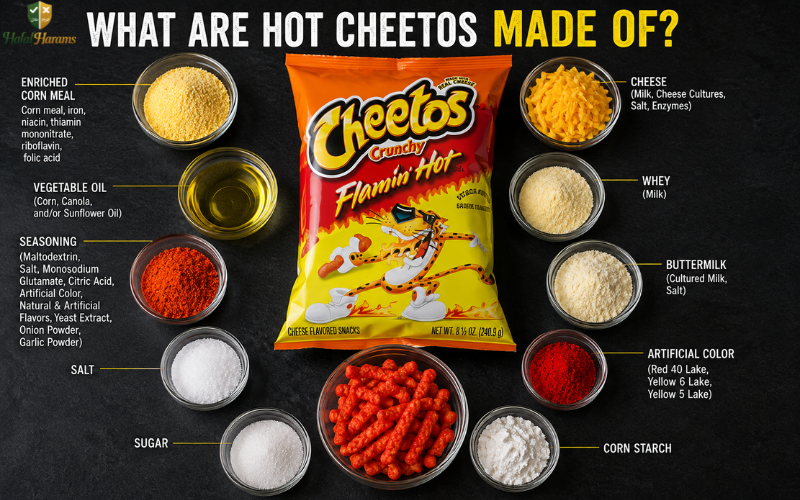
Hot Cheetos are produced by Frito-Lay, a division of PepsiCo.
Common ingredients include:
- Cornmeal
- Vegetable oil
- Cheese seasoning
- Spices and flavorings
- Salt
- Coloring agents
👉 The base (corn and oil) is usually halal, but the seasoning mix is the main concern.
Basic Ingredients and Halal Status
Ingredient Overview
| Ingredient | Source Type | Halal Status |
|---|---|---|
| Cornmeal | Plant-based | ✅ Halal |
| Vegetable Oil | Plant-based | ✅ Halal |
| Salt | Mineral | ✅ Halal |
| Spices | Plant-based | ✅ Halal |
| Flavorings | Mixed | ⚠️ Check |
| Cheese Powder | Dairy/enzymes | ⚠️ Depends |
👉 Flavorings and cheese ingredients require careful review.
The Cheese and Enzyme Issue
Hot Cheetos often contain cheese seasoning, which may include enzymes.
Enzymes are used in cheese production and can come from:
- Plant sources (halal)
- Microbial sources (halal)
- Animal sources (may be non-halal)
Enzyme Sources
| Source Type | Halal Status |
|---|---|
| Plant-based | ✅ Halal |
| Microbial | ✅ Halal |
| Animal (halal slaughter) | ✅ Halal |
| Animal (non-halal) | ❌ Haram |
👉 The issue is that manufacturers often do not specify the enzyme source.
Flavorings and Additives
Hot Cheetos contain complex flavoring blends.
These may include:
- Artificial flavors
- Natural flavors
- Flavor enhancers
Concerns include:
- Alcohol used as a carrier
- Animal-derived compounds
👉 This makes flavorings a grey area.
Related Post: Is Horse Meat Halal
Does the Flavoring in Hot Cheetos Matter for Halal?
Yes, flavoring is one ingredient worth checking when deciding if Hot Cheetos are halal. Spicy snacks often use a mix of natural and artificial flavors to create their taste. Some flavoring ingredients can come from different sources, and the ingredient name alone may not always show where they came from.
Cheese-flavored Hot Cheetos may also contain milk ingredients, enzymes, or other flavor enhancers. These ingredients can vary between products and countries. Because of this, one Hot Cheetos flavor may not have the same halal status as another.
For the safest choice, check the exact package, ingredient list, and halal certification before buying. This is especially important when the product is imported or sold in a different country.
Halal Status by Flavor Type
Different types of Cheetos have different rulings.
Flavor-Based Status
| Flavor Type | Halal Status |
|---|---|
| Plain Cheetos | ⚠️ Check |
| Flamin’ Hot | ⚠️ Doubtful |
| Cheese-based | ❌ Often not halal |
| Non-cheese spicy | ⚠️ Possibly halal |
👉 Cheese flavors are the most concerning.
Regional Differences
Ingredients vary by country, which affects halal status.
Regional Status
| Region | Status |
|---|---|
| USA | ⚠️ Mostly doubtful |
| UK | ⚠️ Some vegetarian-friendly |
| Middle East | ✅ Often halal-certified |
| Asia | ⚠️ Depends |
👉 Always check local packaging.
Cross-Contamination Risks
Hot Cheetos are produced in large factories.
Cross-Contamination
| Area | Risk |
|---|---|
| Production lines | Medium |
| Seasoning units | Medium |
| Packaging | Low |
👉 Shared equipment can introduce non-halal elements.
Halal Certification
Some Hot Cheetos products in Muslim-majority countries carry halal certification.
Certification Benefits
| Factor | Benefit |
|---|---|
| Halal logo | Clear approval |
| Ingredient checks | Verified |
| Consumer trust | High |
👉 Certification removes doubt.
Related Post: Are Takis Halal? A Complete Guide for Muslims
Why Hot Cheetos May Not Be Halal
They may be considered not halal due to:
- Animal-derived enzymes
- Unclear flavoring sources
- Lack of halal certification
- Cross-contamination
👉 These create uncertainty.
Why Some Hot Cheetos May Be Halal
Some versions may be halal because:
- Enzymes are microbial
- Ingredients are plant-based
- Certified halal in certain regions
👉 It depends on specific product and location.
Scholarly Opinions
Scholarly Views
| Opinion Type | View |
|---|---|
| Permissible | If ingredients are halal |
| Cautious | Avoid doubtful snacks |
| Strict | Only halal-certified allowed |
👉 Most scholars recommend caution.
How to Check If Hot Cheetos Are Halal
To verify halal status:
- Read ingredient labels
- Look for enzyme sources
- Check for halal certification
- Contact manufacturer
- Avoid doubtful versions
👉 These steps help ensure compliance.
Halal Alternatives to Hot Cheetos
If you prefer certainty, consider:
- Halal-certified chips
- Plain tortilla chips
- Homemade spicy snacks
👉 These options provide peace of mind.
Health Considerations
Hot Cheetos are a processed snack and should be eaten in moderation. Nutritional Overview
| Factor | Impact |
|---|---|
| Calories | High |
| Fat | High |
| Sodium | High |
👉 Islam encourages moderation.
Common Misconceptions
“All chips are halal”
Not true—flavorings matter.
“Spicy snacks are halal”
Ingredients determine halal status.
“Same product everywhere”
Ingredients vary by region.
Why This Topic Matters
Understanding whether Hot Cheetos are halal is important because:
- They are widely consumed
- Ingredients are complex
- It helps Muslims follow dietary laws
Related Post: Are M&M’s Halal Or Haram? (2026)
FAQs
Are Hot Cheetos halal?
They are not universally halal and are often considered doubtful.
Do Hot Cheetos contain haram ingredients?
They may contain non-halal enzymes or flavorings.
Are Hot Cheetos halal in the USA?
Most are considered doubtful or not halal.
Are Hot Cheetos halal in Muslim countries?
Some are halal-certified and permissible.
Can Muslims eat Hot Cheetos?
Only if ingredients are verified halal.
What is the safest option?
Choose halal-certified snacks.
Final Remarks
Hot Cheetos are a popular snack, but their halal status is not clear-cut. While the base ingredients like corn and oil are halal, the seasoning—especially cheese powder and flavorings—introduces uncertainty due to possible non-halal enzyme sources and undisclosed additives. Regional differences and lack of consistent halal certification further complicate the matter. For Muslims who wish to strictly follow halal dietary guidelines, it is best to avoid doubtful versions and choose halal-certified alternatives. Being informed and cautious ensures that your food choices align with Islamic principles and provide peace of mind.
