
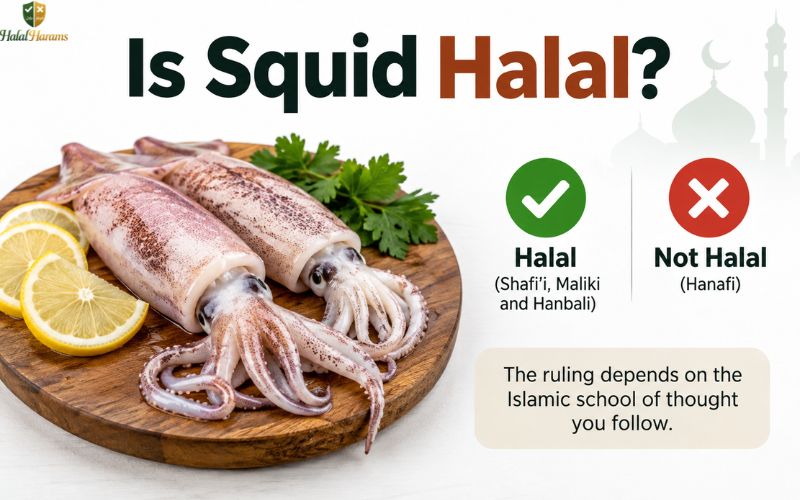
Is squid halal? The answer depends on the Islamic school of thought you follow. In the Shafi’i, Maliki, and Hanbali schools, squid is generally considered halal because these schools allow sea animals as food. The Hanafi school takes a different view and generally permits only fish from sea creatures, so squid is not considered permissible according to the Hanafi ruling.
This difference comes from how scholars understand the Quranic permission of seafood and what counts as “fish.” Squid is a sea animal, but it is not biologically a fish. Because of this, a Muslim may find different answers when searching whether squid is halal or haram.
For Muslims, especially those following Hanafi fiqh, this is an important distinction. If you follow another Sunni school, squid is generally allowed. If you follow Hanafi fiqh, the common ruling is to avoid squid. Knowing this difference helps Muslims make a food choice according to the Islamic guidance they follow.
What Is Squid?
Squid is a marine animal that belongs to the cephalopod family, which also includes:
- Octopus
- Cuttlefish
- Nautilus
Squid have:
- Soft bodies
- Tentacles
- Large eyes
- A beak-like mouth
They live in oceans around the world and are commonly harvested for food.
Squid is often prepared as:
- Calamari rings
- Grilled squid
- Stuffed squid
- Seafood pasta
- Fried seafood platters
- Asian seafood dishes
Because squid comes from the sea, its halal status is generally discussed under Islamic rulings concerning seafood.
Is Squid Halal?
Yes, most Islamic scholars consider squid halal.
The majority opinion is based on Islamic teachings that generally permit seafood and creatures that live in the sea.
According to this view:
- Squid is a sea creature.
- It lives entirely in water.
- It is not harmful or intoxicating.
- It is widely consumed in Muslim countries.
Therefore, most scholars classify squid as halal.
Squid Halal Status Overview
| Category | Status |
|---|---|
| Squid | ✅ Halal (majority opinion) |
| Calamari | ✅ Usually halal |
| Fried squid | ✅ Halal if ingredients are halal |
| Squid with alcohol-based sauce | ❌ May not be halal |
| Squid cooked with haram ingredients | ❌ Not halal |
The preparation method can affect the final halal status of a dish.
Quranic Basis for Seafood Permissibility
Many scholars refer to Quranic verses that permit food from the sea.
Allah says that the game of the sea and its food have been made lawful for believers.
Based on this understanding, many scholars conclude that sea creatures, including squid, are generally permissible unless there is clear evidence to prohibit them.
This forms the foundation for the majority view regarding squid.
Related Post: Is Octopus Halal? A Complete Guide for Muslims
Scholarly Opinions on Squid
Islamic scholars have discussed seafood extensively throughout history.
Shafi’i School
The Shafi’i school generally permits all sea creatures.
Under this view:
- Fish are halal.
- Squid is halal.
- Octopus is halal.
- Shrimp is halal.
Therefore, squid is clearly permissible.
Maliki School
The Maliki school also permits most sea creatures.
Squid is generally considered halal according to Maliki scholars.
Hanbali School
Hanbali scholars similarly allow sea animals unless there is specific evidence prohibiting them.
Squid is therefore regarded as halal.
Hanafi School
The Hanafi school traditionally places more restrictions on seafood.
Many Hanafi scholars primarily permit fish and differ regarding other marine animals.
However, contemporary Hanafi scholars often consider squid permissible due to its widespread acceptance and classification as seafood.
Major Islamic Schools and Squid
| School | Opinion on Squid |
|---|---|
| Shafi’i | Halal |
| Maliki | Halal |
| Hanbali | Halal |
| Hanafi | Differences exist, many modern scholars allow it |
The majority scholarly opinion supports the permissibility of squid.
Why Some Muslims Question Squid
Some Muslims hesitate because squid differs significantly from ordinary fish.
Common concerns include:
- Unusual appearance
- Tentacles
- Classification as a cephalopod
- Differences among schools of thought
These concerns often lead people to seek clarification from scholars.
However, appearance alone does not determine halal status.
Is Calamari Halal?
Calamari is one of the most common squid dishes.
The term “calamari” usually refers to:
- Breaded squid rings
- Fried squid appetizers
- Mediterranean squid dishes
Calamari is halal if:
- The squid itself is halal.
- The batter contains halal ingredients.
- No alcohol is used.
- No haram additives are included.
Many Muslims enjoy calamari as a halal seafood option.
See Also: Is Catfish Halal? Complete Guide For Muslims(2026)
Does Squid Require Islamic Slaughter?
Unlike land animals, seafood generally does not require traditional Islamic slaughter.
Most scholars agree that:
- Fish do not require slaughter.
- Sea creatures do not require dhabihah.
- Squid does not require Islamic slaughter.
This makes seafood simpler from a halal perspective compared to beef, chicken, or lamb.
Is Frozen Squid Halal?
Frozen squid is usually halal if:
- The squid itself is halal.
- No haram ingredients are added.
- Processing remains free from contamination.
Always check ingredient labels on packaged seafood products.
Frozen Squid Checklist
| Question | Check |
|---|---|
| Pure squid only | Preferred |
| Added flavorings | Verify |
| Alcohol ingredients | Avoid |
| Halal certification | Helpful |
| Cross-contamination risk | Review |
Reading labels remains important.
Can Squid Become Haram?
Yes.
Although squid itself is generally halal, preparation methods can make a dish impermissible.
Examples include:
- Cooking squid with alcohol
- Using pork-based sauces
- Mixing with non-halal meat
- Cross-contamination during preparation
The halal status of the final meal depends on all ingredients involved.
Squid in Restaurants
Many restaurants offer squid dishes.
Before ordering, Muslims should consider:
- Cooking ingredients
- Sauces
- Marinades
- Shared fryers
- Alcohol usage
Asking restaurant staff about ingredients can help avoid uncertainty.
Squid and Cross-Contamination
Cross-contamination occurs when halal food comes into contact with haram substances.
Possible sources include:
- Shared cooking oil
- Shared grills
- Shared utensils
- Shared preparation surfaces
For example:
A restaurant may fry squid in the same oil used for pork products.
In such cases, some Muslims may prefer to avoid the dish.
Nutritional Benefits of Squid
Squid is highly nutritious and contains several beneficial nutrients.
It provides:
- Protein
- Vitamin B12
- Selenium
- Copper
- Phosphorus
- Omega-3 fatty acids
Nutritional Benefits of Squid
| Nutrient | Benefit |
|---|---|
| Protein | Muscle growth and repair |
| Vitamin B12 | Supports nervous system |
| Selenium | Antioxidant support |
| Copper | Helps energy production |
| Phosphorus | Supports bone health |
When consumed in moderation, squid can be part of a balanced diet.
Squid in Muslim Countries
Squid is commonly eaten in many Muslim-majority countries including:
- Indonesia
- Malaysia
- Turkey
- Saudi Arabia
- United Arab Emirates
- Egypt
Its widespread consumption among Muslims further supports the majority view that squid is halal.
Common Squid Dishes and Their Halal Status
The squid itself may be halal, but additional ingredients matter.
Examples include:
- Grilled squid
- Fried calamari
- Squid curry
- Seafood pasta
- Stuffed squid
Common Squid Dishes
| Dish | Halal Status |
|---|---|
| Plain grilled squid | Usually halal |
| Fried calamari | Usually halal |
| Squid curry | Depends on ingredients |
| Seafood pasta | Verify sauce ingredients |
| Squid with wine sauce | Not halal |
Always evaluate the complete dish.
Common Misconceptions About Squid
“Squid Is Not Halal Because It Is Not a Fish”
Many scholars permit sea creatures beyond traditional fish.
“Tentacles Make Squid Haram”
Physical appearance does not determine halal status.
“All Seafood Is Automatically Halal”
Preparation methods and ingredients still matter.
“Calamari Is Different From Squid”
Calamari is simply a culinary term commonly used for squid dishes.
How to Ensure Squid Is Halal
Muslims can take several steps:
- Purchase squid from reputable sources.
- Review ingredient labels.
- Avoid alcohol-based marinades.
- Ask restaurants about preparation methods.
- Look for halal-certified seafood products when available.
These practices help ensure compliance with Islamic dietary requirements.
Why Understanding Squid’s Halal Status Matters
Seafood rulings can sometimes cause confusion because different schools of Islamic jurisprudence approach marine animals differently.
Understanding scholarly opinions helps Muslims:
- Make informed choices
- Avoid unnecessary doubts
- Follow their preferred school of thought
- Enjoy seafood confidently
For most Muslims, squid is considered a permissible and nutritious seafood option.
Related Post: Is Alligator Halal? Complete Guide for Muslims
FAQs
Is squid halal in Islam
Yes. The majority of Islamic scholars consider squid halal because it is a sea creature and falls under permissible seafood.
Is calamari halal
Yes. Calamari is generally halal if prepared with halal ingredients and without alcohol or haram additives.
Does squid require Islamic slaughter
No. Most scholars agree that squid does not require traditional Islamic slaughter.
Is fried squid halal
Yes, provided the batter, oil, and other ingredients are halal.
Is frozen squid halal
Usually yes, but consumers should check ingredient labels and processing information.
Can squid become haram
Yes. Squid may become haram if cooked with alcohol, pork products, or other prohibited ingredients.
Final Thoughts
Squid is halal according to the Shafi’i, Maliki, and Hanbali schools, while the Hanafi school generally does not permit it because squid is not considered a fish.
This difference comes from how scholars understand the Islamic rules about seafood. If you follow the Hanafi school, it is better to avoid squid.
If you follow another Sunni school, squid is generally permissible. When in doubt, ask a trusted Islamic scholar and follow the guidance of your madhhab.
Understanding this difference helps Muslims make food choices with confidence and according to the Islamic guidance they follow.
