
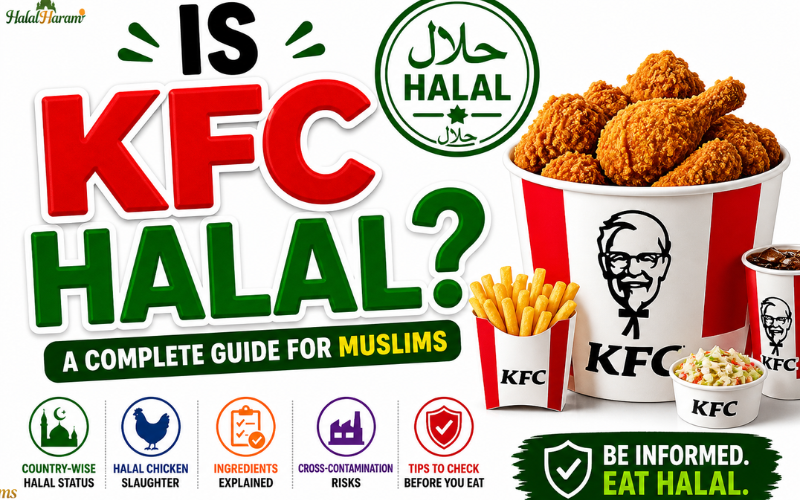
KFC is one of the world’s most popular fast-food chains, best known for its fried chicken, chicken sandwiches, and other chicken meals. Since chicken must meet specific requirements to be halal, many Muslims wonder, “Is KFC halal?”
The answer is not the same at every KFC location. KFC restaurants in some countries serve halal-certified chicken, while others may not. The halal status can depend on the country, individual restaurant, meat supplier, and preparation methods. This means you should not assume that KFC is halal everywhere just because the brand is the same.
For Muslims, it is also important to consider more than the chicken itself. Seasonings, sauces, cooking methods, and other ingredients may need to be checked. Some locations may also have separate halal procedures, while others may prepare halal and non-halal products in the same kitchen.
In this guide, you will learn whether KFC is halal, why its halal status differs by location, and how to check a specific KFC restaurant before ordering. Checking the local menu and halal certification is the safest way to get an accurate answer.
Is KFC Halal Or Haram?
Short Answer
KFC is not universally halal. Some locations in Muslim-majority countries serve halal-certified chicken, while many locations in Western countries do not. Always check local certification before eating.
What Is KFC?
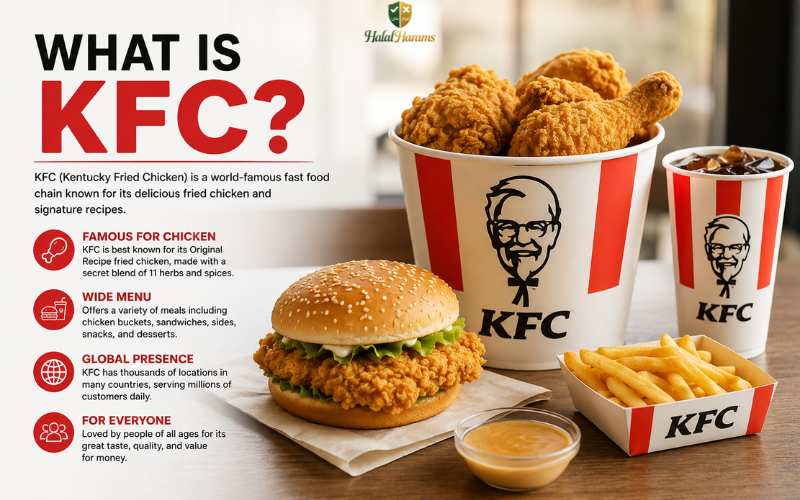
KFC (Kentucky Fried Chicken) is a global fast-food chain famous for:
- Fried chicken
- Burgers and wraps
- Fries and sides
It operates in over 100 countries, and its menu and sourcing vary by region.
This variation is key to understanding halal status.
Why Halal Status Matters
For meat to be halal:
- The animal must be permissible
- It must be slaughtered according to Islamic law (Zabiha)
- The name of Allah must be recited
- Blood must be drained
- No contamination with haram substances
If any of these conditions are not met, the food is not halal.
Is KFC Chicken Halal?
KFC chicken is halal in some countries and not halal in others.
This depends on:
- Meat sourcing
- Halal certification
- Local regulations
General Halal Status
| Region Type | Halal Status |
|---|---|
| Muslim-majority countries | ✅ Halal (usually) |
| Western countries | ❌ Not halal (mostly) |
| Mixed regions | ⚠️ Varies |
Always check your local branch.
Related Post: Is McDonald’s Halal? Complete Guide for Muslims
KFC Halal Status by Country
Different countries have different policies.
Country-Based Status
| Country | Halal Status |
|---|---|
| Saudi Arabia | ✅ Halal |
| UAE | ✅ Halal |
| Pakistan | ✅ Halal |
| Malaysia | ✅ Halal |
| UK | ⚠️ Some branches halal |
| USA | ❌ Not halal |
| Canada | ❌ Not halal |
This variation is very important.
How KFC Chicken Is Prepared
KFC uses large-scale production processes.
Steps include:
- Slaughtering chickens
- Processing and marination
- Coating and frying
The halal issue mainly lies in slaughter method.
Slaughter Method Concerns
For halal meat:
- Hand slaughter is preferred
- Allah’s name must be recited
- Proper drainage of blood is required
Concerns in non-halal KFC locations:
- Machine slaughter
- No religious recitation
- Lack of halal oversight
These make the meat non-halal.
Cross-Contamination Risks
Even in halal-certified locations, contamination must be considered.
Cross-Contamination
| Area | Risk |
|---|---|
| Fryers | Medium |
| Utensils | Medium |
| Storage | Low |
Separate handling is important.
Ingredients Beyond Chicken
KFC menu includes more than just chicken.
Ingredient Overview
| Item Category | Halal Status |
|---|---|
| Chicken | ❌/✅ Depends |
| Fries | ✅ Usually halal |
| Buns | ⚠️ Check |
| Sauces | ⚠️ Check |
| Drinks | ✅ Halal |
Non-meat items may still be permissible.
Related Post: Is Gelatin Halal
Are KFC Fries Halal?
In most cases, KFC fries are halal because they are plant-based.
However:
- Oil may be shared with chicken
- Flavorings may vary
Always verify preparation method.
Are KFC Burgers Halal?
Burger Status
| Item Type | Halal Status |
|---|---|
| Chicken Burger | ❌/⚠️ Depends |
| Veg Burger | ⚠️ Possible |
| Zinger Burger | ❌ Not halal (most countries) |
Meat is the main concern.
Halal Certification at KFC
Some KFC branches have halal certification.
Certification Benefits
| Factor | Benefit |
|---|---|
| Halal logo | Clear approval |
| Verified sourcing | Reliable |
| Consumer trust | High |
Certification is the safest indicator.
Why KFC Is Often Not Halal
In many countries, KFC is not halal because:
- Chicken is not halal-slaughtered
- No halal certification
- Cross-contamination risks
These factors make it unsuitable.
Why KFC Is Halal in Some Countries
KFC is halal in certain regions because:
- Strict halal regulations
- Certified suppliers
- Muslim-majority consumer base
This ensures compliance.
Scholarly Opinions
Scholarly Views
| Opinion Type | View |
|---|---|
| Strict | Avoid non-certified KFC |
| Moderate | Eat only halal-certified branches |
| Lenient | Avoid meat, eat vegetarian |
👉 Most scholars recommend caution.
How to Check If Your KFC Is Halal
To confirm halal status:
- Look for halal certification
- Ask staff directly
- Check official website
- Verify local guidelines
👉 Never assume—it varies by location.
Halal Alternatives to KFC
If your local KFC is not halal:
- Halal fried chicken restaurants
- Local halal fast-food chains
- Homemade fried chicken
👉 These are safer options.
Nutritional Considerations
KFC is a high-calorie fast food.
Nutritional Overview
| Factor | Impact |
|---|---|
| Calories | High |
| Fat | High |
| Sodium | High |
👉 Moderation is encouraged.
Common Misconceptions
“KFC is halal everywhere”
Not true—it depends on location.
“Chicken means halal”
Slaughter method matters.
“Same menu worldwide”
Ingredients and sourcing differ.
Why This Topic Matters
Understanding KFC’s halal status is important because:
- It is widely consumed
- Availability varies globally
- It helps Muslims follow dietary laws
FAQs
Is KFC halal?
It depends on the country and certification.
Is KFC halal in the USA?
No, it is generally not halal.
Is KFC halal in Muslim countries?
Yes, it is usually halal-certified.
Are KFC fries halal?
Usually yes, but cross-contamination is possible.
Can Muslims eat KFC?
Only if it is halal-certified.
What is the safest option?
Choose halal-certified branches or alternatives.
Final Remarks
KFC is one of the most popular fast-food chains in the world, but its halal status is not universal. While it is halal-certified in many Muslim-majority countries, most locations in Western countries do not follow halal slaughter practices. This makes it essential for Muslims to verify the status of their local branch before consuming any KFC products. Even when non-meat items seem permissible, cross-contamination and ingredient variations should be considered. The safest approach is to rely on halal-certified outlets or choose trusted halal alternatives. By staying informed and cautious, you can ensure your dietary choices remain in line with Islamic principles.
