
For Muslims who enjoy Italian food, a common question is “Is Olive Garden halal?” The answer is not simply yes or no because halal status depends on the location, ingredients, and preparation.
Olive Garden’s official information shows that its menu includes different meats, including beef, chicken, seafood, and Italian sausage. Its menu also warns that not all ingredients are listed, so Muslims should not assume that a dish is halal just because it does not contain pork.
Another important point is halal slaughter. Meat must meet Islamic requirements before Muslims can eat it. Olive Garden’s U.S. information does not present its regular meat menu as halal-certified, so Muslims should check the specific restaurant and meat source before ordering.
Vegetarian dishes may offer more choices, but they still need ingredient checking because sauces, cheese, stocks, and other ingredients can affect halal status. Olive Garden also says its kitchens handle animal products during food preparation.
So, Muslims should check the local Olive Garden and specific dish before eating there.
What Is Olive Garden?
Olive Garden is a casual dining restaurant chain specializing in Italian-American cuisine.
Popular menu items include:
- Pasta dishes
- Chicken Alfredo
- Lasagna
- Soups
- Salads
- Breadsticks
- Seafood meals
- Desserts
The restaurant operates hundreds of locations worldwide and is particularly popular in North America.
Is Olive Garden Halal?
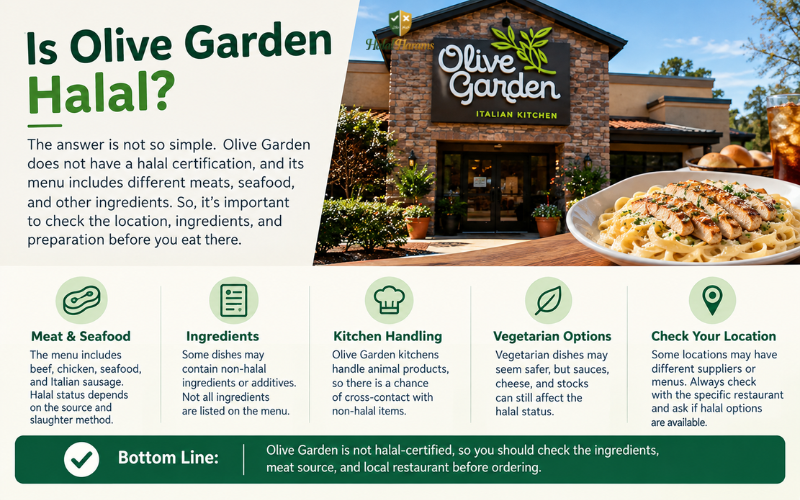
In most countries, Olive Garden is not considered a fully halal restaurant.
The primary reasons include:
- Meat is generally not halal-certified
- Pork products are served
- Alcohol is used in some recipes
- Cross-contamination may occur during food preparation
Therefore, Muslims cannot automatically assume that Olive Garden food is halal.
Olive Garden Halal Status Overview
| Category | Status |
|---|---|
| Restaurant fully halal | ❌ No |
| Halal-certified chicken | ❌ Usually no |
| Halal-certified beef | ❌ Usually no |
| Vegetarian options available | ✅ Yes |
| Seafood options available | ✅ Yes |
Muslims should verify local restaurant practices before dining.
Related Post: Is Balsamic Vinegar Halal
Why Do Muslims Question Olive Garden’s Halal Status?
Several factors contribute to concerns regarding Olive Garden:
- Use of non-halal meat
- Presence of pork-based dishes
- Alcohol in certain recipes
- Shared cooking equipment
Since halal dietary requirements involve more than simply avoiding pork, sourcing and preparation methods are also important.
Does Olive Garden Serve Halal Meat?
In most locations, Olive Garden does not publicly state that its meat is halal-certified.
This applies to:
- Chicken
- Beef
- Sausage
- Meatballs
- Other meat products
Without halal certification or confirmation of Islamic slaughter practices, many Muslims do not consider the meat halal.
Does Olive Garden Serve Pork?
Yes.
Olive Garden serves several pork-containing menu items, including:
- Italian sausage
- Bacon ingredients
- Pork-based meat products
- Certain soups and sauces
Because pork is clearly prohibited in Islam, Muslims should carefully review menu ingredients.
Common Olive Garden Menu Categories
| Menu Category | Halal Concern |
|---|---|
| Chicken dishes | Non-halal meat |
| Beef dishes | Non-halal meat |
| Pork dishes | Haram |
| Seafood dishes | Usually lower concern |
| Vegetarian dishes | Usually lower concern |
Not every item carries the same level of concern.
Alcohol in Olive Garden Recipes
One of the biggest concerns for Muslim diners is the use of alcohol in certain recipes.
Alcohol may appear in:
- Cooking sauces
- Marinades
- Specialty pasta dishes
- Dessert flavorings
Some examples may include:
- Wine-based sauces
- White wine reductions
- Specialty Italian recipes
Menu ingredients can vary over time, so checking current information is important.
Are Olive Garden Breadsticks Halal?
Olive Garden’s famous breadsticks are often considered one of the safer menu items for Muslim diners.
The standard breadsticks generally contain:
- Flour
- Water
- Yeast
- Seasonings
However, ingredient formulations can change, and cross-contamination remains possible.
Many Muslims consider plain breadsticks acceptable, while others prefer additional verification.
Related Post: Is NAYA Halal? Complete Guide for Muslims Custumers
Is Olive Garden Salad Halal?
The house salad may be suitable for many Muslim diners because it primarily contains:
- Lettuce
- Tomatoes
- Olives
- Onions
- Croutons
However, the dressing should be reviewed because ingredients can vary by location and supplier.
When dining out, asking staff about ingredients is always recommended.
Are Olive Garden Soups Halal?
Some soups contain meat products that may not be halal.
Examples include:
- Chicken-based soups
- Sausage-containing soups
- Meat-based broths
Even soups without visible meat may use non-halal stock or flavorings.
Muslims should verify ingredients before ordering.
Seafood Options at Olive Garden
Seafood dishes may present fewer halal concerns compared to meat dishes.
Common seafood options include:
- Shrimp dishes
- Fish dishes
- Seafood pasta
However, concerns may still exist regarding:
- Cooking sauces
- Shared equipment
- Alcohol-containing ingredients
Seafood itself does not automatically make a dish halal.
Seafood Menu Considerations
| Item | Possible Concern |
|---|---|
| Shrimp pasta | Sauce ingredients |
| Fish dishes | Preparation methods |
| Seafood appetizers | Cross-contamination |
| Seafood soups | Stock ingredients |
Ingredient verification remains important.
Vegetarian Options at Olive Garden
Vegetarian menu items are often the easiest options for Muslim diners.
These may include:
- Salads
- Pasta without meat
- Vegetable side dishes
- Breadsticks
However, Muslims should still review:
- Sauces
- Cheese ingredients
- Cooking methods
Vegetarian does not always mean halal.
Cross-Contamination Concerns
Cross-contamination occurs when halal-friendly foods come into contact with non-halal ingredients.
This may happen through:
- Shared grills
- Shared fryers
- Shared utensils
- Shared preparation surfaces
Because Olive Garden is not a halal restaurant, complete separation is not typically guaranteed.
Is Olive Garden Halal in Muslim Countries?
The halal status may differ by country.
Some international restaurant chains adapt their menus based on local requirements.
In countries with large Muslim populations, certain locations may:
- Use halal-certified meat
- Obtain halal certification
- Modify recipes
Muslims should verify the status of individual locations rather than relying on global assumptions.
Table 4: Halal Status by Location
| Location | Status |
|---|---|
| United States | Usually not halal |
| Canada | Usually not halal |
| Muslim-majority countries | May vary |
| International branches | Verify locally |
Local verification is always recommended.
How to Check If Your Olive Garden Is Halal
Before dining, consider asking:
- Is the meat halal-certified?
- Is halal certification available?
- Are alcohol-based sauces used?
- Are ingredients available for review?
- Are separate preparation areas used?
Restaurant management may provide more accurate information than general assumptions.
Can Muslims Eat at Olive Garden?
The answer depends on individual beliefs, scholarly opinions, and personal comfort levels.
Some Muslims may choose:
- Vegetarian options
- Seafood dishes
- Breadsticks and salads
Others may avoid the restaurant entirely due to concerns regarding:
- Non-halal meat
- Alcohol ingredients
- Cross-contamination
Islamic dietary observance varies among individuals.
Halal Alternatives to Olive Garden
Muslims seeking fully halal Italian cuisine may prefer:
- Halal-certified Italian restaurants
- Local halal pasta restaurants
- Halal pizza establishments
- Muslim-owned Italian eateries
These options often provide greater confidence regarding ingredients and preparation methods.
Common Misconceptions About Olive Garden
“Olive Garden Is Automatically Halal Because It Serves Italian Food”
Cuisine type does not determine halal status.
“Seafood Dishes Are Always Halal”
Preparation methods and ingredients still matter.
“Vegetarian Means Halal”
Vegetarian foods may still contain alcohol-based flavorings or face cross-contamination.
“No Pork Means Halal”
Halal requirements involve more than simply avoiding pork.
Tips for Muslim Diners
If you decide to visit Olive Garden:
- Review ingredient information carefully
- Ask questions about sauces
- Verify meat sourcing
- Consider vegetarian or seafood options
- Avoid doubtful dishes
Making informed choices helps reduce uncertainty.
Quick Halal Dining Checklist
| Question | Action |
|---|---|
| Is the meat halal-certified | Verify with staff |
| Any alcohol in sauces | Ask before ordering |
| Any pork ingredients | Review menu |
| Vegetarian option available | Consider safer choice |
| Cross-contamination concerns | Ask restaurant |
These simple checks can help Muslim diners make informed decisions.
Why Understanding Olive Garden’s Halal Status Matters
Restaurants often use complex ingredient sourcing and preparation methods. While some foods may appear halal at first glance, factors such as meat sourcing, alcohol ingredients, and cross-contamination can affect permissibility.
Understanding these issues allows Muslims to make choices that align with their personal level of religious observance and dietary preferences.
See Also: Is Raising Cane’s Halal? Complete Guide for Muslims Cutomers
Frequently Asked Questions
Is Olive Garden halal
Most Olive Garden locations are not officially halal-certified.
Does Olive Garden serve halal chicken
Generally, Olive Garden does not advertise its chicken as halal-certified.
Are Olive Garden breadsticks halal
Many Muslims consider plain breadsticks acceptable, but ingredient verification is recommended.
Does Olive Garden use alcohol in food
Some recipes may contain wine-based sauces or alcohol-derived ingredients.
Can Muslims eat seafood at Olive Garden
Seafood options may have fewer concerns, but sauces and preparation methods should still be checked.
Is Olive Garden halal in every country
No. Halal status varies by country and individual restaurant location.
Final Remarks
Olive Garden is not a restaurant that Muslims should automatically consider halal. The main issue is not pasta itself, but the meat, ingredients, sauces, and cooking methods used in each dish. Olive Garden’s information lists foods containing meat, seafood, and animal ingredients, and the restaurant also says its kitchens may have contact with animal products during preparation.
From an Islamic point of view, meat must come from a halal animal and be slaughtered according to Islamic rules. Choosing chicken or beef does not make the meat halal. Muslims should also be careful with sauces, stocks, cheese, and other added ingredients.
Vegetarian or vegan choices may give more options, but they should still be checked because preparation and ingredients matter.
So, the safest approach is to ask the local Olive Garden about halal meat and ingredients before ordering. If halal certification or reliable information is not available, choosing a trusted halal restaurant is the better option.
