
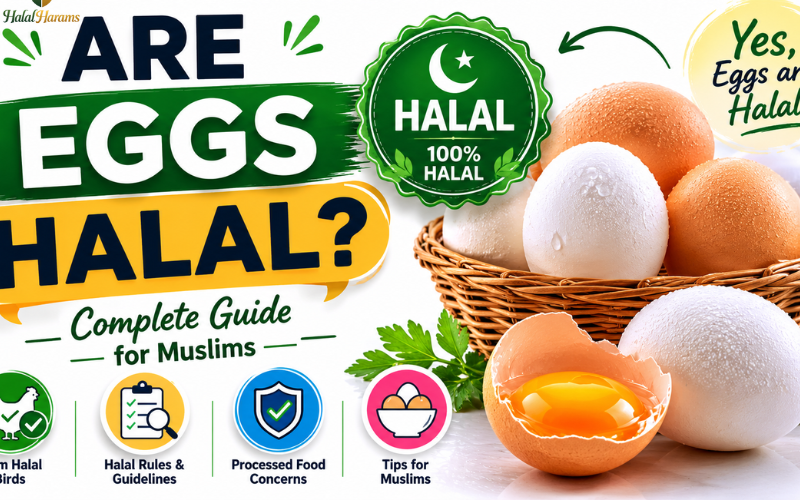
For Muslims, knowing whether everyday foods are halal or haram can sometimes be confusing. Eggs are a common food, so many people ask, “Is eggs halal in Islam?” The simple answer is yes, eggs are generally halal to eat. Eggs from halal birds, such as chickens and ducks, are permissible in Islam.
However, Muslims should also look at where the eggs come from and how they are prepared. A normal chicken egg does not become haram simply because the chicken was not slaughtered. Eggs are different from meat because no animal slaughter is needed to obtain an egg. This makes them a simple halal food in most cases.
The main concern is usually what is added to the eggs. Plain boiled, fried, or scrambled eggs are halal. But eggs cooked with pork, alcohol, or another haram ingredient would not be halal.
In this article, we will explain why eggs are halal, which eggs Muslims can eat, and what ingredients to avoid when preparing egg dishes.
What Are Eggs?
Egg are reproductive products laid by birds and some other animals. The most commonly consumed eggs come from:
- Chickens
- Ducks
- Quails
- Turkeys
Eggs are widely valued because they are:
- Affordable
- High in protein
- Versatile in cooking
- Nutrient-rich
Eggs are considered a major food source in many cultures worldwide.
Are Eggs Halal in Islam?
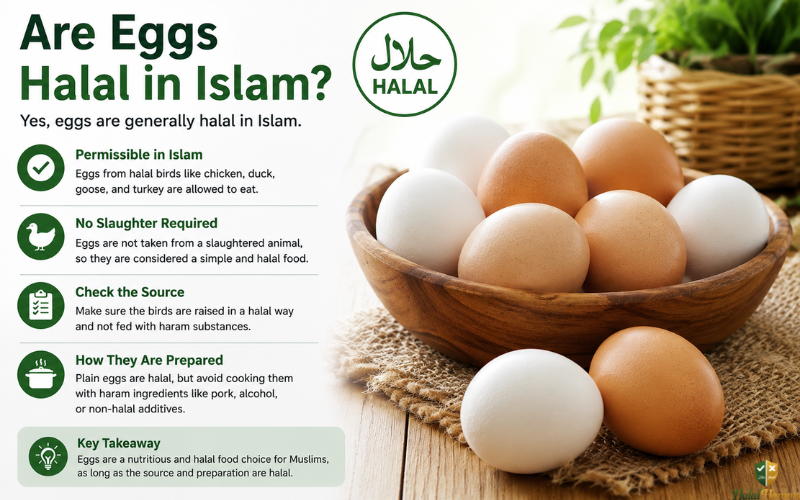
Yes, eggs are generally halal in Islam if they come from halal animals.
Eggs from permissible birds such as:
- Chickens
- Ducks
- Quails
- Turkeys
are widely accepted as halal by Islamic scholars.
Most ordinary eggs sold in stores are halal.
Related Post: Is Duck Halal
Why Eggs Are Considered Halal
Islam allows foods that come from halal animals unless there is clear evidence making them haram.
Eggs are considered halal because:
- They are not intoxicating
- They come from permissible animals
- They are natural food products
Common Egg Sources and Halal Status
| Egg Type | Halal Status |
|---|---|
| Chicken eggs | ✅ Halal |
| Duck eggs | ✅ Halal |
| Quail eggs | ✅ Halal |
| Turkey eggs | ✅ Halal |
| Eggs from haram animals | ❌ Haram |
Eggs from halal birds are generally permissible for Muslims.
Do Eggs Require Halal Slaughter?
No, eggs themselves do not require halal slaughter because:
- The animal is not being killed
- Eggs are naturally produced
However, the bird producing the eggs should still be a halal animal.
This is why chicken eggs are widely accepted as halal.
Are Raw Eggs Halal?
Raw eggs are generally halal if:
- They come from halal birds
- They are safe to consume
- They are not contaminated
Some people consume raw eggs in:
- Smoothies
- Fitness drinks
- Desserts
Hygiene and food safety are important when consuming raw eggs.
Are Fertilized Eggs Halal?
Fertilized eggs are generally considered halal as long as:
- No embryo development has begun
- The egg remains in normal edible condition
Most commercial eggs sold in stores are unfertilized.
Fertilization does not automatically make eggs haram.
Can Eggs Become Haram?
Although eggs themselves are halal, they can become haram if:
- Mixed with haram ingredients
- Cooked using alcohol
- Contaminated with pork products
- Processed with questionable additives
Common Egg-Related Halal Concerns
| Concern | Risk Level |
|---|---|
| Pork contamination | High |
| Alcohol-based recipes | Medium |
| Cross-contamination | Medium |
| Artificial additives | Low to medium |
Preparation methods matter greatly in halal food rules.
Are Eggs in Restaurants Always Halal?
Not always.
Restaurant egg dishes may contain:
- Bacon
- Ham
- Alcohol-based sauces
- Non-halal meat ingredients
Examples include:
- Omelets with pork bacon
- Carbonara pasta
- Breakfast platters with sausage
Muslims should ask about ingredients before ordering.
See Also: Are Mott’s Halal
Processed Foods Containing Eggs
Eggs are used in many processed foods such as:
- Cakes
- Cookies
- Pasta
- Mayonnaise
- Ice cream
The egg itself may be halal, but other ingredients could be questionable.
Ingredient labels should always be checked carefully.
Are Egg Powders Halal?
Egg powder is usually halal if:
- It comes from halal eggs
- No haram additives are included
However, some commercial powders may contain:
- Emulsifiers
- Flavorings
- Preservatives
Halal certification can provide additional confidence.
Egg-Based Sauces and Dressings
Some sauces made with eggs may contain haram ingredients.
Examples include:
- Caesar dressing with alcohol flavoring
- Certain mayonnaise brands with additives
- Cream sauces containing wine
Egg Product Halal Guide
| Product | Halal Status |
|---|---|
| Plain boiled eggs | ✅ Halal |
| Scrambled eggs | ✅ Usually halal |
| Egg mayonnaise | ⚠️ Check ingredients |
| Alcohol-based sauces with eggs | ❌ Haram |
Always review sauces and flavorings carefully.
Are Organic Eggs Halal?
Organic eggs are halal if:
- They come from halal birds
- No haram contamination occurs
“Organic” refers to farming methods, not Islamic permissibility.
Organic does not automatically mean halal-certified.
Eggs and Cross-Contamination
Cross-contamination may happen when eggs are cooked:
- On shared grills
- Near pork products
- Using contaminated utensils
This is especially common in:
- Fast-food restaurants
- Hotel buffets
- Breakfast diners
Strict halal observers may prefer separate cooking equipment.
See Also: Is NAYA Halal
Nutritional Benefits of Eggs
Eggs are highly nutritious and contain:
- Protein
- Healthy fats
- Vitamin B12
- Vitamin D
- Choline
Egg Nutrition Overview
| Nutrient | Benefit |
|---|---|
| Protein | Muscle growth |
| Vitamin B12 | Energy support |
| Vitamin D | Bone health |
| Choline | Brain function |
Eggs are considered one of the most nutrient-dense foods.
Are Brown Eggs More Halal Than White Eggs?
No. Egg color does not affect halal status.
The color depends on:
- Bird breed
- Genetics
Brown and white eggs share the same Islamic ruling.
Are Fish Eggs Halal?
Fish eggs such as:
- Caviar
- Roe
are generally considered halal if they come from halal fish.
Seafood rulings may vary slightly between Islamic schools of thought.
Why Some Muslims Still Question Eggs
Some Muslims question eggs because:
- Processed foods contain mixed ingredients
- Restaurants may use pork products
- Certain recipes contain alcohol
The concern is usually about preparation, not the egg itself.
Common Misconceptions About Eggs
“Eggs are haram because they come from animals”
Eggs from halal animals are generally permissible.
“Organic eggs are automatically halal”
Organic farming and halal certification are separate issues.
“Restaurant eggs are always safe”
Cross-contamination and mixed ingredients can still occur.
How to Ensure Eggs Are Halal
To make sure eggs remain halal:
- Buy eggs from trusted sources
- Check processed food labels
- Avoid pork-containing recipes
- Ask restaurants about preparation methods
Careful checking helps Muslims avoid doubtful foods.
Why This Topic Matters
Understanding whether eggs are halal matters because:
- Eggs are used in countless foods
- Processed products often contain hidden ingredients
- Muslims want clarity in everyday eating
Knowledge helps Muslims follow halal dietary rules confidently.
See Also: Is Root Beer Halal
FAQs
Are eggs halal
Yes, eggs from halal birds such as chickens and ducks are generally halal.
Do eggs require halal slaughter
No, eggs do not require slaughter because the animal is not killed.
Are restaurant eggs always halal
Not always, because some dishes may contain pork or alcohol-based ingredients.
Are raw eggs halal
Yes, raw eggs are generally halal if they come from halal birds and are safe to consume.
Are eggs in cakes halal
The eggs themselves are halal, but other cake ingredients may require verification.
Can eggs become haram
Yes, eggs can become haram if mixed with prohibited ingredients or contaminated during preparation.
Final Remarks
Yes, eggs are halal in Islam when they come from birds that are halal to eat, such as chickens and ducks. Muslims can enjoy eggs in simple foods like boiled eggs, omelets, and scrambled eggs.
The main thing to check is how the eggs are prepared. Plain eggs are halal, but a dish can become haram if it contains ingredients such as pork, alcohol, or other non-halal ingredients.
So, eggs themselves are generally halal, and Muslims do not need to worry about slaughter when eating ordinary eggs. When buying prepared egg dishes, simply check the ingredients and cooking method if you are unsure.
