
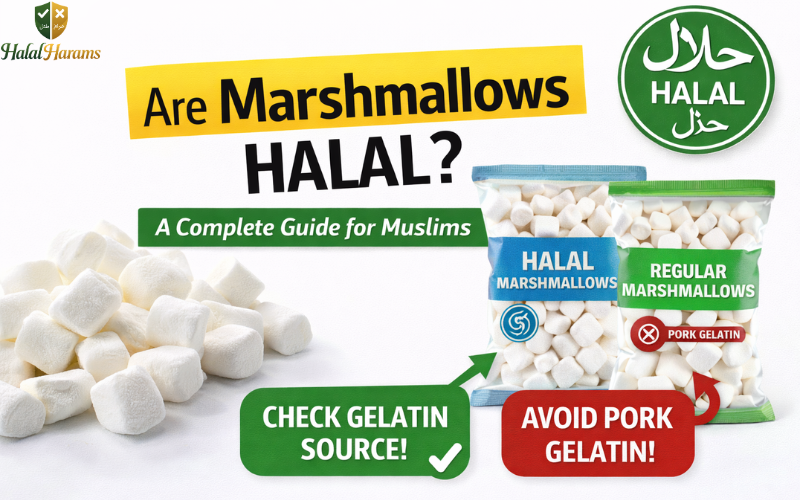
Marshmallows are a soft, sweet treat that many people enjoy in desserts, hot chocolate, and snacks. They are popular around the world and come in different shapes, sizes, and flavors. While they may look simple, many Muslims wonder whether marshmallows are halal before eating them. The answer is not the same for every brand because the ingredients can be very different.
The main concern is gelatin, which gives marshmallows their soft and fluffy texture. Gelatin can come from cows, pigs, or other animal sources. If it is made from pork, marshmallows are haram. If it comes from a cow that was not slaughtered according to Islamic law, many scholars also consider it impermissible. However, marshmallows made with halal-certified beef gelatin or plant-based alternatives, such as agar-agar or carrageenan, are generally considered halal.
Reading the ingredient label is the best way to understand what is inside a pack of marshmallows. In this guide, you will learn what marshmallows are made of, which ingredients Muslims should watch for, and how to identify halal options. By the end, you will know how to choose marshmallows that meet Islamic dietary guidelines with confidence.
What Are Marshmallows?
Marshmallows are soft, spongy sweets made by whipping sugar, water, and air into a fluffy texture. Traditionally, they also include a key ingredient that gives them their structure and bounce.
They are commonly used in:
- Desserts (cakes, brownies, s’mores)
- Hot drinks (hot chocolate, coffee)
- Snacks and baking
Ingredients in Marshmallows
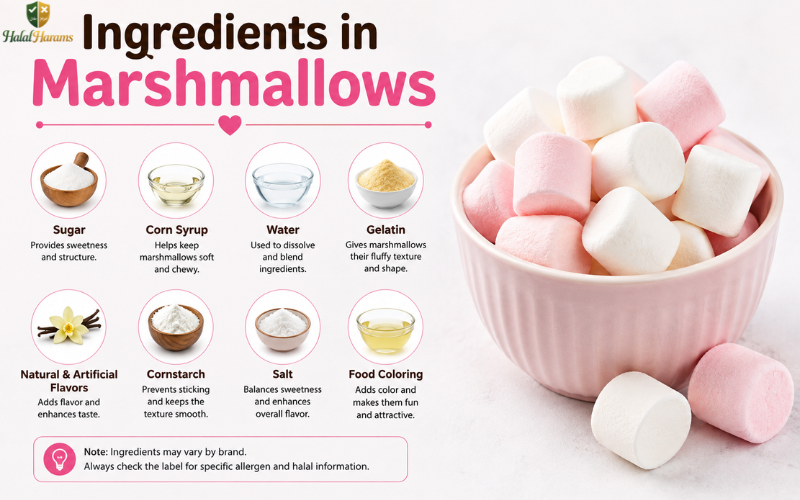
To determine whether marshmallows are halal, we need to understand their ingredients.
Common Ingredients Breakdown
| Ingredient | Source Type | Halal Status |
| Sugar | Plant-based | ✅ Halal |
| Corn Syrup | Plant-based | ✅ Halal |
| Water | Natural | ✅ Halal |
| Gelatin | Animal-based | ⚠️ Depends |
| Flavorings | Mixed | ⚠️ Check |
| Starch (coating) | Plant-based | ✅ Halal |
👉 The most critical ingredient is gelatin.
What Is Gelatin?
Gelatin is a protein obtained from animal bones, skin, and connective tissues. It gives marshmallows their soft and stretchy texture.
Related Post: Is Swedish Fish Halal
Types of Gelatin and Their Halal Status
Gelatin Source Comparison
| Gelatin Type | Source | Halal Status |
| Pork Gelatin | Pig | ❌ Haram |
| Bovine Gelatin | Cow | ⚠️ Depends |
| Fish Gelatin | Fish | ✅ Halal |
| Plant-Based | Seaweed/Fruit | ✅ Halal |
Are Marshmallows Halal?
The Short Answer
Most marshmallows are NOT halal because they contain pork-based gelatin.
When Are Marshmallows Halal?
Marshmallows are halal if they meet the following conditions:
Conditions for Halal Marshmallows
| Condition | Requirement |
| Gelatin Source | Halal-certified or plant-based |
| Slaughter Method | Islamic (Zabiha) |
| Flavorings | Alcohol-free |
| Processing | No contamination |
When Are Marshmallows Haram?
Haram Scenarios
| Reason | Explanation |
| Pork Gelatin | Always forbidden |
| Non-halal Bovine Gelatin | Not slaughtered Islamically |
| Alcohol in Flavoring | Not permissible |
| Cross-Contamination | Mixed with haram substances |
Types of Marshmallows and Their Halal Status
Marshmallow Types
| Type | Description | Halal Status |
| Regular | Contains pork gelatin | ❌ Haram |
| Halal-Certified | Verified halal gelatin | ✅ Halal |
| Vegan | No animal ingredients | ✅ Usually Halal |
Why Most Marshmallows Are Not Halal
Manufacturers often use pork gelatin because:
- It is cheaper
- It gives better texture
- It is widely available
This is why most supermarket marshmallows are not suitable for Muslims.
How to Identify Halal Marshmallows
Quick Identification Guide
| What to Check | What to Look For |
| Label | Halal-certified logo |
| Ingredients | No gelatin or halal gelatin |
| Description | Vegan or vegetarian |
| Brand Info | Transparency about sourcing |
Halal Alternatives to Marshmallows
Halal-Friendly Options
| Alternative | Source | Benefit |
| Agar-Agar | Seaweed | 100% halal |
| Pectin | Fruit | Natural option |
| Vegan Marshmallows | Plant-based | Easy to find |
| Homemade | Controlled | Full assurance |
Marshmallows in Other Foods
Marshmallows are often hidden in:
- Cereals
- Ice creams
- Desserts
- Chocolate bars
👉 Always check labels carefully.
Scholarly Perspectives
Scholarly Views Summary
| Opinion Type | View |
| Majority View | Pork gelatin is haram |
| Conditional View | Halal if source is verified |
| Minority View (Istihalah) | Transformation may allow |
Health Considerations
Nutritional Overview
| Factor | Impact |
| Sugar Content | High |
| Calories | High |
| Nutrition | Low |
👉 Islam encourages moderation in consumption.
Common Misconceptions
| Misconception | Reality |
| All marshmallows are halal | ❌ Most are not |
| Vegetarian = Halal | ⚠️ Usually, but check |
| Gelatin doesn’t matter | ❌ It is the key factor |
If you found this guide helpful, explore these related Halal and Harams articles for more answers to common food and ingredient questions.
- What Is Halal Food? Complete Guide For Muslims(2026)
- Is Dave’s Hot Chicken Halal? Complete Guide for Muslims(2026)
- Is Bovine Gelatin Halal? Complete Guide for Muslims(2026)
- Is Boba Halal? Complete Guide for Muslims(2026)
- Are M&M’s Halal? Complete Guide For Muslims(2026)
FAQs
Are marshmallows halal?
Most marshmallows are not halal because they contain pork gelatin, but halal-certified or vegan options are permissible.
Do marshmallows contain pork?
Yes, many marshmallows contain pork-derived gelatin.
Are vegan marshmallows halal?
Yes, they are usually halal, but always check ingredients.
Is bovine gelatin halal?
Only if it is halal-certified and properly sourced.
Can Muslims eat marshmallows?
Yes, if they are halal-certified or made from plant-based ingredients.
What is the safest option?
Halal-certified or vegan marshmallows.
Final Remarks
Marshmallows may seem simple, but their halal status depends mainly on the type of gelatin used. Since most commercial marshmallows contain pork gelatin, they are generally not halal. However, halal-certified and plant-based alternatives provide safe options for Muslims.
The best approach is to stay informed, read labels carefully, and choose products that clearly meet halal standards. When in doubt, it is always better to avoid uncertain products and go for verified halal options.
