
Introduction
Agriculture is entering a new era of intelligent automation, where advanced technologies help farmers improve productivity while managing resources more efficiently. Among these innovations, swarm robotics offers an exciting approach to precision farming.
Inspired by the coordinated behavior of ants, bees, and other social organisms, swarm robotics allows multiple autonomous machines to work together toward shared objectives. In agriculture, groups of small drones could monitor crops, identify problems, collect environmental information, and support targeted field operations.
Although large-scale agricultural drone swarms remain an emerging technology, their potential to improve farming efficiency is attracting considerable interest.
What Is Swarm Robotics?
Swarm robotics involves coordinating multiple robots through shared rules, communication systems, and distributed decision-making.
Instead of depending entirely on one central controller, individual robots can respond to surrounding conditions while contributing to a larger mission.
In precision agriculture, these robots may include lightweight aerial drones equipped with cameras, sensors, and navigation technology.
A coordinated swarm could divide a large agricultural field into smaller areas, allowing different drones to inspect separate sections simultaneously.
This collaborative approach may improve coverage and reduce the time needed for certain agricultural activities.
How Micro-Drone Swarms Work in Agriculture
A typical agricultural drone swarm would require several interconnected technologies.
Autonomous Navigation: Drones use positioning systems and onboard sensors to follow assigned routes.
Wireless Communication: Communication networks allow drones to exchange operational information.
Artificial Intelligence: Machine learning systems can help analyze crop conditions and identify unusual patterns.
Collision Avoidance: Sensors and coordination algorithms help drones maintain safe distances.
Task Allocation: Software distributes responsibilities according to drone availability, battery levels, and mission priorities.
Together, these technologies allow multiple drones to operate as a coordinated system.
1. Faster Crop Health Monitoring
Traditional crop inspections often require farmers to walk through fields or operate individual drones.
Swarm robotics could accelerate this process by assigning different sections of farmland to multiple drones.
Equipped with appropriate imaging sensors, drones may detect indicators associated with:
- Water stress.
- Nutrient deficiencies.
- Pest damage.
- Plant disease symptoms.
- Uneven crop development.
The collected information can help farmers identify areas requiring closer inspection.
However, aerial observations generally need additional analysis or ground verification before specific agricultural problems can be confirmed.
2. Precision Spraying and Targeted Treatments
One potential application of swarm robotics involves applying agricultural treatments only where necessary.
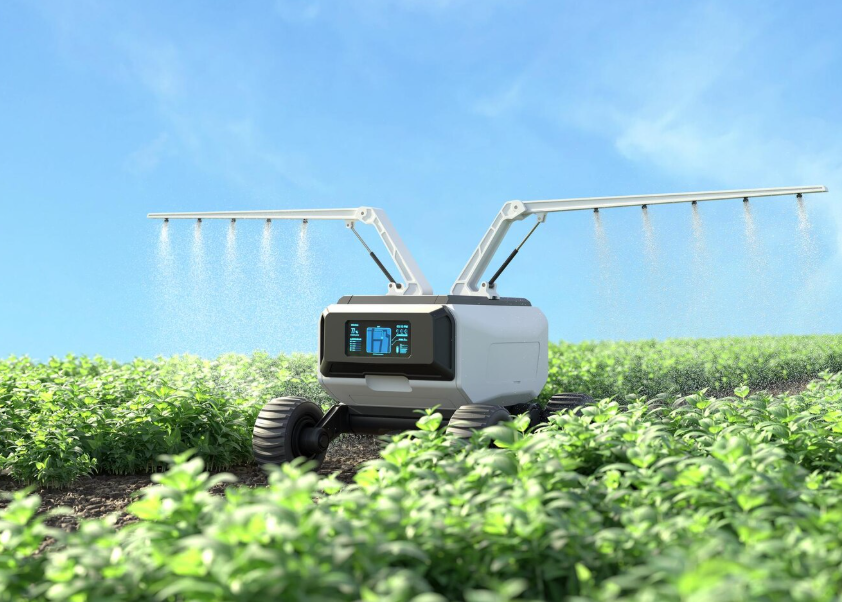
Small drones equipped with suitable spraying systems could theoretically distribute treatments across selected field areas.
This targeted approach may help reduce unnecessary chemical application compared with uniform spraying.
However, micro-drones have limited payload capacity, and spraying operations introduce challenges involving wind drift, coverage accuracy, battery endurance, and chemical safety.
Practical deployment requires approved equipment, trained operators, and compliance with applicable aviation and agricultural regulations.
3. Improved Irrigation Management
Water availability is a major concern for agricultural operations.
Drone swarms equipped with thermal or multispectral imaging technology may help identify patterns associated with uneven irrigation and crop water stress.
By collecting observations from different sections of a field, drones can support more detailed irrigation planning.
Farmers could combine this information with soil moisture sensors and weather forecasts to make better watering decisions.
Such systems may help reduce water waste while supporting healthier crop development.
4. Coordinated Pest and Disease Surveillance
Early identification of crop threats can reduce potential agricultural losses.
Multiple drones could repeatedly inspect designated areas and compare images collected over time.
Automated analysis may highlight changes in plant appearance, growth patterns, or vegetation density.
When suspicious conditions appear, farmers can conduct targeted inspections and determine whether intervention is necessary.
This approach supports more responsive crop management without treating every unusual image as confirmed disease or pest activity.
5. Greater Efficiency Through Distributed Operations
Swarm robotics offers an important operational advantage: tasks can be divided among multiple machines.
If one drone experiences a technical problem, the system may reassign its unfinished work to another available drone.
This flexibility can improve mission resilience, provided the coordination software supports dynamic task allocation.
Multiple drones may also inspect different field sections simultaneously, potentially reducing monitoring time.
Nevertheless, efficiency depends on airspace coordination, communication reliability, battery management, and the number of available charging stations.
Challenges of Agricultural Drone Swarms
Despite their potential, several obstacles limit widespread adoption.
- Battery Limitations: Small drones generally have restricted flight endurance.
- Communication Reliability: Large fields may create wireless connectivity challenges.
- Safety Requirements: Coordinating many aircraft requires dependable collision avoidance.
- High Initial Costs: Specialized equipment and software can require significant investment.
- Weather Sensitivity: Strong winds and rainfall can disrupt operations.
- Regulatory Restrictions: Multi-drone and autonomous flights may require special permissions.
Addressing these limitations is essential before large swarms can become practical tools for everyday farming.
The Future of Swarm Robotics in Farming
Future agricultural systems could combine drone swarms with ground robots, connected irrigation equipment, and intelligent farm management platforms.
For example, aerial drones might identify areas showing possible crop stress, while ground robots collect soil measurements for verification.
Artificial intelligence could then help farmers prioritize inspections and select appropriate interventions.
Advances in lightweight batteries, onboard computing, and autonomous coordination may gradually improve the practicality of these systems.
However, widespread deployment will depend on affordability, safety, reliability, and demonstrated agricultural benefits.
Conclusion
Swarm robotics represents a promising direction for precision agriculture by enabling multiple small drones to cooperate on complex farming tasks.
From crop monitoring and irrigation assessment to targeted surveillance and distributed field inspections, coordinated drone systems could help farmers make more informed decisions.
Although significant technical and regulatory challenges remain, continued innovation may transform drone swarms into valuable tools for more efficient, sustainable, and data-driven agriculture.
Read More :Algorithmic Bias Audits: Holding Automated Hiring Tools Legally Accountable
