
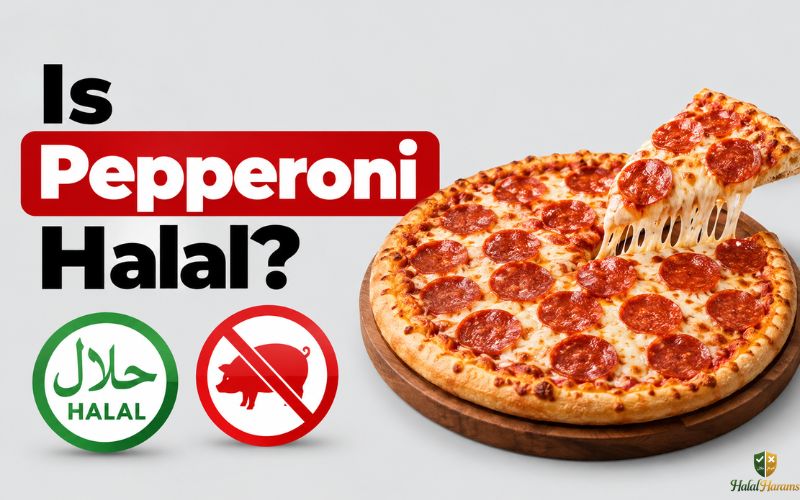
If you are wondering is pepperoni halal, the short answer is: usually not, but it depends on what meat was used and how it was prepared. Traditional pepperoni is commonly made with pork, and pork is clearly haram in Islam. Some pepperoni is made from beef, turkey, or chicken instead, but that does not automatically make it halal.
A Muslim should check more than just the name on the package. The animal must be permissible, the meat must meet Islamic slaughter requirements, and the other ingredients must not contain haram substances.
This is especially useful when ordering pizza or buying packaged pepperoni because labels such as “beef pepperoni” or “no pork” do not always provide enough information to establish that the product is halal.
Is Pepperoni Halal or Haram?
Traditional pork pepperoni is haram. Pork and its derivatives are prohibited in Islam, as clearly established in the Quran.
However, not every type of pepperoni is automatically haram. Beef, chicken, or turkey pepperoni can be halal if the meat and all other ingredients meet Islamic dietary requirements.
| Type of pepperoni | General ruling |
|---|---|
| Pork pepperoni | Haram |
| Halal beef pepperoni | Halal |
| Halal chicken pepperoni | Halal |
| Halal turkey pepperoni | Halal |
| Beef pepperoni with unknown source | Questionable |
| Pepperoni containing pork fat | Haram |
| Halal-certified pepperoni | Generally halal |
So when someone asks, “Is pepperoni halal?”, the answer cannot be based only on the word pepperoni. You need to know its ingredients and source.
Why Is Traditional Pepperoni Haram?
Pepperoni is a cured and seasoned sausage. Traditional versions commonly use pork or a mixture of pork and beef.
Islam specifically prohibits pork. Allah mentions the prohibition of swine in the Quran, and this ruling is well established in Islamic jurisprudence.
Processing does not change the basic ruling. Turning pork into sausage, drying it, seasoning it, or curing it does not make it halal.
For this reason, a Muslim should avoid traditional pork pepperoni.
What Is Pepperoni Made From?
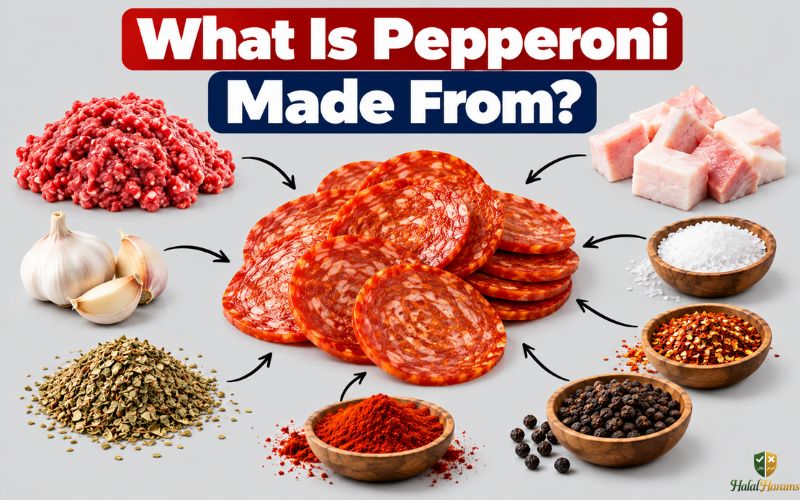
Pepperoni is usually made from ground meat mixed with fat, salt, spices, and curing ingredients. Recipes vary between manufacturers.
Traditional pepperoni often contains pork, while halal alternatives may use beef, chicken, or turkey.
| Ingredient | Halal concern |
|---|---|
| Beef | Must come from halal-slaughtered animal |
| Chicken | Must come from halal-slaughtered chicken |
| Turkey | Must come from halal-slaughtered turkey |
| Pork | Haram |
| Pork fat | Haram |
| Salt | Halal |
| Black pepper | Halal |
| Paprika | Generally halal |
| Garlic | Halal |
| Curing agents | Source may need checking |
| Flavorings | Source should be checked if unclear |
This is where many people make a common mistake. They see “beef pepperoni” and immediately assume that it is halal.
Beef itself is halal, but the animal’s slaughter and the remaining ingredients still matter.
Related Post: Is Subway Halal? Complete Guide for Muslims(2026)
Is Beef Pepperoni Halal?
Beef pepperoni can be halal, but beef pepperoni is not automatically halal.
The beef should come from an animal that is permissible to eat and has been slaughtered according to Islamic requirements.
The seasonings, fats, flavorings, and other ingredients should also be free from prohibited substances.
For example, if a restaurant says it uses “100% beef pepperoni,” you know the meat is beef, but you still do not necessarily know whether the beef was halal-slaughtered.
A reliable halal certification provides much stronger assurance.
Can Chicken or Turkey Pepperoni Be Halal?
Yes. Chicken and turkey pepperoni can be halal.
The same basic principles apply. The bird must be permissible and slaughtered according to Islamic requirements. The other ingredients must also meet halal standards.
Some manufacturers produce chicken and turkey pepperoni specifically for Muslim consumers.
| Pepperoni type | Can it be halal? | What to check |
|---|---|---|
| Beef | Yes | Halal slaughter and ingredients |
| Chicken | Yes | Halal slaughter and ingredients |
| Turkey | Yes | Halal slaughter and ingredients |
| Pork | No | Pork is prohibited |
Simply replacing pork with chicken does not automatically establish that the product is halal. The complete production process matters.
What About Halal-Certified Pepperoni?
Halal-certified pepperoni is generally the safest choice for Muslims.
Halal certification can cover several aspects of production, including the meat source, slaughter, ingredients, processing, and handling.
When shopping, look for a recognized halal certification mark on the package.
A statement such as “no pork”, “Muslim-friendly”, or “beef pepperoni” is not necessarily the same as halal certification.
Can Pepperoni Contain Pork Even If It Says Beef?
A product described as beef pepperoni should still be checked carefully.
Some processed meat products contain additional animal-derived ingredients, fats, flavorings, or processing ingredients. The exact formulation depends on the manufacturer.
| Label | Automatically halal? |
|---|---|
| Halal certified | Generally yes |
| Beef pepperoni | No |
| Turkey pepperoni | No |
| No pork | No |
| Vegetarian pepperoni | Check ingredients |
| Halal beef pepperoni | Generally yes |
The key point is simple: “no pork” and “halal” are not always identical claims.
Is Pepperoni on Pizza Halal?
Pepperoni pizza is halal only when the pepperoni itself is halal and the other ingredients are permissible.
The crust, tomato sauce, cheese, and vegetables are generally not the main concern. The meat topping is usually where the question arises.
There can also be a preparation issue. If a restaurant prepares halal pepperoni on equipment that is also used for pork products, some customers may want to ask how the food is handled.
If you follow strict halal dietary practices, asking a few questions before ordering is a sensible approach.
What Should Muslims Ask at a Restaurant?
You do not need to have a long conversation with the restaurant. A few direct questions can usually clarify the situation.
Ask:
“Is your pepperoni halal-certified?”
If the answer is no, ask:
“What type of meat is used?”
If they say beef, chicken, or turkey, ask:
“Is the meat halal-slaughtered?”
You can also ask whether pork products are cooked on the same equipment.
| Question | Why ask it? |
|---|---|
| Is the pepperoni halal-certified? | Gives the clearest assurance |
| What meat is used? | Identifies possible pork |
| Is the meat halal-slaughtered? | Species alone is not enough |
| Does it contain pork fat? | Pork fat is haram |
| Are the additives halal? | Some ingredients may need checking |
| Is it cooked with pork products? | Helps address preparation concerns |
Related Post: Is Whey Halal? A Muslim’s Guide to Whey Protein
What Do Islamic Principles Say About Processed Meat?
Islamic dietary rules apply to processed food just as they apply to ordinary meat.
The Quran prohibits certain foods, including pork and animals that are not lawfully slaughtered. The teachings of the Prophet Muhammad ﷺ also guide Muslims to avoid prohibited foods and to be cautious about doubtful matters.
This means processing does not simply change the ruling of a prohibited substance.
At the same time, Muslims should not turn halal eating into constant suspicion. When a trustworthy halal certification covers a product, there is generally no reason to assume hidden problems without evidence.
What If You Accidentally Eat Haram Pepperoni?
If you genuinely did not know that the pepperoni contained pork or another prohibited ingredient, do not panic.
Accidentally consuming something prohibited is different from knowingly choosing to eat it.
Once you discover the problem, avoid the product in the future and take reasonable steps to check ingredients more carefully.
Islam recognizes genuine mistakes and lack of knowledge. A person should correct the mistake rather than becoming overwhelmed by unnecessary worry.
What About Different Madhhabs?
The prohibition of pork is not a major point of disagreement among the recognized Sunni schools of Islamic jurisprudence. Pork is prohibited.
Differences can arise in more detailed questions involving slaughter, food processing, doubtful ingredients, and contamination.
For example, scholars may discuss the details of modern slaughtering systems or the source of particular food additives.
| Issue | General Islamic position |
|---|---|
| Pork meat | Haram |
| Pork fat | Haram |
| Halal-slaughtered beef | Halal |
| Halal-slaughtered poultry | Halal |
| Unknown meat source | Requires caution |
| Halal-certified processed meat | Generally acceptable |
| Knowingly eating pork | Haram |
For a particular product involving complicated ingredients or production methods, asking a qualified scholar is better than relying on a general internet answer.
Is Vegan or Vegetarian Pepperoni Halal?
Vegan or vegetarian pepperoni does not contain meat, but you should still check its ingredients.
Plant-based ingredients are generally halal. The questions usually arise around flavorings, enzymes, processing aids, or other additives.
A product can be meat-free without necessarily having every ingredient that a Muslim wants to verify.
If the product carries reliable halal certification, that provides additional reassurance.
Related Post: Is HI-CHEW Halal? Complete Guide for Muslims(2026)
How Can You Tell If Pepperoni Is Halal?
Use a simple three-step check.
First, identify the meat. If it contains pork, do not eat it.
Second, check the meat source. Beef, chicken, and turkey should come from a halal source.
Third, check the ingredients. Look for animal fats, gelatin, flavorings, enzymes, and other ingredients whose sources may not be obvious.
This approach works when buying packaged pepperoni, ordering pizza, or eating at a restaurant.
Common Pepperoni Situations and Their Rulings
| Situation | General ruling |
|---|---|
| Pork pepperoni on pizza | Haram |
| Halal beef pepperoni | Halal |
| Halal chicken pepperoni | Halal |
| Beef pepperoni with unknown slaughter method | Questionable |
| Pepperoni labeled halal | Generally halal |
| Pepperoni with pork fat | Haram |
| Vegetarian pepperoni with halal ingredients | Generally halal |
| Restaurant says “no pork” but provides no halal information | Ask further questions |
Relaled Post: Is Domino’s Halal? A Clear Guide for Muslims Before Ordering
Frequently Asked Questions
Is pepperoni always haram?
No. Traditional pork pepperoni is haram, but pepperoni made from halal beef, chicken, or turkey can be halal when its ingredients and preparation meet Islamic requirements.
Is beef pepperoni halal?
Beef pepperoni can be halal. The beef should come from halal slaughter, and the product should not contain pork, pork fat, or other prohibited ingredients.
Can Muslims eat turkey pepperoni?
Yes, Muslims can eat turkey pepperoni when the turkey is halal-slaughtered and the seasonings, additives, and processing meet halal requirements.
Is pepperoni pizza haram?
Pepperoni pizza is haram when the pepperoni contains pork or another prohibited ingredient. Pizza with properly halal pepperoni can be permissible.
Does “no pork” mean halal?
Not necessarily. A product can be free from pork while still containing other ingredients or meat sources that need to be checked under Islamic dietary rules.
What is the safest pepperoni for Muslims?
Halal-certified beef, chicken, or turkey pepperoni is generally the safest choice because certification provides assurance about the meat and relevant ingredients.
Practical Answer
If you are standing in a supermarket or ordering pizza and asking, “Is pepperoni halal?”, remember one simple rule: do not judge pepperoni by its name alone.
Traditional pork pepperoni is haram. Beef, chicken, and turkey versions can be halal, but you should verify the meat source, slaughter method, ingredients, and halal certification where possible.
The easiest option is to choose clearly halal-certified pepperoni. If certification is unavailable, ask the restaurant or manufacturer what meat is used and whether it comes from a halal source.
Is pepperoni halal? Traditional pork pepperoni is haram, while properly halal-certified beef, chicken, or turkey pepperoni can be halal.
