
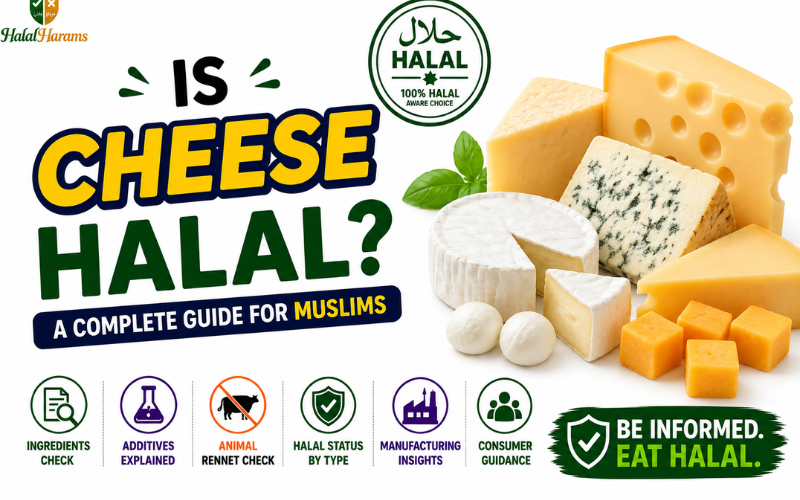
Cheese is a common food made from milk, and it is used in everything from pizza and sandwiches to sauces and snacks. Since cheese can contain several added ingredients, Muslims often ask, “Is cheese halal?”
The simple answer is it depends on how the cheese is made and which ingredients are used. Milk itself is halal, but some cheese-making ingredients may need closer attention. One of the main concerns is rennet, an enzyme traditionally taken from the stomach lining of animals. If the animal source and method of slaughter do not meet Islamic requirements, the cheese may not be considered halal by some scholars.
Modern cheese can also be made with microbial or plant-based enzymes, which can avoid animal-derived rennet. Other ingredients, such as flavorings, cultures, and additives, may also need to be checked.
Halal certification can make this easier, but not every cheese product carries a halal logo. The rules may also differ between types of cheese and countries.
In this guide, you will learn which types of cheese may be halal, why rennet matters, and what to check on a cheese label before buying or eating it.
Is Cheese Halal or Haram?
Short Answer:
Cheese is generally halal if it is made with halal ingredients and halal enzymes. Cheese made with animal rennet from non-halal slaughtered animals may not be halal.
What Is Cheese?
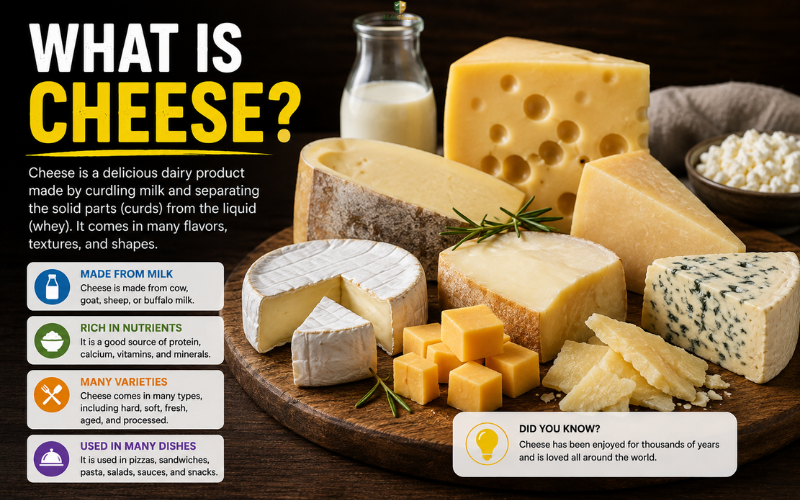
Cheese is a dairy product made from milk. It is produced by separating milk solids from liquid whey through coagulation.
Cheese can be made from:
- Cow milk
- Goat milk
- Sheep milk
- Buffalo milk
The process usually involves:
- Milk
- Cultures
- Salt
- Enzymes or rennet
The most important halal concern is usually rennet.
Related Post: Is Butter Halal? Complete Guide For Muslims Users(2026)
What Is Rennet?
Rennet is an enzyme used to curdle milk during cheese production.
It helps transform liquid milk into solid cheese.
Types of Rennet
| Rennet Type | Source | Halal Status |
|---|---|---|
| Animal Rennet | Calf stomach | ⚠️ Depends |
| Microbial Rennet | Fungi/Bacteria | ✅ Halal |
| Vegetable Rennet | Plants | ✅ Halal |
| Synthetic Rennet | Lab-made | ✅ Halal |
Animal rennet is the main issue.
Why Animal Rennet Can Be Problematic
Animal rennet comes from the stomach lining of young calves.
The halal status depends on:
- Whether the animal was halal
- Whether it was slaughtered according to Islamic law
Animal Rennet Rulings
| Source Condition | Halal Status |
|---|---|
| Halal-slaughtered calf | ✅ Halal |
| Non-halal slaughter | ❌ Haram or doubtful |
| Unknown source | ⚠️ Doubtful |
Many imported cheeses fall into the doubtful category.
Is Cheese Halal According to Scholars?
Scholars have different opinions regarding cheese made with animal rennet.
Scholarly Opinions
| Opinion Type | View |
|---|---|
| Strict | Only halal-certified cheese allowed |
| Moderate | Cheese from People of the Book may be allowed |
| Lenient | Most commercial cheese permissible |
Many scholars recommend caution when the source is unknown.
Types of Cheese and Their Halal Status
Different cheeses use different ingredients.
Common Cheese Types
| Cheese Type | Halal Status |
|---|---|
| Mozzarella | ⚠️ Usually halal |
| Cheddar | ⚠️ Check rennet |
| Parmesan | ⚠️ Often animal rennet |
| Cream Cheese | ✅ Usually halal |
| Cottage Cheese | ✅ Usually halal |
| Vegan Cheese | ✅ Halal |
Hard cheeses are more likely to use animal rennet.
Is Mozzarella Halal?
Mozzarella is one of the most commonly consumed cheeses.
It is often made with:
- Microbial enzymes
- Vegetarian rennet
Many mozzarella cheeses are halal-friendly, but checking labels is still important.
See Also: Is Jollibee Halal
Is Parmesan Halal?
Parmesan is more concerning.
Traditional parmesan usually contains:
- Animal rennet
- Non-halal enzymes
Many Muslims avoid parmesan unless certified halal.
Halal Cheese vs Non-Halal Cheese
Comparison Table
| Feature | Halal Cheese | Non-Halal Cheese |
|---|---|---|
| Enzymes | Halal/vegetarian | Unclear or haram |
| Certification | Often certified | Usually not certified |
| Ingredients | Transparent | May be doubtful |
Certification makes identification easier.
What Ingredients Should Muslims Watch For?
Important ingredients include:
- Rennet
- Enzymes
- Lipase
- Flavorings
Ingredient Concerns
| Ingredient | Concern |
|---|---|
| Animal Rennet | Source may not be halal |
| Lipase | Sometimes animal-derived |
| Flavorings | May contain alcohol |
| Gelatin | Can be pork-derived |
Reading labels carefully is essential.
Is Cheese Pizza Halal?
Cheese pizza may or may not be halal depending on:
- Type of cheese
- Preparation method
- Cross-contamination
Vegetarian pizza is not automatically halal.
Cross-Contamination Risks
Cheese products may be prepared alongside non-halal items.
Cross-Contamination
| Area | Risk |
|---|---|
| Pizza ovens | Medium |
| Shared utensils | Medium |
| Food factories | Medium |
Shared preparation can affect halal status.
Halal Certification
Halal certification is the easiest way to confirm halal cheese.
Certification Benefits
| Factor | Benefit |
|---|---|
| Halal logo | Clear approval |
| Verified enzymes | Reliable |
| Consumer confidence | High |
Certified cheese removes uncertainty.
Is Vegan Cheese Halal?
Vegan cheese is usually halal because it contains:
- No animal enzymes
- No dairy-based rennet
- Plant-based ingredients
Vegan cheese is often one of the safest options.
Cheese in Fast Food Restaurants
Cheese used in restaurants may not always be halal.
Examples include:
- Burgers
- Pizza chains
- Pasta dishes
Restaurant cheese should be verified separately.
Common Misconceptions
“All cheese is halal”
Not true—rennet matters.
“Vegetarian means halal”
Usually yes, but ingredients should still be checked.
“Milk products are automatically halal”
Processing ingredients can change the ruling.
How to Check If Cheese Is Halal
To verify halal status:
- Look for halal certification
- Check for vegetarian enzymes
- Avoid unclear animal rennet
- Contact manufacturers if needed
These steps help avoid doubtful products.
Health Benefits of Cheese
Cheese can provide:
- Calcium
- Protein
- Vitamin B12
Nutrition Overview
| Nutrient | Benefit |
|---|---|
| Calcium | Bone health |
| Protein | Muscle support |
| Vitamin B12 | Energy production |
Cheese can be part of a balanced diet.
Why This Topic Matters
Understanding whether cheese is halal is important because:
- Cheese is widely consumed
- Ingredients are often unclear
- It helps Muslims maintain halal diets
Related Post: Are Takis Halal? A Complete Guide for Muslims
FAQs
Is cheese halal
Cheese is halal if it uses halal ingredients and halal enzymes.
Is mozzarella halal
Many mozzarella cheeses are halal-friendly, but labels should still be checked.
Is parmesan halal
Traditional parmesan often contains animal rennet and may not be halal.
Is vegetarian cheese halal
Yes, vegetarian cheese is generally halal.
What makes cheese haram
Animal rennet from non-halal slaughtered animals can make cheese doubtful or haram.
What is the safest option
Choose halal-certified or vegetarian cheese.
Final Remarks
Cheese is one of the most common foods consumed around the world, but its halal status depends largely on the enzymes and rennet used during production. While many cheeses are halal-friendly, others may contain animal-derived ingredients from non-halal sources. Understanding labels, checking certifications, and choosing vegetarian or halal-certified options are the safest ways to ensure compliance with Islamic dietary laws. By staying informed and cautious, Muslims can enjoy cheese confidently while maintaining halal standards.
