
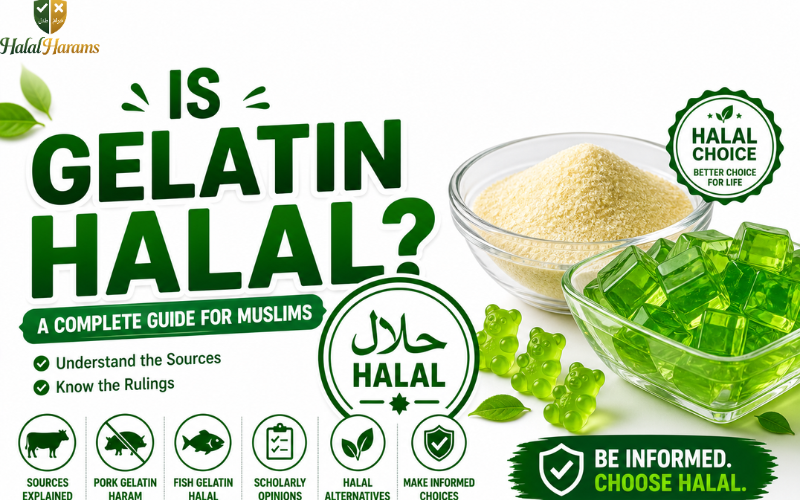
Gelatin is a common ingredient found in gummies, marshmallows, desserts, capsules, and many other foods. It is mainly used to give products their soft, chewy, or firm texture. Because gelatin usually comes from animals, many Muslims ask an important question: Is gelatin halal?
The answer depends on where the gelatin comes from and how the animal was sourced. Gelatin made from pork is haram in Islam. Gelatin made from cattle may be halal if the animal was halal and slaughtered according to Islamic requirements. Fish gelatin is generally considered halal because it comes from fish.
The word “gelatin” on a food label does not always tell you its exact source. This is why checking the type of gelatin and halal certification can be important. Some products clearly state “beef gelatin,” “fish gelatin,” or “halal gelatin,” while others only list gelatin without giving more details.
In this guide, you will learn where gelatin comes from, which types are halal, and what to look for on food labels. This can help you make a better choice when buying products that contain gelatin.
Is Gelatin Halal Or Haram?
Short Answer
Gelatin is halal only if it comes from halal sources (such as properly slaughtered animals or fish). Gelatin derived from pork or non-halal slaughtered animals is haram.
What Is Gelatin?
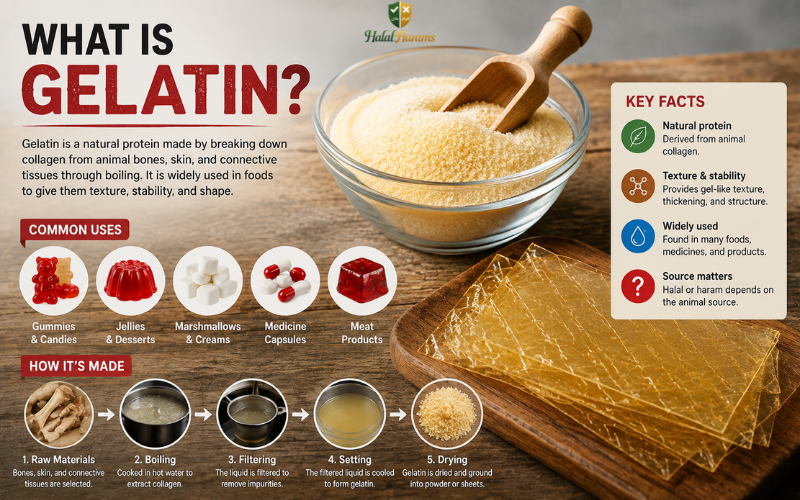
Gelatin is a protein obtained by boiling the skin, bones, and connective tissues of animals. It is widely used because of its ability to:
- Thicken foods
- Stabilize mixtures
- Create a chewy texture
Common uses include:
- Gummy candies
- Marshmallows
- Yogurt
- Capsules and medicines
Its widespread use makes understanding its halal status very important.
Sources of Gelatin
Gelatin can come from different animals, and this determines whether it is halal.
Gelatin Sources and Halal Status
| Source Type | Halal Status |
|---|---|
| Pork (pig) | ❌ Haram |
| Beef (halal slaughter) | ✅ Halal |
| Beef (non-halal) | ❌ Haram |
| Fish | ✅ Halal |
| Plant-based (gelatin alternative) | ✅ Halal |
👉 The source is the most important factor.
Why Pork Gelatin Is Haram
In Islam, pork is strictly forbidden.
Reasons include:
- Clear prohibition in the Quran
- Considered impure (najis)
- Applies to all pork-derived products
👉 Therefore, any gelatin made from pork is 100% haram.
Beef Gelatin: Halal or Not?
Beef gelatin can be halal or haram depending on slaughter.
Beef Gelatin Status
| Condition | Halal Status |
|---|---|
| Halal slaughter (Zabiha) | ✅ Halal |
| Non-halal slaughter | ❌ Haram |
| Unknown source | ⚠️ Doubtful |
👉 Always verify the source.
Fish Gelatin
Fish gelatin is considered halal.
Reasons:
- All fish are halal
- No slaughter requirement
- Widely accepted by scholars
👉 This is one of the safest options.
The Istihalah Debate (Transformation)
One of the most debated issues is Istihalah (chemical transformation).
Some scholars argue:
- Gelatin undergoes transformation
- It becomes a new substance
- Therefore, it may be halal even if originally haram
Others argue:
- The source still matters
- Transformation does not make it halal
Scholarly Views on Istihalah
| Opinion Type | View |
|---|---|
| Permissible | Transformation makes it halal |
| Strict | Source remains important |
| Cautious | Avoid doubtful gelatin |
👉 Most scholars recommend caution.
Related Post: Is Haribo Halal
Where Is Gelatin Found?
Gelatin is used in many products.
Common Products Containing Gelatin
| Product Type | Gelatin Usage |
|---|---|
| Gummies | Texture |
| Marshmallows | Structure |
| Yogurt | Thickener |
| Capsules | оболочка |
| Desserts | Stabilizer |
👉 Always check labels carefully.
Is Gelatin Halal in Foods?
The Short Answer
Gelatin in food is halal only if its source is halal and properly certified. Otherwise, it is haram or doubtful.
Ingredient Label Challenges
Manufacturers often list gelatin without specifying its source.
Label Issues
| Issue | Impact |
|---|---|
| No source mentioned | Doubtful |
| Mixed sources | Risk |
| Imported products | Unclear |
👉 Lack of transparency creates confusion.
Halal Certification
The easiest way to confirm gelatin is halal is certification.
Certification Benefits
| Factor | Benefit |
|---|---|
| Halal logo | Clear approval |
| Verified sourcing | Reliable |
| Consumer trust | High |
👉 Certification removes uncertainty.
Related Post: Is Jello Halal? Complete Guide For Muslims(2026)
Alternatives to Gelatin
There are halal-friendly substitutes.
Gelatin Alternatives
| Alternative | Source | Halal Status |
|---|---|---|
| Agar-agar | Seaweed | ✅ Halal |
| Pectin | Fruits | ✅ Halal |
| Carrageenan | Seaweed | ✅ Halal |
👉 These are commonly used in halal and vegan products.
Gelatin in Medicine
Gelatin is widely used in capsules and medicines.
Medical Use
| Use Case | Ruling |
|---|---|
| Necessary medicine | ✅ Allowed if no alternative |
| Optional supplements | ⚠️ Avoid doubtful |
👉 Necessity can change rulings.
Cross-Contamination Risks
Even halal gelatin can become questionable if processed improperly.
Cross-Contamination
| Area | Risk |
|---|---|
| Factories | Medium |
| Equipment | Medium |
| Packaging | Low |
👉 Always consider production environment.
Why Gelatin Is Often Not Halal
Many gelatin products are not halal because:
- Derived from pork
- Lack of halal certification
- Unclear sourcing
👉 These make them unsafe for Muslims.
Why Some Gelatin Is Halal
Some gelatin is halal because:
- Derived from halal animals
- Properly slaughtered
- Certified halal
👉 These are safe to consume.
How to Check If Gelatin Is Halal
To ensure halal status:
- Look for halal certification
- Check ingredient source
- Avoid unknown gelatin
- Choose plant-based alternatives
👉 These steps help avoid haram products.
Common Misconceptions
“All gelatin is haram”
Not true—halal sources exist.
“Transformation makes it halal”
Scholars differ on this issue.
“Label doesn’t matter”
It is very important.
Why This Topic Matters
Understanding gelatin is important because:
- It is widely used in foods and medicine
- Often hidden in ingredients
- Helps Muslims follow halal guidelines
See Also: Is Sour Patch Kids Halal? A Complete Guide for Muslims
FAQs
Is gelatin halal?
It depends on the source. Halal if from halal animals or fish.
Is pork gelatin halal?
No, it is strictly haram.
Is beef gelatin halal?
Only if the animal was slaughtered according to Islamic law.
Is gelatin in candy halal?
Only if it is halal-certified or from a halal source.
Is plant-based gelatin halal?
Yes, it is halal.
What is the safest option?
Choose halal-certified or plant-based products.
Final Remarks
Gelatin is a common ingredient found in many everyday products, but its halal status depends entirely on its source and processing method. While gelatin derived from halal-slaughtered animals or fish is permissible, gelatin made from pork or non-halal sources is strictly forbidden. The issue of transformation (Istihalah) adds complexity, but most scholars recommend avoiding doubtful sources unless clearly verified. For Muslims who want to strictly follow halal guidelines, the safest approach is to choose halal-certified products or plant-based alternatives like agar-agar and pectin. By staying informed and reading labels carefully, you can ensure that your dietary choices remain aligned with Islamic principles.
