
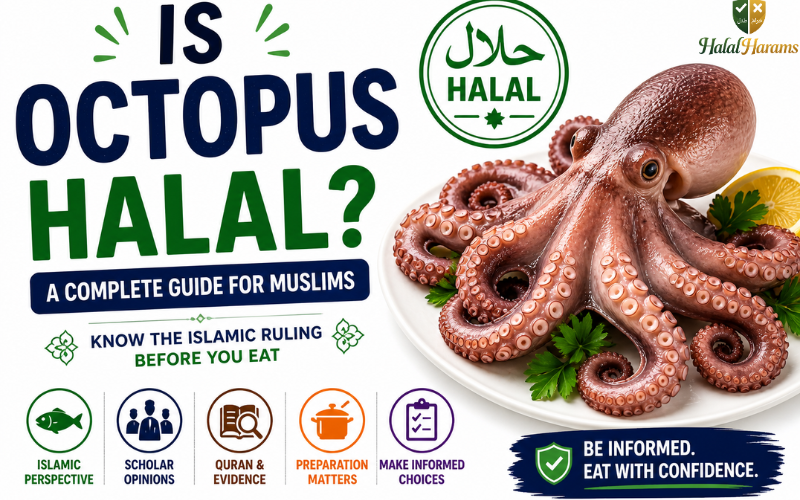
Octopus is a sea animal that is eaten in many parts of the world. It is commonly grilled, fried, boiled, or added to seafood dishes. Since Islam has specific rules about which animals Muslims can eat, many people ask, “Is octopus halal?”
The answer depends on the Islamic school of thought being followed. In general, many Muslim scholars consider octopus halal because it is a sea animal. The Quran permits seafood, and scholars who follow the broader view of permissible sea animals include octopus in this category.
However, there is a difference of opinion among Islamic scholars. Some Hanafi scholars take a more limited view of seafood and generally consider only fish to be permissible. Under this view, octopus is not considered halal. Other schools, including Shafi’i, Maliki, and Hanbali, generally allow sea animals such as octopus.
The way octopus is prepared can also matter. If it is cooked with haram ingredients, such as alcohol or pork-based ingredients, the final dish would not be halal.
In this guide, you will learn why scholars differ about octopus, how each major Islamic school views it, and what Muslims should consider before eating it.
Is Octopus Halal Or Haram?
Short Answer
Octopus is considered halal by many scholars, especially in the Hanafi, Shafi‘i, and Hanbali schools, but some scholars—particularly within the Hanafi school—consider only fish to be halal, making octopus doubtful or not permissible according to that view.
Understanding Halal Seafood in Islam
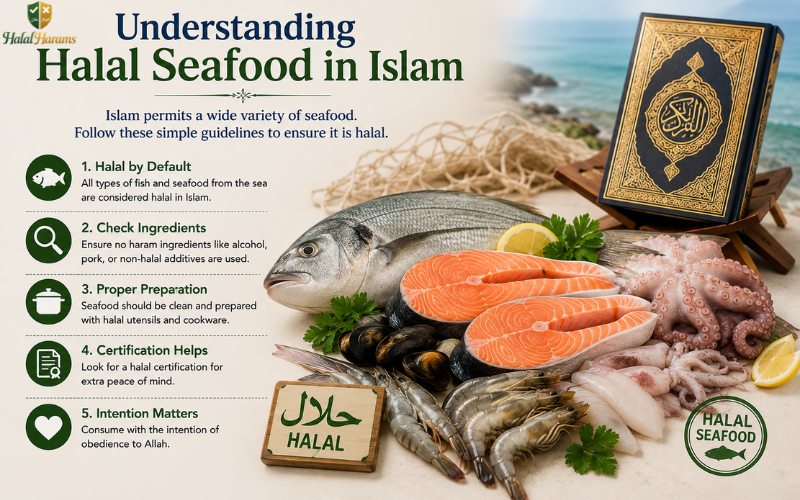
Islamic dietary laws treat seafood differently from land animals.
For land animals:
- Proper Islamic slaughter (Zabiha) is required
For seafood:
- Slaughter is generally not required
- Permissibility depends on the type of sea creature
👉 This is why seafood rulings can vary.
Related Post: Is Squid Halal? Shocking Guide for Muslims(2026)
What Does the Quran Say About Seafood?
The Quran provides general guidance regarding seafood:
“Lawful to you is the game of the sea and its food…” (Quran 5:96)
This verse is often interpreted as allowing sea creatures, but scholars differ in how broadly it applies.
Classification of Seafood in Islamic Law
Sea creatures can be divided into categories.
Types of Seafood
| Category | Examples | General Ruling |
|---|---|---|
| Fish | Salmon, tuna | ✅ Halal |
| Shellfish | Shrimp, crab | ⚠️ اختلاف |
| Mollusks | Octopus, squid | ⚠️ اختلاف |
| Amphibians | Frogs | ❌ Haram |
👉 Octopus falls under mollusks, which is where اختلاف (difference of opinion) occurs.
What Is an Octopus?
An octopus is a soft-bodied marine animal with:
- Eight arms
- No bones
- A flexible body
- A carnivorous diet
It belongs to the mollusk family, similar to squid and cuttlefish.
Scholarly Opinions on Eating Octopus
Islamic scholars have different views regarding octopus.
Scholarly Views
| School of Thought | Opinion on Octopus |
|---|---|
| Hanafi | ❌ Not halal (only fish allowed) |
| Shafi‘i | ✅ Halal |
| Hanbali | ✅ Halal |
| Maliki | ✅ Halal |
👉 The main difference lies in how “seafood” is defined.
Why Some Scholars Say Octopus Is Not Halal
The Hanafi school generally restricts halal seafood to fish only.
Reasons include:
- Octopus is not classified as a fish
- It belongs to mollusks
- Lack of explicit mention in classical texts
👉 Therefore, some Hanafi scholars consider it not permissible.
Related Post: Is Doritos Halal
Why Many Scholars Consider Octopus Halal
Other schools take a broader view of seafood.
Reasons include:
- Quranic allowance of sea creatures
- No explicit prohibition
- General permissibility principle
👉 This leads many scholars to consider octopus halal.
Does Octopus Need Zabiha Slaughter?
No. Octopus does not need Zabiha slaughter because it is a sea creature. This is different from chicken, beef, or other land animals, which have specific slaughter requirements when they are halal.
The main issue with octopus is not how it is slaughtered, but whether your madhab considers it permissible to eat. The Hanafi school does not permit octopus because it is not classified as a fish, while the Shafi’i, Maliki, and Hanbali schools generally permit sea creatures such as octopus.
So, when checking octopus, focus first on the seafood ruling of the school you follow, then check how it was prepared and whether any haram ingredients were added.
Comparison: Fish vs Octopus
Fish vs Octopus
| Feature | Fish | Octopus |
|---|---|---|
| Classification | Fish | Mollusk |
| Halal Status | ✅ Agreed | ⚠️ Disputed |
| Slaughter | Not required | Not required |
👉 Fish is universally halal, while octopus is debated.
Preparation and Cooking Considerations
Even if octopus is considered halal, preparation matters.
Cooking Factors
| Factor | Halal Requirement |
|---|---|
| Ingredients | Must be halal |
| Cooking oil | Halal only |
| Cross-contamination | Avoid non-halal foods |
👉 Cooking methods can affect halal status.
Cross-Contamination Risks
Octopus is often prepared in seafood restaurants.
Cross-Contamination Overview
| Area | Risk |
|---|---|
| Shared grills | Medium |
| Frying oil | High |
| Utensils | Medium |
👉 Always verify how food is prepared.
Nutritional Benefits of Octopus
Octopus is considered a healthy seafood option.
Nutritional Overview
| Nutrient | Benefit |
|---|---|
| Protein | High |
| Omega-3 | Good for heart |
| Vitamins | B12, iron |
| Fat | Low |
👉 It is both nutritious and low in fat.
Regional and Cultural Practices
Octopus is widely consumed in:
- Japan
- Korea
- Mediterranean countries
In Muslim-majority regions, acceptance depends on local مذهبی interpretation.
When Octopus Is Clearly Halal
It is considered halal when:
- Following Shafi‘i, Maliki, or Hanbali views
- Prepared with halal ingredients
- No contamination occurs
When Octopus May Be Avoided
It may be avoided when:
- Following strict Hanafi opinion
- Doubt exists about preparation
- Personal caution is preferred
Common Misconceptions
“All seafood is halal”
Not according to all scholars.
“Octopus is haram everywhere”
Not true—majority consider it halal.
“Cooking method doesn’t matter”
It does—ingredients and contamination matter.
Why This Topic Matters
Understanding whether octopus is halal is important because:
- Seafood rulings differ in Islam
- It is widely consumed globally
- It helps Muslims follow their dietary beliefs correctly
See Also: Is Swedish Fish Halal
FAQs
Is octopus halal in Islam?
It is halal according to most scholars, but some Hanafi scholars consider it not permissible.
Can Muslims eat octopus?
Yes, if following the majority opinion and proper preparation is ensured.
Is octopus considered fish?
No, it is a mollusk, which is why اختلاف exists.
Is octopus halal in the Hanafi school?
Generally, no—only fish is considered halal.Does octopus require halal slaughter?
No, seafood does not require slaughter.
What is the safest option?
Follow your school of thought and avoid doubtful situations.
Final Remarks
Octopus is a unique and widely consumed seafood that falls into a debated category in Islamic dietary law. While the majority of scholars from the Shafi‘i, Maliki, and Hanbali schools consider it halal based on the general permissibility of sea creatures, the Hanafi school traditionally limits halal seafood to fish, making octopus questionable or not permissible in that view. As a result, the ruling depends on which scholarly opinion you follow. For Muslims seeking clarity, it is important to understand your school of thought and make informed decisions accordingly. Ensuring proper preparation and avoiding cross-contamination also plays a key role in maintaining halal standards. By staying informed and cautious, you can confidently align your dietary choices with your faith.
