
Skittles are small, chewy candies known for their bright colors, fruity flavors, and crunchy outer shells. They are available in many varieties, including Original, Wild Berry, Tropical, and limited-edition flavors. Since Skittles are made with several ingredients, many Muslims want to know whether they are halal before eating them.
The answer can depend on the specific Skittles product, ingredients, and country of manufacture. Some ingredients may need extra attention, especially flavorings, food colors, and other additives. Even when a product does not contain obvious haram ingredients such as pork gelatin, Muslims may still want to check whether the ingredients come from halal sources.
Another important factor is halal certification. A halal-certified product gives consumers clearer information about its ingredients and production process. However, certification and recipes can vary between countries, so it is better to check the package instead of relying only on information about Skittles sold in another market.
In this guide, you will learn what Skittles are made of, which ingredients may raise halal concerns, and how to check their halal status. This information can help Muslim consumers make a more informed choice when buying or eating Skittles.
Short Answer
Skittles are generally considered halal in many countries because they do not contain gelatin, but they may still be doubtful due to ingredients like flavorings and colorings, as well as lack of halal certification in some regions.
What Are Skittles Made Of?
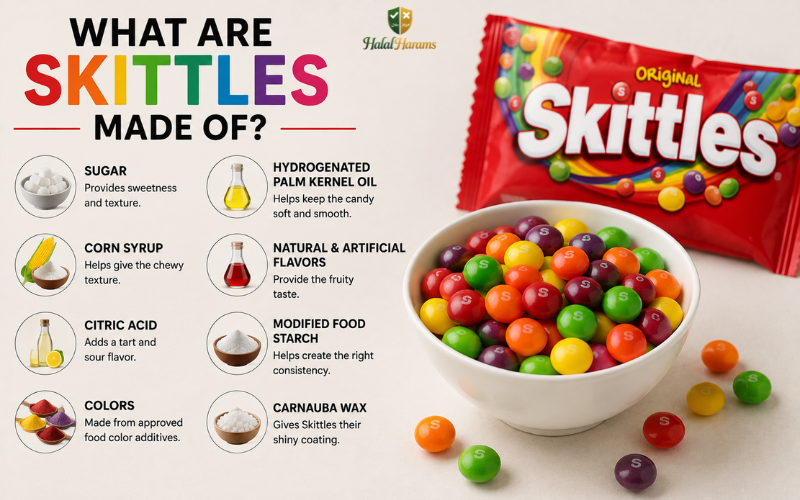
Skittles are chewy, fruit-flavored candies produced by Mars Wrigley. Their ingredients can vary slightly by country, but the core formula is usually similar.
Common ingredients include:
- Sugar
- Corn syrup
- Citric acid
- Flavorings
- Food colorings
- Waxes (for coating)
While most of these ingredients are plant-based or synthetic, some require closer examination.
Do Skittles Contain Gelatin?
👉 Modern Skittles do NOT contain gelatin.
This is an important point because gelatin—often derived from pork—is one of the main reasons many candies are considered haram.
Skittles used to contain gelatin in the past, but it has been removed in most formulations.
Ingredient Breakdown and Halal Status
Key Ingredients in Skittles
| Ingredient | Source Type | Halal Status |
|---|---|---|
| Sugar | Plant-based | ✅ Halal |
| Corn Syrup | Plant-based | ✅ Halal |
| Citric Acid | Synthetic/plant | ✅ Halal |
| Flavorings | Mixed | ⚠️ Check |
| Food Coloring | Synthetic/natural | ⚠️ Depends |
| Wax Coating | Plant/insect-based | ⚠️ Check |
👉 The main concerns are flavorings, coloring agents, and wax coatings.
Are Food Colorings in Skittles Halal?
Food coloring is one of the most discussed aspects of Skittles.
Some colorings may include:
- Synthetic dyes (generally halal)
- Natural dyes (sometimes derived from insects like carmine)
👉 Carmine (E120) is derived from insects and is considered haram by many scholars.
However, many Skittles products today use synthetic colorings instead.
Related Post: What Is Halal Chicken
Common Coloring Concerns
| Coloring Type | Source | Halal Status |
|---|---|---|
| Synthetic | Chemical | ✅ Halal |
| Carmine (E120) | Insects | ❌ Haram |
| Plant-based | Natural | ✅ Halal |
👉 Always check ingredient labels in your country.
What About Flavorings?
Flavorings can be complex and are not always fully disclosed.
They may:
- Be synthetic (usually halal)
- Use alcohol as a carrier
- Be derived from unknown sources
👉 This makes flavorings a potential grey area.
Wax Coating in Skittles
Skittles have a shiny outer layer created using wax.
Common waxes include:
- Carnauba wax (plant-based)
- Beeswax (animal/insect-derived)
Wax Coating Overview
| Wax Type | Source | Halal Status |
|---|---|---|
| Carnauba Wax | Plant | ✅ Halal |
| Beeswax | Insects | ⚠️ Generally allowed |
| Other Waxes | Mixed | ⚠️ Check |
👉 Most scholars consider beeswax permissible, but opinions may vary.
Are Skittles Halal in Different Countries?
The halal status of Skittles can vary depending on region due to ingredient differences.
Regional Halal Status
| Region | Halal Status |
|---|---|
| USA | ✅ Generally halal |
| UK | ⚠️ Check ingredients |
| Europe | ⚠️ Varies |
| Middle East | ✅ Often halal-certified |
| Asia | ⚠️ Depends |
👉 Always verify local packaging.
Why Skittles Are Often Considered Halal
Many Muslims consider Skittles halal because:
- They do not contain gelatin
- Most ingredients are plant-based or synthetic
- No clear haram substances are listed
Why Some Scholars Consider Them Doubtful
Others classify Skittles as mashbooh (doubtful) due to:
- Unclear flavoring sources
- Possible use of questionable colorings
- Lack of halal certification in some regions
👉 This leads to different opinions among Muslims.
Scholarly Opinions on Skittles
Scholarly Views
| Opinion Type | View |
|---|---|
| Permissible | Halal unless proven haram |
| Cautious | Avoid doubtful ingredients |
| Strict | Only halal-certified allowed |
👉 Your choice depends on your level of caution.
How to Check If Skittles Are Halal
To be sure, you can:
- Read the ingredient label carefully
- Look for halal certification
- Contact the manufacturer
- Choose certified alternatives
These steps help reduce uncertainty.
Halal Alternatives to Skittles
If you prefer certainty, consider:
- Halal-certified candies
- Vegan-certified sweets
- Natural fruit snacks
These options often provide more transparency.
Health Considerations
Skittles are high in sugar and should be consumed in moderation.
Nutritional Overview
| Factor | Impact |
|---|---|
| Sugar | High |
| Calories | Moderate |
| Nutrients | Low |
👉 Islam encourages moderation and avoiding excess.
Common Misconceptions
“All Skittles are halal everywhere”
Not true—ingredients vary by region.
“No gelatin means fully halal”
Not always—other ingredients matter.
“Vegan equals halal”
Not necessarily—processing and additives still matter.
Why This Topic Matters
Understanding whether Skittles are halal is important because:
- They are widely consumed
- Ingredients are not always transparent
- It helps Muslims follow dietary guidelines properly
Related Post: Is Starburst Halal? Complete Guide for Muslims(2026)
FAQs
Are Skittles halal?
Skittles are generally considered halal in many regions, but may be doubtful due to flavorings and colorings.
Do Skittles contain gelatin?
No, modern Skittles do not contain gelatin.
Do Skittles contain haram ingredients?
No clear haram ingredients are listed, but some components may be questionable.
Are Skittles halal in the USA?
Yes, they are generally considered halal.
Are Skittles vegan?
Yes, most Skittles are vegan, but vegan does not always mean halal.
What is the safest option?
Halal-certified candy is always the safest choice.
Final Remarks
Skittles are one of the most popular candies in the world and are generally considered halal by many Muslims because they do not contain gelatin and rely mostly on plant-based or synthetic ingredients. However, certain elements such as flavorings, food colorings, and wax coatings introduce some uncertainty, especially in regions where halal certification is not provided. For those who follow a cautious approach, it may be better to avoid doubtful products and choose halal-certified alternatives. Ultimately, the decision depends on your personal level of comfort and understanding. Staying informed, reading labels carefully, and choosing trusted products will help ensure your food aligns with Islamic dietary principles.
