
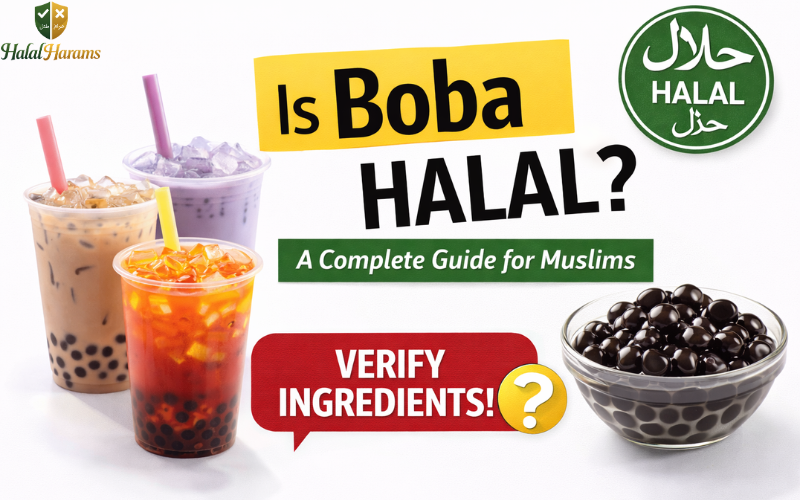
Boba, also known as bubble tea, is one of the most popular drinks in the world. It is loved for its sweet flavors, chewy tapioca pearls, and many topping choices. You can find boba in shopping malls, cafés, and tea shops in many countries. As more Muslims enjoy this drink, a common question comes up: Is boba halal?
The simple answer is that boba can be halal, but it depends on the ingredients used. Traditional tapioca pearls are usually made from cassava starch, which is naturally halal. However, some bubble tea drinks may contain ingredients such as gelatin, alcohol-based flavorings, or non-halal creamers that can make them unsuitable for Muslims. The toppings and syrups used in different shops may also vary.
Because every bubble tea store uses its own recipes, it is important to check the ingredients before ordering. In this guide, you will learn what boba is made of, which ingredients are halal or haram, and how to choose a halal bubble tea with confidence. By the end, you will know what to look for before enjoying your favorite boba drink.
Short Answer:
Yes, boba is generally halal. Plain tapioca pearls are usually made from cassava starch and are halal. However, always check the other ingredients, such as flavorings, creamers, and toppings, because some may contain non-halal ingredients.
What Is Boba?
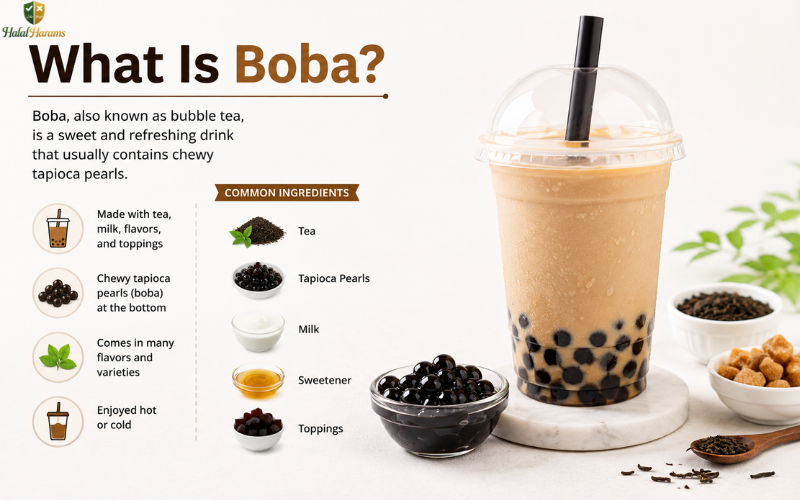
Boba refers to a tea-based drink that usually includes:
- Tea (black, green, or milk tea)
- Milk or creamer
- Sweeteners
- Tapioca pearls (the “boba”)
Originating from Taiwan, boba has evolved into many variations, including:
- Fruit teas
- Slush drinks
- Cheese foam teas
- Brown sugar milk tea
The main attraction is the chewy tapioca pearls that sit at the bottom of the drink.
Related Post: Is Shake Shack Halal? Complete Guide for Muslims (2026)
What Are Tapioca Pearls Made Of?
Tapioca pearls are the key ingredient in boba. They are usually made from:
- Tapioca starch (from cassava root)
- Water
- Sugar or brown sugar
Good news: Tapioca itself is plant-based and naturally halal.
However, the halal status of boba does not depend on tapioca alone—it depends on the entire drink.
Is Boba Halal?
Boba can be halal, but it depends on the ingredients used.
Some boba drinks are completely halal, while others may contain haram or doubtful components.
When Is Boba Halal?
Boba is considered halal when all its ingredients meet Islamic dietary requirements.
1. Tapioca Pearls
As mentioned earlier, tapioca pearls are halal if:
- They are made from plant-based ingredients
- No alcohol or haram additives are used
2. Tea Base
Plain tea (black or green) is halal.
3. Milk and Creamers
Milk is halal as long as:
- It is pure and not mixed with haram substances
- Powdered creamers do not contain non-halal additives
4. Flavorings and Syrups
Flavorings must be:
- Free from alcohol
- Free from non-halal ingredients
5. Toppings
Common toppings like:
- Jelly
- Popping boba
- Red beans
are halal if they do not contain gelatin or alcohol.
When Is Boba Not Halal?
Boba becomes non-halal if it contains any haram ingredients.
1. Alcohol-Based Flavorings
Some syrups or flavor extracts may contain alcohol.
2. Gelatin-Based Ingredients
Some toppings (like certain jellies) may contain gelatin from non-halal sources.
3. Non-Halal Creamers
Certain powdered creamers may include:
- Animal-derived emulsifiers
- Non-halal additives
4. Cross-Contamination
If equipment is used for both halal and non-halal items without proper cleaning, contamination may occur.
Types of Boba Drinks and Their Halal Status
Classic Milk Tea
- Usually halal if made with halal ingredients
- Watch for creamer and flavorings
Fruit Tea
- Mostly halal
- Check syrups and additives
Cheese Foam Tea
- May be halal
- Depends on cheese ingredients and preparation
Slush and Specialty Drinks
- May contain artificial flavorings
- Always verify ingredients
Are Tapioca Pearls Ever Haram?
In most cases, tapioca pearls are halal. However, they may become questionable if:
- Alcohol is used in flavoring
- Non-halal coloring agents are added
Always check the brand or supplier if you are unsure.
Boba Shops and Halal Certification
Not all boba shops are halal-certified. This is because:
- Many shops use shared equipment
- Ingredients come from different suppliers
What Should You Do?
- Ask staff about ingredients
- Look for halal certification
- Choose shops known for halal options
Related Post: Is Bovine Gelatin Halal
Popular Boba Chains: Are They Halal?
Different chains have different policies. Some may offer halal options in certain locations, while others do not.
Important: Always verify per location, not just the brand.
How to Check If Boba Is Halal
Here are practical steps you can follow:
Ask Questions
- Do your syrups contain alcohol?
- Are your toppings gelatin-free?
Check Ingredients
Look at:
- Creamers
- Flavorings
- Additives
Choose Simple Drinks
Safer options include:
- Plain milk tea
- Fruit tea without additives
Look for Halal Certification
This is the most reliable way to ensure permissibility.
Halal Alternatives for Safe Consumption
If you want to avoid doubt, you can:
- Make boba at home using halal ingredients
- Use plant-based milk
- Choose verified halal brands
Health Considerations of Boba
While discussing halal status, it’s also worth noting:
- Boba drinks can be high in sugar
- Excess consumption may not be healthy
Islam encourages moderation in eating and drinking.
Common Misconceptions About Boba
“All boba is halal”
Not true. Ingredients vary widely.
“Tapioca pearls are always safe”
Mostly true, but additives can change the ruling.
“If it’s vegetarian, it’s halal”
Not always. Alcohol and other factors matter.
If you found this guide helpful, explore these related Halal and Harams articles for more answers to common food and ingredient questions.
- What Is Halal Food
- Is Dave’s Hot Chicken Halal
- Is Swedish Fish Halal
- Are Marshmallows Halal
- Are M&M’s Halal
- Is Red Bull Halal
FAQs
Is boba halal in Islam?
Boba can be halal if all ingredients used are halal and free from alcohol or non-halal additives.
Are tapioca pearls halal?
Yes, tapioca pearls are generally halal because they are plant-based, but additives should be checked.
Does boba contain alcohol?
Some flavorings or syrups may contain alcohol, so it’s important to verify.
Is milk tea boba halal?
It can be halal if the milk, creamer, and flavorings are all halal.
Are boba toppings halal?
Some toppings are halal, but others may contain gelatin or non-halal ingredients.
Can Muslims drink boba from any shop?
Not necessarily. It is best to choose halal-certified shops or verify ingredients.
What is the safest boba option?
Plain tea with tapioca pearls and simple ingredients is usually the safest choice.
Final Remarks
Boba is generally halal, but its halal status depends on the ingredients used in the drink. Plain tapioca pearls are usually made from cassava starch and are considered halal. However, some bubble tea shops may use non-halal ingredients, such as gelatin, alcohol-based flavorings, or certain creamers and toppings.
If you want to enjoy boba with confidence, check the ingredient list or ask the staff about the drink’s contents. Choosing bubble tea from a halal-certified shop or one that clearly lists its ingredients is the safest option.
By taking a few moments to confirm what is in your drink, you can enjoy your favorite boba while following Islamic dietary guidelines with peace of mind.
