
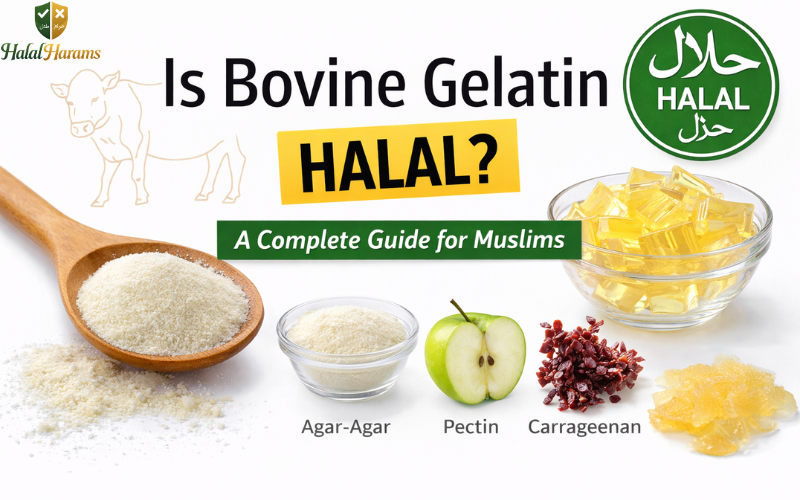
Bovine gelatin is a common ingredient found in many foods, medicines, and health products. It is made from the skin, bones, or connective tissues of cows. You can find it in gummy candies, marshmallows, yogurt, desserts, capsules, and many other everyday products. Because it comes from animals, many Muslims ask an important question: Is bovine gelatin halal?
The answer is not always simple. Bovine gelatin can be halal or haram depending on where it comes from and how the cow was slaughtered. If the gelatin is made from a halal animal that was slaughtered according to Islamic rules, it is generally considered halal. However, if it comes from a non-halal source or from an animal that was not slaughtered in the Islamic way, many scholars consider it haram.
Knowing the source of bovine gelatin is important because food labels often do not provide enough details. In this guide, you will learn what bovine gelatin is, when it is halal, when it is haram, and how to identify halal-certified products. By the end, you will be able to make informed choices and shop with greater confidence according to Islamic dietary guidelines.
Short Answer:
Bovine gelatin can be halal or haram. It is halal only if it comes from a halal-slaughtered cow and is certified halal. If its source is unknown or the cow was not slaughtered according to Islamic law, Muslims should avoid it.
What Is Bovine Gelatin?
Bovine gelatin is a type of gelatin derived from cows. It is made by processing collagen found in animal bones, skin, and connective tissues. Through a series of boiling, filtering, and drying steps, this collagen is converted into a colorless, flavorless substance known as gelatin.
This ingredient is widely used because of its ability to:
- Thicken liquids
- Stabilize foods
- Create a gel-like texture
Common Uses of Bovine Gelatin
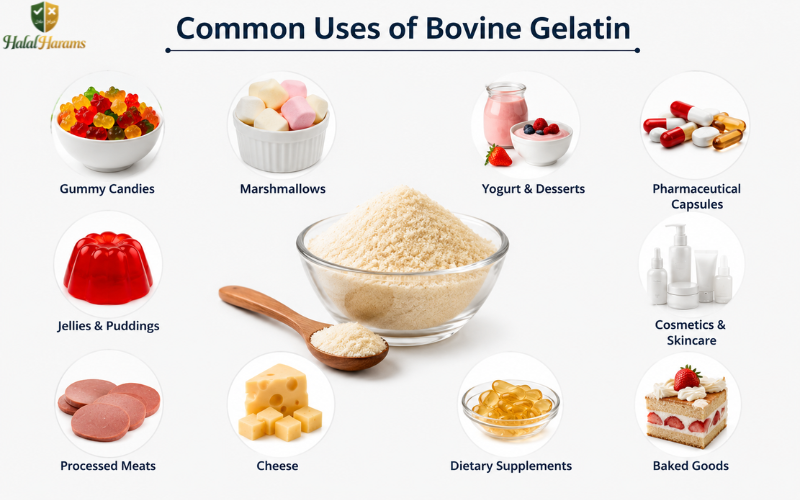
Bovine gelatin is found in a wide range of products, including:
Food Products
- Gummies and jelly sweets
- Marshmallows
- Yogurt and desserts
- Ice cream
- Cheesecakes
Non-Food Products
- Medicine capsules
- Vitamins and supplements
- Cosmetics (like creams and lotions)
Because it is so widely used, understanding its halal status is very important for Muslims.
Related Post: Is Beef Gelatin Halal? Complete Guide for Muslims (2026)
Basic Principle: Are Cows Halal?
In Islam, cows are considered halal animals. This means that in principle, products derived from cows can be halal.
However, there is an important condition:
The animal must be slaughtered according to Islamic law (Zabiha).
If this condition is not met, the product derived from the animal may not be halal—even if the animal itself is permissible.
When Is Bovine Gelatin Halal?
Bovine gelatin is considered halal under the following conditions:
1. Halal Slaughter (Zabiha)
The cow must be slaughtered according to Islamic guidelines:
- The name of Allah is mentioned
- A humane and proper method is used
- Blood is fully drained
2. Halal Processing
The gelatin must not be contaminated with non-halal substances during manufacturing.
3. Verified Source
The source of the gelatin must be known and trusted.
If all these conditions are met, bovine gelatin is halal.
When Is Bovine Gelatin Not Halal?
Bovine gelatin becomes non-halal in the following cases:
1. Improper Slaughter
If the cow is not slaughtered according to Islamic law, the gelatin is not halal.
2. Unknown Source
If you don’t know where the gelatin comes from, it is better to avoid it.
3. Cross-Contamination
If the gelatin is processed with haram ingredients (like pork gelatin), it may not be permissible.
Related Post: Is Dave’s Hot Chicken Halal
The Scholarly Difference of Opinion
One of the main reasons this topic can be confusing is because scholars have different opinions about gelatin.
Opinion 1: Gelatin Is Not Halal Unless Source Is Halal
Many scholars believe:
- If the original animal is not slaughtered properly, gelatin is not halal
- The transformation process does not make it permissible
This is the more cautious and widely followed view.
Opinion 2: Transformation Makes It Halal (Istihalah)
Some scholars argue that during processing, gelatin undergoes a chemical transformation known as Istihalah (change of substance).
According to this view:
- The original impure substance changes into a new, pure substance
- Therefore, gelatin may be considered halal even if the source was not halal
However, this opinion is not accepted by all scholars.
Which Opinion Should You Follow?
For most Muslims, the safest approach is:
Only consume bovine gelatin that is clearly labeled as halal.
This avoids doubt and ensures compliance with Islamic teachings.
Halal Certification: What to Look For
When buying products that contain gelatin, always check for:
Halal Certification Logo
Look for trusted certification authorities on the packaging.
Ingredient List
Check if it mentions:
- “Halal gelatin”
- “Bovine gelatin (halal certified)”
Brand Transparency
Some brands clearly state the source of their gelatin.
How to Identify Halal Gelatin Products
Here are practical tips to help you:
- Choose products labeled halal certified
- Avoid items with unclear ingredients
- Research brands before buying
- Contact manufacturers if needed
Bovine Gelatin vs Pork Gelatin
It is important to distinguish between different types of gelatin:
Bovine Gelatin
- Comes from cows
- Can be halal (if conditions are met)
Pork Gelatin
- Comes from pigs
- Always haram in Islam
This is why checking the source is crucial.
Halal Alternatives to Gelatin
If you want to avoid gelatin completely, there are halal-friendly alternatives:
1. Agar-Agar
- Derived from seaweed
- 100% plant-based
2. Pectin
- Found in fruits
- Common in jams and jellies
3. Carrageenan
- Extracted from red seaweed
- Used in dairy products
These options are naturally halal and widely available.
Gelatin in Medicines and Supplements
Gelatin is commonly used in capsules for medicines and vitamins.
What Should Muslims Do?
- Look for halal-certified capsules
- Choose vegetarian or plant-based capsules
- In cases of necessity, consult a knowledgeable scholar
Islam allows exceptions in medical situations where no halal alternative is available.
Why This Topic Matters
Understanding the halal status of bovine gelatin is important because:
- It is hidden in many everyday products
- It affects both food and non-food items
- It helps Muslims maintain halal compliance
Being aware allows you to make better and more confident choices.
Common Misconceptions
“Bovine gelatin is always halal”
Not true. It depends on slaughter and processing.
“All gelatin is the same”
Incorrect. Gelatin can come from halal or haram sources.
“If it says bovine, it must be halal”
Wrong. The source and method matter.
If you found this guide helpful, explore these related Halal and Harams articles for more answers to common food and ingredient questions.
FAQs
Is bovine gelatin halal in Islam?
Bovine gelatin is halal only if it comes from cows that are slaughtered according to Islamic guidelines and processed without contamination.
Can Muslims eat products with bovine gelatin?
Yes, but only if the gelatin is halal-certified or the source is verified.
Is gelatin always haram?
No. Gelatin can be halal or haram depending on its source and processing.
Is bovine gelatin better than pork gelatin?
Yes. Pork gelatin is always haram, while bovine gelatin can be halal if conditions are met.
What is the safest option for Muslims?
The safest option is to choose products with clear halal certification.
Are medicines with gelatin halal?
If no halal alternative is available, some scholars allow it due to necessity. Otherwise, halal or vegetarian capsules are preferred.
What are halal alternatives to gelatin?
Agar-agar, pectin, and carrageenan are common halal alternatives.
Final Remarks
Bovine gelatin is not automatically halal or haram. Its halal status depends on where it comes from and whether the cow was slaughtered according to Islamic law. If it is made from a halal-slaughtered cow and has trusted halal certification, it is generally considered permissible. However, if the source is unknown or the animal was not slaughtered in the Islamic way, many scholars advise avoiding it.
Before buying foods, medicines, or supplements that contain bovine gelatin, always check the ingredient list and look for a reliable halal certification. When in doubt, choose products that clearly state they are halal-certified. This simple step can help you follow Islamic dietary guidelines with confidence and peace of mind.
