
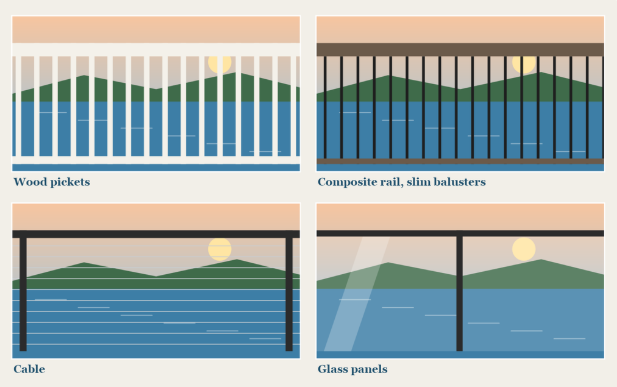
A particular kind of disappointment shows up on new decks in north Georgia. The homeowners bought the lot for the view, maybe Lake Lanier through the pines, a cove on Allatoona, or a long look down a wooded ravine toward the Chattahoochee. The deck goes up, everyone sits down for the first evening out there, and the top rail lands right across the middle of the view.
It isn’t exactly the builder’s fault. Most decks need guards, and guards have to be a certain height. But the type of railing, and a handful of details about how it’s installed, decide whether the view feels framed or fenced in.
Start Sitting Down
Most railing decisions get made standing up, in a showroom or on a job site. Most of the time on a deck is spent sitting.
Residential codes commonly require guards at least 36 inches tall when a deck is more than 30 inches off the ground, and some jurisdictions ask for more. A standing adult’s eyes are around five feet up, so the top rail sits well below the view. A seated adult in a typical deck chair has eyes somewhere around 40 to 48 inches off the floor. In a low lounge chair, it can be closer to 36.
That puts the top rail at, or just below, seated eye level. Whatever fills the space beneath it, whether pickets, cable, glass, or panels, is what you’ll be looking through most of the time.
If you test only one thing before choosing a railing, sit in your actual deck chair and look out.
Before the railing goes on, have someone hold a board at 36 inches while you sit. You’ll see right away what the top rail does to the view.
The Options, and What You’ll See Through Them
Traditional pickets in wood or composite
Square balusters, usually 1.5 inches wide in wood and a little narrower in composite, set close enough to stop a 4-inch sphere. They’re familiar and affordable, and they suit almost any house.
They’re also the most view-blocking option. Straight on, wide pickets cover a big share of what’s behind them. At an angle, which is how you see most of a railing, they visually close up and start to read as a solid wall.
Composite rail with slim balusters
Many composite systems pair a composite top rail and posts with round or slim aluminum balusters. It’s a popular middle ground. The rail looks substantial, the balusters are thinner than wood pickets, and upkeep is low.
Aluminum railing
Powder-coated aluminum systems use narrow balusters, often around three-quarters of an inch. They’re light, they don’t rot, and they never need paint. Black is the popular color because it recedes visually against trees and water. The downside is heat: dark metal in full summer sun gets uncomfortable to lean on by mid-afternoon.
Plenty of lake-lot owners get stuck right here. The composite vs aluminum deck railing decision usually comes down to looks, heat, and how much cleaning you’re willing to do, since both resist rot and both last a long time.
Cable railing
Horizontal stainless steel cables, usually spaced about three inches apart, strung between posts. From a few feet away the cables nearly vanish. For pure view, cable is hard to beat.
It has to be tensioned correctly and checked over time, because slack cable can spread far enough to fail the 4-inch rule. Some jurisdictions also worry about horizontal infill because kids can climb it like a ladder. The International Residential Code doesn’t ban horizontal rails outright, but local rules vary, so ask before committing.
Glass panels
Tempered glass panels, with or without a top rail. This is the most open look available. Nothing interrupts the view except the posts.
Glass comes with its own chores. It needs regular cleaning, and in north Georgia that’s no small thing, since spring pine pollen coats everything yellow for weeks. Glass can also reflect sky and trees in ways that confuse birds, which is why some homeowners add bird-safe decals or etched patterns.
Same view, four railings. Baluster width and spacing change more than most people expect.
Putting Rough Numbers on It
It helps to estimate how much of the infill area each railing blocks when you look straight at it. These are simple geometric estimates based on typical baluster sizes and spacing. Real products vary, and any viewing angle makes every option look more solid.
| Railing type | Typical infill | Share blocked, straight on | Maintenance |
|---|---|---|---|
| Wood pickets | 1.5-inch balusters, 3.5-inch gaps | About 30% | Paint or stain every few years |
| Composite with slim balusters | Round balusters around 0.75 inch | About 15 to 20% | Occasional washing |
| Aluminum | Balusters around 0.75 inch | About 15% | Occasional washing |
| Cable | 1/8 to 3/16-inch cable, 3-inch spacing | About 5% | Check tension yearly |
| Glass | Clear panel | Near 0%, plus reflections | Frequent cleaning |
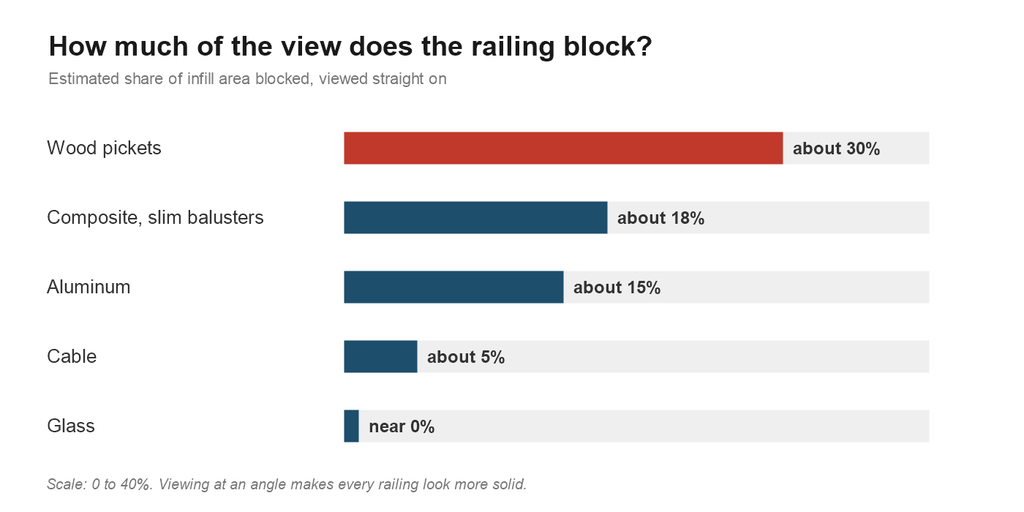
Estimated share of the infill area blocked when viewed straight on.
Details That Matter as Much as the Railing
Post spacing. Fewer posts mean fewer interruptions. Many aluminum and cable systems allow posts up to about six feet apart. Ask what the system permits, and plan post locations so none lands in the middle of your best sightline.
Top rail width. A wide flat cap is handy for setting down a drink, but it adds visual weight at exactly the wrong height. A narrower top rail, or a drink rail mounted on the inside face of the posts, keeps the line thinner.
Color. Dark railings tend to disappear against woods and water. White railings stand out and frame the view more formally. Neither is wrong, but they look very different from the chair.
Mixing systems. Plenty of lake houses use glass or cable on the view side and pickets on the sides facing the neighbors. It saves money and keeps privacy where you want it.
Deck height. On sloped lots, the lake side of a deck often ends up well above grade. Any section under 30 inches may not need a guard at all, which opens the door to a built-in bench or a wide step instead.
Two Layouts That Work on Sloped Lake Lots
Picture a typical north Georgia lake house. The back of the house faces the water, the yard drops away toward the shoreline, and the deck ends up eight or ten feet above grade on the lake side.
Layout one: open front, private sides. The long edge facing the water gets glass or cable. The two short ends, which face the neighbors, get standard balusters or a privacy screen. Posts on the view side are spaced as widely as the system allows, and one of them is shifted a foot or two so it doesn’t land in front of the dining table. This is the most common approach, and it keeps the cost of glass or cable to one run.
Layout two: two levels. An upper level off the kitchen holds the table and grill, with a cable or slim aluminum railing. A few steps down, a lower lounge level sits close enough to the ground that part of it needs no guard at all. Built-in benches or a wide step line that edge instead. From the lower level, the view has nothing in front of it.
Neither layout is cheap, but both solve the same problem: they put the most open railing exactly where people sit and look out.
Lighting the Railing Without Wrecking the Night View
Evening is prime time on a lake deck, so lighting matters. The trap is that bright lights at eye level turn the view into a black wall, and glass panels become mirrors once it’s dark outside.
A few things help:
- Keep fixtures low. Post cap lights, under-rail strips, and stair lights aim light down at the deck instead of out toward the water.
- Use warm, dim bulbs. Soft white light around 2700K feels calmer and lets your eyes adjust to the dark.
- Put lights on a dimmer or separate switches, so you can turn the railing lights off and watch the water.
- With glass, keep bright interior lights away from the windows behind the deck, or the reflections will follow you.
What Upkeep Actually Looks Like
Wood pickets want fresh stain or paint every few years, and the shady side of the house will need a mildew wash more often than the sunny side.
Composite rails and aluminum systems mostly need a rinse and a soft brush a couple of times a year. Expect a heavier cleaning after pollen season in late March and April.
Cable needs a quick tension check once a year, plus a wipe-down if you’re close enough to the water for spray or heavy humidity.
Glass is the most work. In pollen season, plan on washing it every week or two if you want it to stay clear.
Climate Notes for North Georgia
Humidity, heat, and pollen are the big three here.
Wood pickets on the shady north side of a house can grow mildew fast. Aluminum and powder-coated finishes handle humidity well. Stainless cable near water should be marine grade, since lower grades can show rust spots. Glass shows every water spot and pollen streak, so plan a regular wash routine.
Think about heat, too. Dark composite and dark aluminum top rails get hot in direct afternoon sun. If the deck faces west toward the water, which is common on sunset lots, consider which surfaces people will actually touch.
Choosing a Builder for a View Deck
View decks reward builders who think from the chair, not from the drawing. Builders aren’t hard to find in north Fulton or Forsyth County. What separates the good ones is how they handle the next few questions. Ask each one to bring railing samples to the actual site instead of showing you a catalog. Ask how they’d place posts around your main sightline, and whether they’ve installed cable or glass before. The answers sort experienced crews from everyone else fairly quickly.
Ask about permits and inspections for the specific railing system as well. Some systems need engineering documentation from the manufacturer, and you want to know that before the order goes in.
Before You Order Anything
On a lot with a view, the railing is the one part of the deck you look through every time you sit down. It deserves as much thought as the boards.
Sit in your chair, hold a board at rail height, and look out. Then pick the railing that gets out of the way.
Read More: Right-to-Repair Legislation: Forcing Manufacturers to Share Schematics and Parts
