
Introduction
Traditional classrooms provide structured learning environments, but young children also benefit from opportunities to explore the natural world. Outdoor forest classrooms are becoming an increasingly interesting approach to early childhood education, combining hands-on activities, environmental exploration, and child-centered learning.
Instead of spending the entire school day indoors, children participate in educational experiences surrounded by trees, plants, wildlife, and natural landscapes. These environments encourage curiosity, movement, creativity, and meaningful interaction with the world.
Nature immersion may also help children develop attention skills, emotional awareness, and independence, creating valuable foundations for future learning.
What Are Outdoor Forest Classrooms?
Outdoor forest classrooms are educational environments where natural spaces become important settings for learning and development.
Inspired by forest school approaches, these classrooms emphasize exploration, practical experiences, and learning through play.
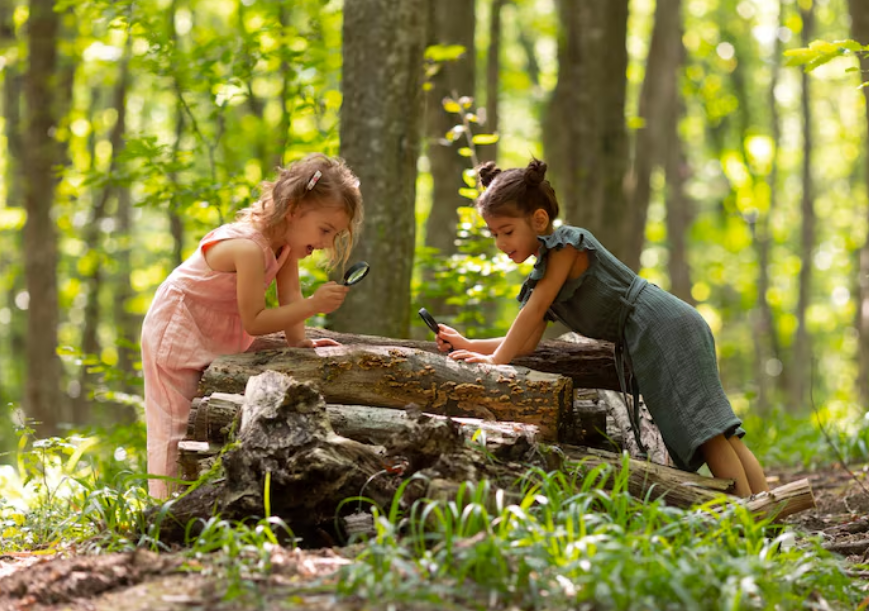
Children might observe insects, collect fallen leaves, build shelters with natural materials, or investigate seasonal changes.
Unlike conventional classroom activities that often follow fixed instructions, forest learning encourages children to ask questions, experiment, and discover solutions independently.
Teachers act as facilitators, guiding exploration while ensuring safety and connecting experiences with educational goals.
How Nature Immersion Supports Childhood Focus
Young children naturally have developing attention spans, making prolonged concentration challenging.
Outdoor environments offer different kinds of sensory experiences that may support attention and engagement.
1. Reducing Mental Fatigue
Indoor learning often requires sustained concentration on specific tasks.
Natural surroundings provide opportunities for less demanding observation, such as watching moving leaves or listening to birds.
These experiences may allow children to recover from mentally demanding activities and return to structured learning feeling refreshed.
2. Encouraging Active Engagement
Forest classrooms allow children to learn through movement and direct exploration.
For example, counting stones, examining tree bark, or comparing different leaves transforms ordinary educational concepts into interactive experiences.
When children actively participate in learning, they may remain engaged for longer periods.
3. Providing Balanced Sensory Stimulation
Natural environments offer varied sounds, textures, colors, and movements.
Walking across grass, observing insects, and touching safe natural materials encourage sensory exploration.
These activities help children practice noticing details and directing attention toward their surroundings.
Strengthening Cognitive Development Through Outdoor Learning
Forest classrooms offer opportunities to develop important thinking skills.
Children regularly encounter situations requiring observation, experimentation, and problem-solving.
Building a small shelter, for example, involves planning, selecting suitable materials, and adjusting the structure when something does not work.
Similarly, exploring different plants introduces early scientific thinking through comparison, classification, and questioning.
Such activities encourage children to develop flexible thinking rather than relying exclusively on memorized information.
Supporting Emotional Well-Being and Self-Regulation
Emotional development plays an important role in children’s ability to concentrate.
When children feel overwhelmed, frustrated, or restless, maintaining attention becomes more difficult.
Outdoor learning provides opportunities for movement, quiet observation, and independent exploration.
Activities such as nature walks, gardening, and imaginative outdoor play may help children manage emotions and develop patience.
Natural environments can also create opportunities for teachers to introduce calming exercises, including mindful listening and breathing activities.
Over time, these experiences may support emotional self-regulation and classroom readiness.
Encouraging Creativity and Imagination
Unlike manufactured toys with predetermined functions, natural materials offer open-ended possibilities.
A fallen branch might become a bridge, a collection of stones could represent a miniature village, and leaves might inspire creative artwork.
This flexibility encourages children to imagine different uses for ordinary objects.
Outdoor storytelling, nature-inspired crafts, and cooperative building activities can further develop creativity while supporting communication and concentration.
Developing Social Skills Through Cooperative Activities
Forest classrooms frequently involve group exploration and shared projects.
Children may work together to construct shelters, identify plants, or complete outdoor challenges.
These experiences encourage important social skills, including:
- Communication and active listening.
- Sharing materials and responsibilities.
- Cooperation and teamwork.
- Conflict resolution.
- Respect for different ideas.
Positive social interactions can help children feel more comfortable participating in learning activities.
The Role of Teachers in Forest Classrooms
Teachers play an essential role in making outdoor learning meaningful.
Rather than allowing exploration without direction, educators create activities that combine freedom with educational objectives.
For example, a teacher might introduce mathematics through measuring branches or develop vocabulary through describing natural objects.
Educators must also assess environmental risks, establish clear boundaries, monitor weather conditions, and ensure children use appropriate clothing and equipment.
Effective forest education combines curiosity with thoughtful supervision.
Challenges of Outdoor Forest Education
Despite its advantages, outdoor education presents practical challenges.
Unpredictable weather, limited access to green spaces, safety concerns, and resource requirements can make implementation difficult.
Schools may also need additional teacher training and suitable outdoor facilities.
However, forest learning does not always require large woodland areas. School gardens, local parks, and small natural spaces can provide valuable educational opportunities.
Even regular outdoor lessons can introduce children to nature-based learning experiences.
Conclusion
Outdoor forest classrooms offer an engaging approach to early childhood education by connecting learning with natural exploration.
Through hands-on activities, movement, creative play, and cooperative experiences, children can develop attention, problem-solving abilities, emotional awareness, and social confidence.
Although the effects of nature immersion vary between children and more research is needed to establish its long-term impact on attention, outdoor education provides valuable opportunities for meaningful learning.
By incorporating natural environments into early education, schools can help children build curiosity, independence, and a lasting appreciation for the world around them.
Read More : Dark-Sky Sanctuaries: Planning Stargazing Expeditions Away from Light Pollution

2 comments